
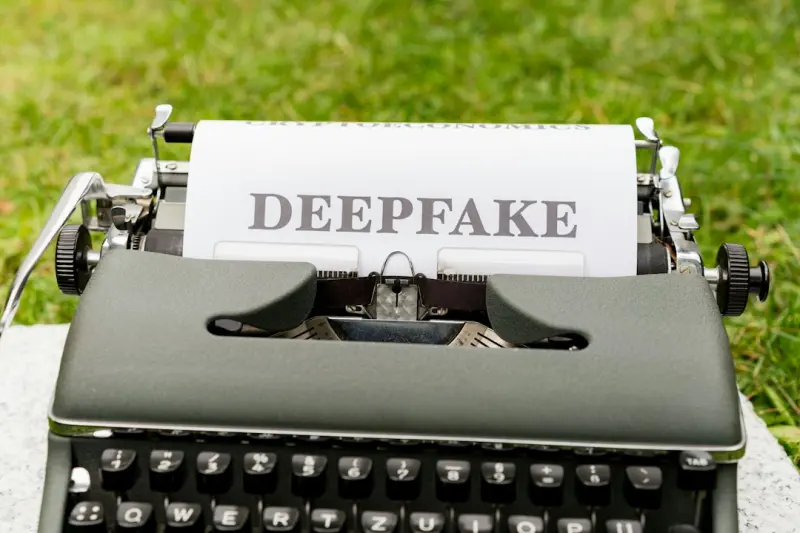
Why Deepfakes Matter to Every Lawyer
When I first heard the term “deepfake” in a courtroom anecdote, I imagined a Hollywood‑style montage of a politician saying things they never said. What I didn’t anticipate was how quickly that technology would infiltrate the very fabric of evidentiary law. The ability to synthesize hyper‑realistic video and audio with a few minutes of source material is no longer a novelty; it is a strategic weapon that can undermine trust, manipulate juries, and force judges to rewrite centuries‑old rules. In this post I’ll unpack the technical basics, trace how courts are responding, and give you a playbook for protecting your clients in a world where the line between fact and fabrication blurs at the click of a button.
The Science in Plain English
At its core, a deepfake leverages generative adversarial networks (GANs). One neural network, the “generator,” tries to create synthetic media that looks authentic. A second network, the “discriminator,” evaluates the output and signals whether it can tell the fake from the real. Over thousands of iterations, the generator learns to produce media that the discriminator can no longer reliably reject. The result: a video or audio clip that can pass casual visual inspection and even fool seasoned forensic analysts.
What makes deepfakes especially dangerous for legal practice is threefold:
- Speed. A convincing clip can be rendered in hours rather than weeks.
- Scalability. Once the model is trained on a public figure’s face or voice, the same architecture can be repurposed for any individual with minimal additional data.
- Portability. The output can be compressed, shared across encrypted channels, and embedded in social media feeds where it spreads before anyone has a chance to verify its authenticity.
These attributes mean that a single deepfake can become evidence in a civil lawsuit, a piece of a criminal investigation, or a lever in a high‑stakes arbitration—all before the opposing counsel even knows it exists.
Why Courts Are Starting to Sweat
Traditional evidentiary doctrines—think of the best evidence rule or the principle of authentication—assume that a document or recording can be linked to a reliable source. When the source itself can be fabricated, the doctrine loses its bite. In recent months, a handful of jurisdictions have begun to grapple with the problem:
- California. A landmark case involving a disputed video of a police officer used the court’s “scientific reliability” standard from Daubert v. Merrell Dow to exclude a deepfake that could not be independently verified.
- United Kingdom. The Court of Appeal referenced the R v. Sinclair decision, emphasizing that digital forensics must be “exhaustively documented” before a synthetic image can be admitted.
- Australia. The Federal Court issued a temporary injunction to stop the distribution of a fabricated interview that threatened to prejudice an ongoing defamation trial.
These cases illustrate a common thread: judges are demanding forensic certainty that many firms simply do not have in‑house. The result is a surge in demand for specialized digital‑forensics experts and a growing market for AI‑driven verification tools.
Existing Evidentiary Rules Meet Synthetic Media
Let’s break down how the classic rules intersect with deepfakes:
- Authentication. Under Rule 901 of the Federal Rules of Evidence, a party must produce “sufficient evidence to support a finding that the item is what the proponent claims it is.” For a video, this often means a chain‑of‑custody log, metadata, and a witness who can attest to its origin. Deepfakes can be engineered to mimic metadata, making the chain‑of‑custody appear intact while the content itself is fabricated.
- Hearsay. Even if a deepfake is authenticated, it may still be hearsay unless it falls within an exception (e.g., a recorded statement by a party-opponent). A fabricated interview, however, fails both the hearsay test and the authenticity requirement.
- Best Evidence Rule. This rule prefers the original over copies. In the digital realm, the “original” is a file hash. If an adversary manipulates the hash, the “original” is compromised, and the rule collapses.
In short, the conventional toolbox is blunt against a scalpel‑sharp problem. That’s why many litigators are now turning to interdisciplinary strategies that blend law, technology, and policy.
Emerging Judicial Responses
Judges are not sitting idly by. Several emerging doctrines are gaining traction:
- Presumption of Inauthenticity. Some courts are shifting the burden of proof, presuming that any media lacking a verifiable forensic report is inadmissible.
- Expert Gatekeeping. The Daubert framework is being repurposed to evaluate the reliability of forensic tools themselves. Judges now ask: “Has the algorithm been peer‑reviewed? Is there a known false‑positive rate?”
- Procedural Safeguards. A few jurisdictions have introduced pre‑trial motions specifically targeting synthetic media, allowing parties to seek a “digital authenticity injunction” that freezes dissemination until verification is complete.
These developments signal a broader trend: evidence law is evolving from a static set of rules to a dynamic, technology‑aware ecosystem.
Practical Strategies for Litigators
Below are actionable steps you can take today to safeguard your case against deepfake threats:
- Secure the Chain of Custody from the Outset. Use encrypted storage, timestamped logs, and write‑once read‑many (WORM) drives to preserve original files. Even the smallest metadata inconsistency can become a red flag.
- Engage Certified Digital‑Forensics Experts Early. Look for professionals who hold certifications such as the Certified Computer Examiner (CCE) or the Certified Forensic Analyst (CFA). Their reports should include algorithmic error margins and reference peer‑reviewed literature.
- Leverage AI‑Detection Tools, But Verify Manually. Many SaaS platforms claim to detect deepfakes with high accuracy. Treat these tools as a first line of defense, not a final verdict. Cross‑check results with frame‑by‑frame analysis and audio spectrograms.
- Build a Data‑Literacy Baseline Within Your Team. Understanding how data is generated, stored, and transformed is crucial. The national data literacy movement shows that even non‑technical lawyers can become competent gatekeepers with the right training.
- Prepare a Counter‑Narrative. If the opposition attempts to introduce a questionable deepfake, be ready to argue its unreliability before the judge. Use analogies that jurors understand—compare a deepfake to a forged signature, not a “creative” video.
- Consider Pre‑emptive Disclosure. In high‑risk cases, voluntarily disclose authentic recordings to the court early, establishing a benchmark for comparison.
- Stay Informed About Legislative Shifts. Several states are drafting statutes that criminalize the malicious creation or distribution of synthetic media. Familiarity with these laws can inform both criminal and civil strategy.
The Intersection with Other AI Legal Trends
You might wonder whether deepfakes are just another facet of the broader AI surge in law. They are, but they intersect in surprising ways. For instance, the same generative models used to create synthetic video can also draft contracts. While the AI‑generated contracts article focused on drafting efficiency, the underlying risk model—unintended output that misrepresents intent—mirrors deepfake concerns. Both demand rigorous verification, version control, and an audit trail that can survive courtroom scrutiny.
Moreover, the push for legal design thinking—making legal processes more user‑centric—must now account for how laypeople interpret synthetic media. A well‑designed disclaimer or an interactive verification portal could become standard practice in corporate communications, reducing the likelihood that a deepfake will ever be mistaken for genuine evidence.
Preparing for the Future: A Blueprint
To future‑proof your practice, adopt a three‑layered approach:
1. Technology Layer
Invest in a vetted suite of detection tools, maintain a repository of hash values for critical recordings, and partner with forensic labs that publish their methodologies. Treat technology as an extension of your evidentiary toolbox, not a replacement for traditional legal analysis.
2. Process Layer
Standardize protocols for media handling: every piece of evidence receives a unique identifier, a documented chain of custody, and a forensic analysis report before it ever sees the courtroom. Incorporate these steps into your case management software.
3. Education Layer
Run quarterly workshops on digital authenticity for associates, paralegals, and senior partners. Bring in experts from computer science departments or cybersecurity firms to demystify the math behind GANs. The more comfortable your team is with the technology, the better they can anticipate and neutralize attacks.
By aligning these layers, you not only mitigate risk but also position your firm as a leader in the emerging field of “evidence integrity.” Clients increasingly ask, “Can you prove that this video is real?” The answer should be a confident “Yes, and here’s how.”
Conclusion: The Courtroom Will Never Be the Same
Deepfake technology is not a passing fad; it is a structural shift that forces the legal community to re‑examine the foundations of proof. The old adage “seeing is believing” is obsolete when the very act of seeing can be manufactured. As lawyers, we must become both technologists and storytellers—capable of interrogating the code behind a video while weaving a persuasive narrative for the jury.
The good news? The law is adaptable. Judges are already crafting new doctrines, legislators are drafting safeguards, and forward‑thinking firms are building the forensic infrastructure needed to survive the deepfake era. By staying ahead of the curve, you can turn a potential vulnerability into a competitive advantage, protecting clients and reinforcing the integrity of the judicial process.

Related Posts

When Algorithms Judge: Navigating AI’s Role in Modern Courtrooms
A deep dive into AI’s growing influence on courts, examining bias, transparency, and the steps law... Read More
Beyond Compliance: How Real‑Time Data is Future‑Proofing Legal Teams
Legal teams are shifting from reactive checklists to proactive, data‑driven operations. By harness... Read More

The Unseen Struggles of Canadian Farmers: A Legal Perspective
Canadian farmers are the backbone of our nation's food system, but they face numerous unseen struggl... Read More
Top Posts

Is the CN Tower Still Worth the Ascend in 2025? Let Me Tell You About My Experience and Why You Should Go!
The CN Tower. Even the name evokes a sense of awe and wonder. For years, it dominated the Toronto skyline, a beacon of innovation and architectural prowess. But...Read More

Beyond the Gown: Turning Prom & Graduation Into a Launchpad for Future Success
Learn to use the excitement of prom and graduation as a launchpad for long‑term success by leveraging data, smart budgeting, sustainable fashion, and a revenu...Read More

Canada’s Comedy Renaissance: From Local Clubs to Global Spotlights
A deep dive into Canada’s thriving comedy scene, revealing how regional hubs, digital tools, and cultural storytelling are reshaping live humor into a global ...Read More
When Algorithms Write the Law: Navigating Generative AI’s Legal Minefields
Generative AI can draft contracts and predict outcomes, but it also introduces complex liability, ethical, and compliance issues. This article unpacks those cha...Read More
0 Comments
Post Comment
You will need to Login or Register to comment on this post!