
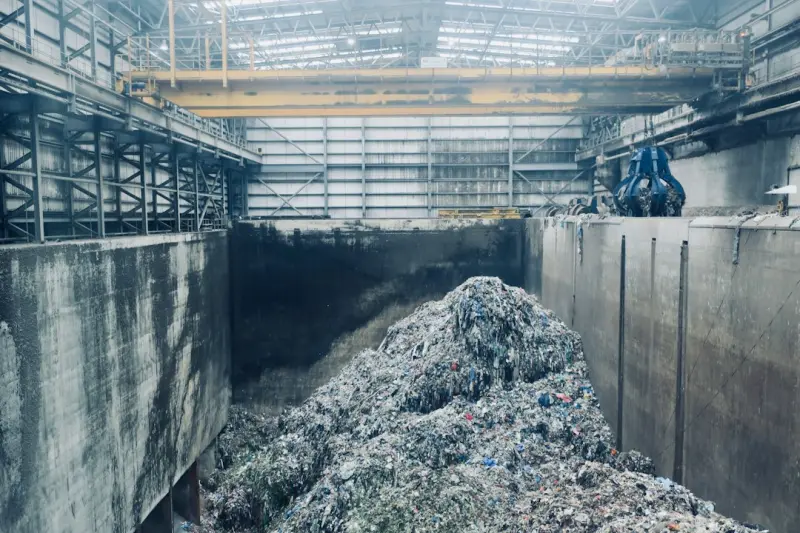
When I first walked into a small‑scale manufacturing shop in the outskirts of Toronto, I expected to see a relic of the past—clunky equipment, a handful of workers, and a lingering scent of oil. Instead, I found a buzzing hub of innovation where 3‑D printers, AI‑driven demand forecasting, and circular‑economy principles were the norm. It was a vivid reminder that the future of business isn’t always about scaling up; sometimes it’s about scaling smart.
The Myth of “Big Is Better”
For decades, the dominant narrative in business strategy has been growth measured in size: more factories, larger warehouses, and ever‑expanding product lines. The equation was simple—bigger = more profitable. Yet the data we see today tells a different story. Companies that double down on flexibility, waste reduction, and local sourcing often outperform their heavyweight rivals on margins, resilience, and brand loyalty.
In the last few years, the confluence of three forces has accelerated this shift:
- Rising material costs. Global supply chain disruptions have turned raw‑material price volatility into a strategic risk.
- Consumer demand for sustainability. Shoppers now expect brands to close the loop on waste, not just talk about it.
- Technological democratization. Tools that were once exclusive to large enterprises—AI, IoT, and additive manufacturing—are now affordable for mid‑size firms.
The result? A surge in micro‑scale, circular manufacturing hubs that turn waste into revenue streams, reduce transportation emissions, and keep cash flow tighter.
What Is the Circular Economy, Really?
At its core, a circular economy replaces the traditional “take‑make‑dispose” model with a regenerative system where products, components, and materials are continuously repurposed. Think of it as a perpetual remix rather than a linear track.
Key pillars include:
- Design for longevity. Products are built to be repaired, upgraded, or disassembled.
- Resource recovery. Waste streams become feedstock for new products.
- Product‑as‑a‑service. Companies retain ownership of assets, leasing them instead of selling outright.
When you embed these principles into a business model, you create a virtuous cycle: lower material costs, reduced environmental impact, and a brand story that resonates with today’s eco‑aware customers.
Case Study: A Micro‑Factory That Turned Plastic Waste Into High‑Value Components
Consider EcoForm Labs, a Toronto‑based startup that started with a single 3‑D printer and a vision to divert post‑consumer plastic from landfills. By partnering with local grocery chains, they collected plastic packaging, shredded it, and fed it into a proprietary extrusion process that creates high‑strength filament for automotive and consumer‑goods manufacturers.
Within 18 months, EcoForm Labs:
- Reduced raw‑material spend by 35 %.
- Created a new revenue line that contributed 22 % of total sales.
- Secured three long‑term contracts with OEMs seeking greener supply chains.
What makes this story compelling isn’t just the environmental win—it’s the clear business case. By turning a cost center (waste disposal) into a profit center (recovered material), EcoForm unlocked a hidden ROI that larger competitors struggled to replicate due to their entrenched linear processes.
How Data Drives Circular Decisions
Implementing a circular model isn’t a guess‑work exercise. It requires granular, real‑time insight into inventory, waste streams, and product usage. That’s where data platforms shine. If you’re curious how data can transform an otherwise opaque operation, take a look at the Why Real‑Time Data Is the New Front‑Row Seat in Restaurants piece. The principles outlined there—instant visibility, predictive analytics, and rapid response—apply just as well to a micro‑factory’s material flow.
By integrating IoT sensors on production lines, businesses can track material input, detect deviations, and automatically adjust processes to minimize scrap. Coupled with AI forecasting, firms can anticipate demand spikes and align production schedules, ensuring that every kilogram of raw material is utilized to its fullest potential.
Financial Implications: The Savings Playbook
From a CFO’s perspective, the circular approach translates into concrete line‑item savings. The Smart Savings Playbook for SaaS Buyers outlines tactics for cutting costs in software procurement; similarly, you can apply a “playbook” to material procurement:
- Audit waste streams. Identify every by‑product and evaluate its resale or reuse potential.
- Negotiate closed‑loop contracts. Suppliers who take back end‑of‑life products can offer discounts on new purchases.
- Leverage tax incentives. Many jurisdictions provide credits for recycling and sustainable manufacturing.
- Invest in modular equipment. Machines that can be re‑configured reduce capital expenditures when product lines shift.
When you stack these levers, you often see a 10‑15 % reduction in cost of goods sold (COGS) within the first year—a figure that can dramatically improve gross margins.
Overcoming Common Barriers
Adopting a circular mindset isn’t without challenges. Below are the three most frequent objections and how to counter them:
- “It’s too complex.” Start small. Pilot a single product line, map its lifecycle, and iterate.
- “Our customers won’t pay a premium.” Market the sustainability story effectively; data shows that many buyers are willing to pay up to 15 % more for responsibly sourced goods.
- “We lack the technology.” Partner with tech providers that offer modular IoT platforms—no need for a full‑scale overhaul.
Each barrier, when reframed as an opportunity, becomes a stepping stone toward a more resilient and profitable operation.
Integrating Circular Strategies With B2B Sales
From the sales desk, the circular narrative can be a differentiator. When pitching to a procurement team, highlight the following:
- Reduced exposure to raw‑material price swings.
- Compliance with emerging ESG (Environmental, Social, Governance) regulations.
- Long‑term partnership potential through product‑as‑a‑service models.
In fact, the Why Conversational Commerce Is the Secret Weapon for B2B SaaS Growth article demonstrates how dialogue‑driven interactions can surface hidden buyer motivations—sustainability being a top one. By embedding circular benefits into your conversation flow, you turn a “nice‑to‑have” into a “must‑have.”
The Talent Angle: Employees Want Purpose
Millennial and Gen Z talent increasingly seeks employers whose values align with their own. A circular manufacturing approach provides an intrinsic purpose that resonates with this cohort. When employees see their work directly reducing waste and contributing to a greener planet, engagement scores rise, turnover drops, and the organization gains a competitive edge in talent acquisition.
Future Outlook: From Niche to Norm
What was once a niche—small factories turning waste into wealth—is quickly becoming a mainstream strategy. Industry analysts predict that by the end of the decade, more than half of mid‑size manufacturers in North America will have integrated at least one circular process into their operations.
For forward‑looking leaders, the question isn’t “if” but “when” you’ll join this movement. The sooner you experiment, the faster you’ll learn, adapt, and capture the financial upside that comes with being an early adopter.
Action Steps for Leaders Ready to Embrace Circularity
1. Map your current material flow. Use a simple spreadsheet to track inputs, outputs, and waste for one product line.
2. Identify a low‑hanging fruit. Look for a waste stream that can be sold or repurposed with minimal processing.
3. Secure a pilot partner. Whether it’s a local retailer or a recycling firm, collaboration accelerates learning.
4. Invest in data visibility. Deploy sensors or simple tracking tools to gain real‑time insights.
5. Communicate the story. Craft a narrative that ties sustainability to cost savings and brand differentiation.
By following this roadmap, you’ll not only future‑proof your supply chain but also unlock a new realm of profitability that many still overlook.
In the end, the most compelling reason to go circular isn’t just environmental—it’s strategic. When you turn waste into value, you create a self‑reinforcing loop that fuels growth, reduces risk, and positions your business as a leader in an era where resilience is the ultimate competitive advantage.

Related Posts

The Experimentation Mindset: How SaaS Leaders Turn Uncertainty into Competitive Edge
A deep dive into why modern SaaS companies should embed experimentation into every function, turning... Read More

Strategic Partnerships: The Untapped Engine Driving SaaS Growth
Strategic partnerships are the hidden engine behind SaaS success, enabling expanded reach, richer pr... Read More

Building Trust in Remote‑First Teams: A Business Playbook
A practical guide shows how remote‑first organizations can cultivate psychological safety, measura... Read More
Top Posts

Unlock Hidden Savings in SaaS: A Playbook for Smarter Spending
A comprehensive guide shows how to audit your SaaS stack, negotiate smarter contracts, leverage referrals, and apply zero‑waste principles to achieve lasting ...Read More

Quiet Revolutions: Reclaiming Personal Health in the Age of Constant Connectivity
A deep‑dive into how nonstop connectivity erodes our health and a step‑by‑step buffer plan—digital sunsets, micro‑movements, privacy‑first apps—to...Read More

How Canada’s Digital Parliament Is Redefining Civic Engagement
A deep dive into Canada’s shift toward digital governance, examining online participation, cybersecurity, Indigenous tech sovereignty, and the promise of e‑...Read More

When Algorithms Become Advocates: The Legal Frontier of AI
Artificial intelligence is no longer a buzzword in law; it’s a transformative force. This post delves into AI-driven contract drafting, algorithmic accountabi...Read More
0 Comments
Post Comment
You will need to Login or Register to comment on this post!