

Why Tariff Shockwaves Are the Wake‑Up Call SaaS Leaders Needed
When the first headlines about fresh trade duties hit the newsroom, most of us in the SaaS world instinctively reached for the same playbook we use for any market fluctuation: tighten the belt, defer non‑essential spend, and hope the storm passes. The reality is far messier. Tariffs are no longer a peripheral cost of hardware procurement—they’re a strategic variable that can reshape where you host data, how you price, and who you trust as a partner.
In my ten‑plus years of steering product and engineering teams through everything from hyper‑growth to recession‑proofing, I’ve learned that the most sustainable advantage comes from designing for disruption, not reacting to it. In this post I’ll walk through the three‑phase shift I’m seeing across the SaaS landscape: Supply‑chain rebalancing, architectural diversification, and pricing transparency. By the end you’ll have a concrete playbook to turn today’s tariff shockwaves into tomorrow’s competitive moat.
Phase 1: The Supply‑Chain Shock That No One Expected
Most SaaS companies think of tariffs as a “hardware” issue. After all, the classic headline is “tariffs on servers increase costs by X%”. But the ripple effect reaches far beyond the rack. A new duty on silicon chips forces OEMs to relocate production, which in turn delays the rollout of the next‑gen GPU clusters that power AI‑driven features. Suddenly, a roadmap that promised real‑time analytics in six months slides into a nine‑month horizon.
Even more subtle is the impact on data egress fees. When a cloud provider’s data center moves to a new jurisdiction to avoid a duty, the cost of moving data out of that region can spike. For customers with strict latency requirements—think fintech transaction monitoring or tele‑health diagnostics—this adds a hidden, unpredictable expense.
In short, tariffs are turning the once‑linear cost curve of infrastructure into a jagged terrain. Companies that treat this as a “nice‑to‑have” budgeting line item risk being blindsided when a duty changes overnight.
Phase 2: Architectural Diversification—Multi‑Cloud, Edge, and Data Residency
Historically, SaaS firms have gravitated toward a single‑cloud strategy for simplicity. One provider, one set of APIs, one billing relationship. The tariff‑induced volatility of the past 12 months has exposed the fragility of that model.
Multi‑cloud is no longer a “nice‑to‑experiment”. By spreading workloads across two or three major providers, you gain three key buffers:
- Cost arbitrage: If one provider inflates prices due to a duty on imported hardware, you can shift new workloads to a cheaper alternative without a massive migration effort.
- Regulatory agility: Different jurisdictions have varying tariff regimes. A multi‑cloud architecture lets you route data through a region that remains tariff‑free, preserving latency guarantees.
- Risk mitigation: Supplier‑specific outages or policy shifts become isolated events rather than existential threats.
Edge computing amplifies this resilience. By deploying micro‑data‑centers close to the user—whether in a telecom carrier’s edge node or a partner’s regional hub—you reduce dependency on the central cloud backbone that is most exposed to tariff changes.
But diversification isn’t just about tech; it’s about data residency strategy. When tariffs target specific import categories, the cost of storing data in a foreign region can skyrocket. A forward‑looking SaaS product now needs to embed data‑locality rules directly into its orchestration layer, automatically selecting the optimal region based on cost, latency, and compliance constraints.
Phase 3: Rethinking Pricing Architecture for Transparency
Customers are waking up to “hidden tariffs” on their SaaS invoices. A subscription that once listed a flat monthly fee now shows line items like “data egress surcharge” or “regional compute premium”. This erosion of price transparency erodes trust.
The solution is two‑fold:
- Dynamic pricing dashboards that expose real‑time cost drivers, allowing customers to see exactly how a tariff‑driven egress fee is calculated.
- Tiered pricing models that bundle regional resilience as a premium feature. Think of it as “Resilience‑as‑a‑Service” (RaaS) where customers pay a predictable add‑on for guaranteed low‑latency access in multiple regions.
By turning an opaque cost into a visible, optional service, you not only preserve margin but also turn a pain point into a revenue stream.
Case Study: From Single‑Cloud Panic to Multi‑Cloud Confidence
One of our early‑stage SaaS partners—an AI‑driven marketing automation platform—faced a 22% increase in GPU‑cluster costs after a sudden duty on imported ASICs. Their initial reaction was to cut back on AI features, which would have crippled their value proposition.
Instead, they executed a three‑step response:
- Audit the existing stack: Identify which workloads are truly GPU‑bound versus those that can be shifted to CPU or FPGA alternatives.
- Deploy a pilot on a secondary cloud: Using Terraform and a cloud‑agnostic CI/CD pipeline, they spun up a parallel AI training environment on a competitor that hadn’t been affected by the duty.
- Introduce a “Resilience” pricing tier: Existing customers were offered a modest upgrade fee for the guarantee that their campaigns would continue uninterrupted, even if one provider’s costs rose.
The outcome? Within six months, the platform not only neutralized the cost shock but also added a new revenue line that accounted for 8% of total ARR. Their customers reported higher satisfaction because they now had a clear line of sight into where and why costs were changing.
Integrating the Lessons with Existing Knowledge
If you’re wondering how this fits with the broader conversation about tariffs, you’ll find that the themes overlap with some of our earlier deep dives. For example, turn trade duties into strategic advantage by leveraging multi‑cloud, but the focus there was on short‑term opportunistic pricing. Here, we’re extending that mindset into a long‑term resilience framework.
Similarly, the piece on modern tariffs reshape SaaS product strategy highlighted the need to embed tariff awareness into product roadmaps. Our current discussion takes the next logical step: operationalizing that awareness through automated data‑residency controls and dynamic pricing dashboards.
A Practical Playbook for SaaS Leaders
Below is a concise, actionable checklist you can start implementing today:
- Map your cost exposure: List every third‑party service (compute, storage, CDN) and annotate which tariff categories could affect each.
- Audit regional dependencies: Identify which customer segments rely on specific regions for latency or compliance.
- Prototype a multi‑cloud bridge: Use infrastructure‑as‑code tools (Terraform, Pulumi) to spin up a minimal workload on an alternative provider.
- Build a cost‑visibility layer: Expose real‑time cost breakdowns in your billing UI, highlighting tariff‑related fees.
- Introduce a resilience tier: Offer a premium option that guarantees multi‑region uptime and price caps.
- Establish a tariff watch team: Assign a cross‑functional squad (legal, finance, engineering) to monitor policy changes and trigger pre‑defined mitigation actions.
Execution is the differentiator. The best‑theorized tariff model is useless if you can’t translate it into a concrete change in your CI/CD pipeline or your billing system.
Closing Thoughts: Turning Uncertainty Into a Competitive Edge
Tariff shockwaves are a reality of a more fragmented global economy. They force SaaS firms to confront the uncomfortable truth that a single‑provider, single‑region approach is no longer a safe bet. By embracing architectural diversification, embedding data‑residency intelligence, and offering transparent pricing, you not only safeguard your margins—you create a new value proposition that your competitors haven’t yet mastered.
In the end, the companies that thrive will be those that see tariffs not as a cost to be hidden, but as a lever for strategic differentiation. The next wave of SaaS growth will belong to those who turn every duty into a design decision, every policy shift into a product feature, and every hidden fee into a trust‑building opportunity.

Related Posts

Tariff Tactics: Turning Trade Barriers into a Competitive Edge
Explore a fresh, actionable approach to tariffs that transforms them from cost penalties into strate... Read More

The Tariff Tango: A Threat to Canadian Farmers and the Economy
The tariff tango between Canada and the US is affecting farmers and the economy. Learn about the eco... Read More
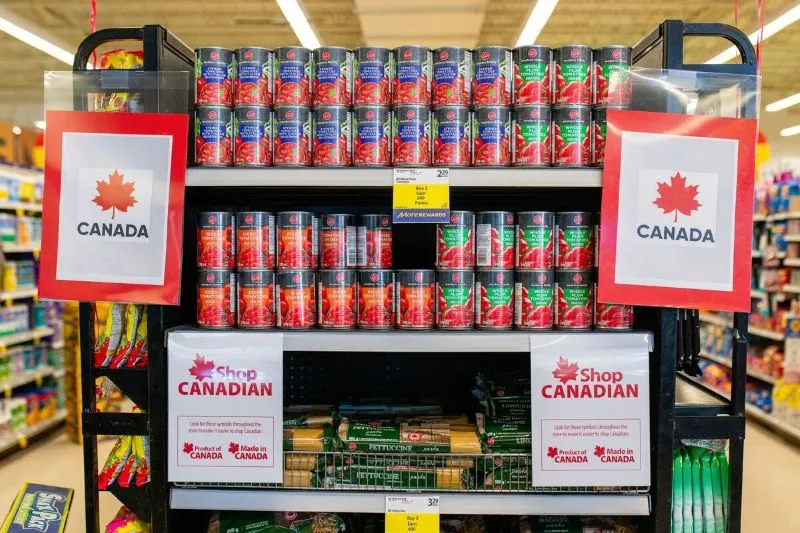
How Canadians are Standing Up to Trump's Tariffs in the Grocery Aisles
For years, Canada and the United States enjoyed a relatively harmonious trade relationship. However,... Read More
Top Posts

Seasonal Foraging: Unlocking Wild Nutrition for Modern Diets
Explore the health benefits, safety tips, and practical recipes for bringing seasonal foraged foods into everyday meals, and learn how to integrate wild nutriti...Read More

Why Canada’s Senate Needs a Modern Overhaul
A deep dive into Canada’s Senate legitimacy crisis, proposals for proportional representation, and the role of digital identity and AI in reshaping the nation...Read More

Beyond Flavor: Crafting Multi‑Sensory Restaurant Experiences
Explore the power of multi‑sensory design in restaurants, from immersive lighting and curated soundscapes to smart scent diffusers and AR menus, with actionab...Read More

Fermentation, Microgreens, and Data‑Driven Shopping: A Fresh Playbook for Healthy Eating
A hands‑on guide that blends home fermentation, indoor microgreen gardening, and data‑informed grocery choices to help busy professionals build a resilient,...Read More
0 Comments
Post Comment
You will need to Login or Register to comment on this post!