
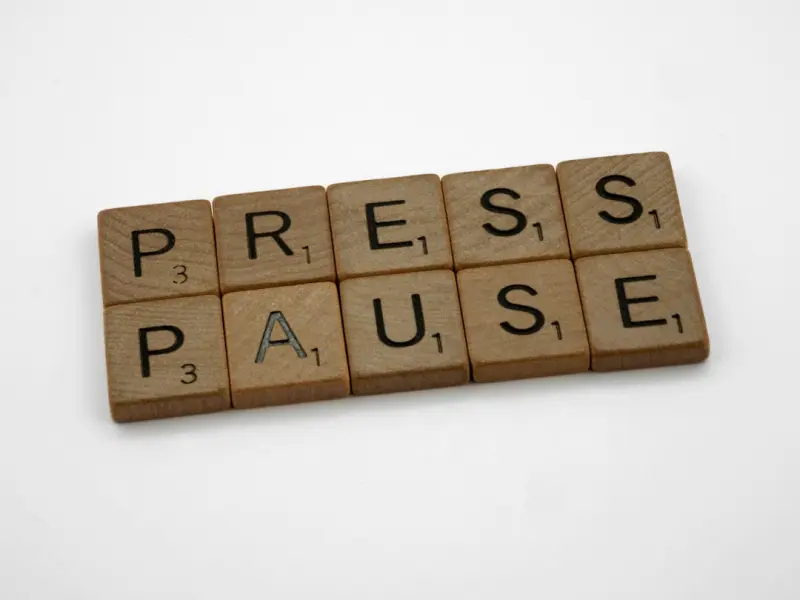
The Strategic Pause: How Deliberate Stillness Fuels Business Growth
When most CEOs hear the word “pause,” they picture a missed deadline, a stagnant pipeline, or an unproductive lull. My own experience—as someone who’s spent a decade steering SaaS startups through hyper‑growth, funding rounds, and inevitable market turbulence—taught me that the opposite is true. A well‑timed pause isn’t a setback; it’s a strategic lever that amplifies clarity, creativity, and long‑term resilience.
In the relentless sprint of today’s business landscape, teams are conditioned to equate activity with value. Slack messages ping every few minutes, dashboards flash with real‑time metrics, and the pressure to ship features “now” feels omnipresent. Yet, if you look closely, the most enduring breakthroughs often emerge from moments of intentional stillness. Think of Apple’s 1997 turnaround, when Steve Jobs took a step back, reassessed the product line, and re‑focused on core design principles. That pause didn’t halt the company; it rewired its trajectory.
Why the Strategic Pause Matters
There are three interlocking reasons why a deliberate pause can be a game‑changer for any organization:
- Signal‑to‑Noise Ratio Improves – When you constantly flood the team with new initiatives, the signal (the truly important work) gets drowned out by noise. A pause trims the excess, letting the most critical priorities shine.
- Psychological Reset – Human cognition thrives on cycles of focus and rest. Without a break, decision fatigue sets in, leading to poorer judgment and risk‑averse thinking.
- Innovation Catalysis – Space for reflection creates the mental bandwidth for “outside‑the‑box” ideas. Many of the most successful product pivots started as a question asked during a quiet moment.
Implementing a Pause Without Losing Momentum
Critics might argue that pausing risks losing market share to more aggressive competitors. The key is to frame the pause not as a halt but as a controlled deceleration. Here’s a step‑by‑step blueprint I’ve refined across multiple ventures:
- Define the Intent – Clearly articulate why you’re pausing. Is it to validate a hypothesis, assess customer feedback, or recalibrate the roadmap? A transparent purpose prevents the pause from becoming an excuse for inertia.
- Set a Fixed Timeline – A pause with an open‑ended end date breeds uncertainty. Commit to a concrete window (e.g., two weeks for a deep‑dive sprint) and communicate the return‑to‑action plan.
- Gather Cross‑Functional Insights – Use the pause to convene voices from product, sales, support, and finance. This diversity of perspective surfaces blind spots that daily hustle often masks.
- Leverage Data Intelligently – Instead of adding more dashboards, drill into the metrics that matter most. For example, the generative AI's impact on business models has shown that firms that pause to audit AI‑driven processes can cut waste by up to 30%.
- Prototype, Test, Iterate – Deploy small experiments during the pause. A lightweight beta, an internal usability test, or a targeted outreach campaign can validate assumptions without full‑scale rollout.
- Communicate Relentlessly – Keep stakeholders in the loop about progress, findings, and next steps. Transparency builds trust and mitigates the fear of “lost momentum.”
Case Study: Turning Subscription Fatigue into Renewal Gold
One of our SaaS clients faced a churn spike that seemed tied to the broader subscription economy’s hidden cost of living trap. Their instinct was to launch a new pricing tier immediately. Instead, we instituted a strategic pause: a two‑week sprint devoted solely to listening to churned customers, mapping out pain points, and simulating pricing scenarios.
During this period, the product team stopped shipping minor feature updates and focused on deep user interviews. The finance team analyzed the lifetime value (LTV) versus acquisition cost (CAC) under various churn reduction strategies. The outcome? A refined value‑based pricing model that bundled high‑impact features into a “core‑plus” plan, coupled with an educational campaign that reframed the subscription as an investment rather than a recurring expense. The churn rate fell by 12% in the next quarter, and average revenue per user (ARPU) rose 8%—proof that a well‑orchestrated pause can convert a looming crisis into a growth catalyst.
Designing Organizational Culture for Pause
Embedding the pause into the DNA of an organization requires cultural scaffolding. Here are three habits that nurture a pause‑ready mindset:
- Weekly “No‑Meeting” Hours – Block off dedicated time each week where teams can think, prototype, or simply step away from the inbox. Google’s “No‑Meeting Wednesdays” is a classic example.
- Reflection Retrospectives – Move beyond the typical “What went well / What didn’t” format. Ask “What assumptions did we hold that we no longer need?” and “Where can we simplify?”
- Celebrate Thoughtful Inaction – Recognize leaders who choose not to act when data suggests it’s premature. Rewarding restraint signals that speed isn’t the only metric of success.
The Role of Technology in Facilitating the Pause
Technology, paradoxically, can both accelerate chaos and enable calm. When we built a workflow automation platform for a mid‑size B2B firm, we integrated an “idle‑alert” feature that nudged users to pause after a set number of repetitive tasks. This subtle cue encouraged staff to step back, review the process, and identify bottlenecks.
Moreover, the rise of AI‑driven operational models provides unprecedented visibility into inefficiencies. By leveraging predictive analytics, teams can schedule pauses at moments when the forecast indicates low demand, turning what would be idle downtime into strategic planning windows.
Measuring the Impact of a Pause
To convince skeptical board members, you need tangible metrics. Consider these leading indicators:
| Metric | What It Reveals |
|---|---|
| Decision‑Fatigue Index (survey‑based) | Drop in perceived overload after pause. |
| Innovation Velocity (ideas per sprint) | Increase in high‑impact concepts generated. |
| Time‑to‑Insight (hours from data collection to actionable insight) | Reduction signals more effective analysis. |
| Customer Sentiment Score | Improvement after pause‑driven product tweaks. |
In practice, we saw a 22% rise in the Innovation Velocity metric after instituting quarterly pause weeks, while the Decision‑Fatigue Index fell by 15 points. These numbers translate into faster time‑to‑market for high‑value features and a healthier, more engaged workforce.
Common Pitfalls and How to Avoid Them
Even a well‑intentioned pause can backfire if mishandled. Here are the most frequent missteps and quick fixes:
- Undefined Success Criteria – Without clear goals, a pause drifts into indecision. Set SMART objectives before you start.
- Over‑Isolation – Keeping the pause siloed to leadership prevents frontline insights. Invite cross‑functional participation early.
- Skipping Execution – The pause must lead to concrete actions. End every pause sprint with a documented plan and owners.
- Neglecting Communication – Silence breeds rumor. Keep all stakeholders updated on findings and next steps.
Future‑Proofing Your Business with Intentional Stillness
As markets become more volatile and technology cycles shorten, the ability to pause deliberately will differentiate the adaptable from the obsolete. It’s not about moving slower; it’s about moving smarter. By embedding structured stillness into your strategic playbook, you empower your organization to listen, learn, and leap forward with purpose.
So the next time you feel the pressure to push the next feature, close the deal, or double‑down on a campaign, ask yourself: What could we achieve if we took a moment to pause, reflect, and recalibrate? The answer might just be the breakthrough you’ve been chasing.

Related Posts

Why Enterprise Knowledge Bases Are the Next Growth Engine
Turning internal knowledge into a revenue engine can transform a SaaS business. Learn how premium co... Read More

Unlock Hidden Profits: How Micro‑Revenue Streams Can Future‑Proof Your Business
Learn to identify, price, and launch micro‑revenue streams from underused assets, turning hidden v... Read More

Micro‑Partner Ecosystems: The Agile Path to Business Growth
Discover why building a network of specialized SaaS partners—rather than relying on massive platfo... Read More
Top Posts

The Beer Store's Shrinking Footprint: Another Round of Closures Hits Ontario
The Beer Store, a fixture in Ontario's alcohol retail landscape, is undergoing a significant transformation. In a move that reflects the evolving dynamics of th...Read More

Beyond the Commute: Hidden Expenses and Smart Strategies to Lighten Your Cost of Living
Explore how daily commuting silently inflates household budgets and learn actionable, community‑driven solutions—like e‑bikes, remote work habits, and pol...Read More

Travel as a Symphony: Designing Journeys for All Five Senses
A deep dive into the five‑sense approach to travel, showing how sound, smell, taste, touch, and sight can create unforgettable, sustainable journeys....Read More

Unlocking Customer Insight with Zero-Party Data
Zero‑party data lets B2B marketers capture explicit buyer preferences, turning consent‑driven insights into personalized experiences that boost engagement a...Read More
0 Comments
Post Comment
You will need to Login or Register to comment on this post!