
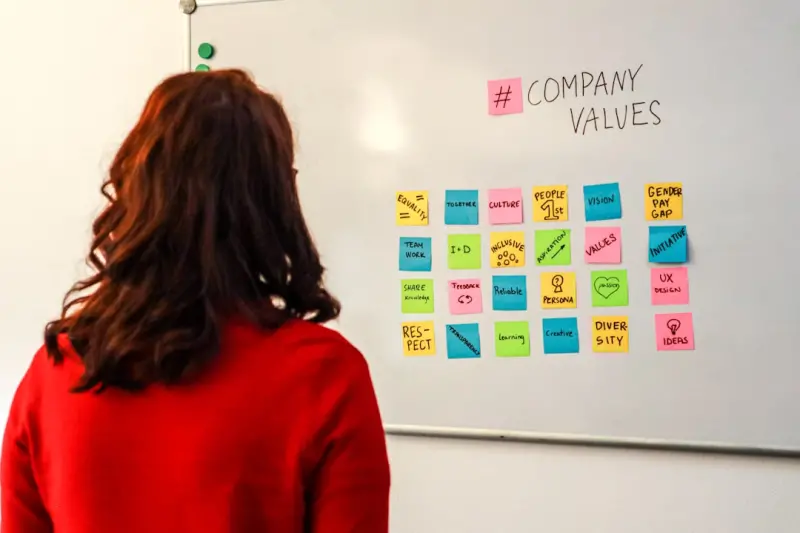
When I first walked into my old office’s basement, I expected a server room or a forgotten storage closet. Instead, I found a room buzzing with whiteboards, prototype gadgets, and a whiteboard that read “Ideas Welcome – No Pitch Required.” That space became our unofficial innovation playground, and it taught me one hard‑won truth: the most powerful growth engine for a SaaS business isn’t a new market strategy or a fancy partnership—it’s the untapped creativity sitting right inside your own team.
The Myth of the “External” Innovation Engine
Too often, B2B leaders chase the next big partnership, a flashy acquisition, or a viral marketing stunt, assuming that breakthrough ideas must come from outside the organization. While external collaborations can be valuable, they’re also expensive, time‑consuming, and fraught with alignment challenges. What if you could cultivate a continuous pipeline of high‑impact concepts without leaving the building?
Enter the internal innovation playground: a low‑risk, high‑reward environment where anyone—from a junior support rep to the CFO—can sketch, prototype, and test ideas that could become the next product feature, new revenue stream, or operational improvement.
Designing the Playground: Foundations That Matter
- Physical or Virtual Space? The venue doesn’t have to be a swanky loft. A corner of the office, a dedicated Slack channel, or a shared Google Jamboard can serve as the hub. The key is visibility and accessibility.
- Time Allocation. Set aside protected time each week—think “Innovation Fridays” or a 2‑hour “Idea Sprint” every sprint cycle. When employees know the clock is ticking, they focus on rapid validation instead of endless brainstorming.
- Resource Bank. Provide low‑cost prototyping tools: sketch pads, basic UI kits, sandbox environments, or even a small budget for third‑party APIs. The goal is to lower the barrier to experiment.
- Clear Evaluation Criteria. Not every spark should become a flame. Define simple metrics—potential impact, feasibility, alignment with core customer pain points—to filter concepts before they move forward.
Culture: The Real Engine Behind the Playground
Even the most perfectly designed space will sit idle if the culture doesn’t encourage curiosity. Here are three cultural levers you can pull:
- Psychological Safety. Team members must feel safe to share half‑baked ideas without fear of ridicule. Celebrate “failed” experiments as learning moments.
- Recognition Over Rewards. Publicly shout out contributors in all‑hands meetings or internal newsletters. Tangible rewards (gift cards, extra PTO) can reinforce the behavior, but genuine acknowledgment does the heavy lifting.
- Leadership Modeling. When executives drop by the playground, ask questions, and even pitch their own ideas, it signals that innovation is a priority, not a side project.
From Idea to Impact: A Simple Workflow
To keep the playground from becoming a “nice‑to‑have” vanity metric, implement a lightweight, repeatable workflow:
- Idea Capture. Anyone can post an idea on the shared board with a one‑sentence problem statement.
- Rapid Validation. Within 48 hours, a small cross‑functional “validation squad” builds a low‑fidelity prototype or conducts quick customer interviews.
- Scoring & Selection. Using the predefined criteria, the squad scores the concept. Top‑scoring ideas move to a “pilot” stage.
- Pilot Execution. Allocate a modest budget (often less than 1% of a quarterly product budget) and a short timeline (2‑4 weeks) to develop a minimum viable version.
- Review & Scale. Measure pilot outcomes against KPIs. Successful pilots graduate to the product roadmap; others are archived for future reference.
Real‑World Wins: What Companies Are Doing (Without Copying the Playbook)
While we won’t name names, several mid‑market SaaS firms have reported measurable gains by institutionalizing internal innovation:
- A subscription‑management platform reduced churn by 7 % after a support‑team member suggested a “payment‑method health check” alert, which was prototyped in two weeks and rolled out globally.
- A HR‑tech provider discovered a new AI‑driven resume‑matching feature after a data‑science intern built a proof‑of‑concept in the playground, leading to a $3 M ARR boost within six months.
- An analytics SaaS added a “quick‑insight” dashboard after a sales engineer noticed prospects repeatedly asked for a one‑click report. The feature was built, tested, and shipped in under a month, shortening the sales cycle dramatically.
Integrating the Playground With Existing Processes
It’s tempting to treat the innovation space as a silo, but the real magic happens when you bridge it with your product, marketing, and sales functions. Here’s how:
- Product Management Sync. Schedule a monthly “playground roundup” where product managers review the top ideas and decide which align with the upcoming roadmap.
- Marketing Collaboration. When an idea passes the pilot stage, involve the marketing team early to craft go‑to‑market messaging. This synergy can accelerate adoption.
- Sales Feedback Loop. Sales reps are on the front lines of customer pain. Invite them to the validation squad to ensure prototypes address real‑world objections.
Measuring Success Without Over‑Engineering
Metrics should be simple, actionable, and tied directly to business outcomes:
- Idea Velocity. Number of ideas submitted per quarter.
- Conversion Rate. Percentage of ideas that progress from validation to pilot.
- Revenue Impact. Incremental ARR or cost savings attributable to playground‑originated features.
- Engagement Score. Employee participation rates, measured through attendance logs or platform analytics.
Tracking these figures quarterly gives you a clear picture of the playground’s ROI and helps justify continued investment.
Common Pitfalls—and How to Dodge Them
- “Idea Overload.” Too many concepts can overwhelm the validation squad. Implement a brief “gatekeeping” step where a small committee filters out low‑impact submissions.
- “Prototype Paralysis.” Teams get stuck perfecting a prototype. Emphasize “good enough”—the goal is learning, not a polished product.
- “Siloed Ownership.” When only one department owns the playground, other teams disengage. Keep it cross‑functional and open to all voices.
- “No Follow‑Through.” Ideas that fade after the pilot stage erode trust. Ensure every pilot has a clear decision point and communication plan.
Leveraging External Knowledge Without Losing the Internal Focus
While the playground is about internal creativity, you can still tap external insights to enrich the process. For instance, reading about emerging data practices can spark new product concepts. A recent piece on next‑gen data approaches highlighted how consent‑driven insights can reshape customer relationships—an idea that quickly found a home in our prototype queue.
Similarly, exploring how other SaaS businesses build collaborative ecosystems can inform your own partnership strategy. The article on collaborative alliances underscored the importance of aligning incentives, a principle that guided our pilot’s pricing model.
Future‑Proofing Your Business With a Culture of Continuous Innovation
In a world where market dynamics shift faster than a software release cycle, the companies that thrive are those that embed experimentation into their DNA. An internal innovation playground is not a one‑off project; it’s a living ecosystem that evolves with your people and your customers.
By giving employees the space, time, and resources to explore, you’ll surface hidden revenue streams, improve operational efficiency, and, perhaps most importantly, create a workplace where talent wants to stay and grow. The payoff isn’t just dollars and cents—it’s a resilient, adaptable organization ready to seize the next opportunity before anyone else sees it coming.

Related Posts

Indulge in a Canadian Classic: The Story and Scoop on Kawartha Dairy Ice Cream
For generations of Canadians, the name Kawartha Dairy conjures up images of sunny days, family outin... Read More

Turning Customer Success into a Predictable Revenue Engine
Discover how data, AI, and a human‑in‑the‑loop approach can turn customer success from a cost ... Read More

The Hidden Cost of Decision Fatigue and How to Cure It in B2B Teams
Decision fatigue silently hampers B2B growth. This post reveals why endless choices hurt teams, how ... Read More
Top Posts

Micro‑Moments: The Quiet Power Shaping B2B SaaS Marketing
Micro‑moments—brief, intent‑driven interactions—are redefining B2B SaaS marketing. This post explains why they matter, how to map and serve them, and pr...Read More

Beyond the Soil: Mental Resilience and Community Innovation for Canadian Farmers
Canadian farms are turning to community hubs, wellness‑focused tech, and diversified income streams to combat isolation and stress, proving that mental resili...Read More

What Does it Mean to Be “Made in Canada?” Here’s 30+ of Our Favorite Brands Who Do It Well
In a world saturated with globalized production and complex supply chains, the label "Made in Canada" carries a significant weight. It's more than just a geogra...Read More

Data‑Driven Wellness: Canada’s Shift to Predictive Care
Canada’s health system is evolving from reactive treatment to predictive wellness, leveraging a national data trust, ethical AI, and patient‑shared data to ...Read More
0 Comments
Post Comment
You will need to Login or Register to comment on this post!