
Why Tariffs Are No Longer Just a Tax – They’re a Blueprint for Local Innovation
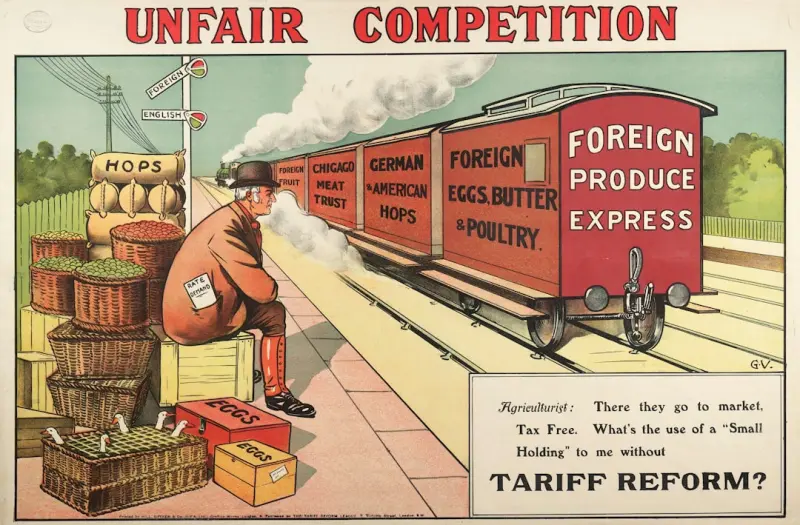
When most people hear the word “tariff,” the first image that pops up is a line on a customs form or a news headline about rising prices on imported goods. The conversation quickly pivots to “cost of living” or “global trade wars,” and the nuance of how tariffs shape the very fabric of regional economies is often left on the back burner. In today’s hyper‑connected, climate‑conscious market, however, tariffs have quietly evolved from a blunt fiscal tool into a sophisticated lever for local innovation ecosystems. This shift isn’t about protectionism for its own sake; it’s about leveraging policy to accelerate resilience, sustainability, and competitive advantage in ways that were unimaginable a decade ago.
The New Tariff Landscape: From Shockwaves to Strategic Signals
Historically, tariffs were wielded as blunt instruments—simple percentages designed to protect domestic producers from foreign competition. The modern reality is dramatically different. Governments now embed tariffs within broader economic strategies that aim to:
- Stimulate domestic R&D investment by creating a price differential that makes locally‑developed solutions more attractive.
- Encourage regional supply‑chain diversification to reduce dependence on single‑source imports.
- Align trade policy with climate goals, nudging companies toward greener production methods.
- Foster “innovation clusters” that blend manufacturing, software, and services around a common tariff‑driven incentive.
These objectives signal a move from reactive to proactive policymaking. Instead of seeing tariffs as an inevitable cost, forward‑thinking businesses can view them as a roadmap for strategic growth.
Case Study: The Rise of Hyper‑Local Manufacturing Hubs
Take the example of a mid‑sized electronics firm that once relied heavily on components sourced from overseas. When a series of tariff adjustments targeted key semiconductor imports, the company faced a stark choice: absorb higher costs or re‑engineer its supply chain. Rather than pass the expense onto customers, the firm partnered with a provincial innovation centre, secured a modest tariff rebate for domestic assembly, and launched a micro‑fab facility in a previously under‑utilised industrial park.
The results were surprising:
- Cost Savings: Over three years, the firm reduced its bill of materials by 12% thanks to lower transportation fees and tariff‑adjusted component pricing.
- Speed to Market: Lead times dropped from 45 days to 14 days, allowing the company to respond faster to market trends.
- Talent Retention: The new hub attracted local engineering talent eager to work on cutting‑edge hardware, decreasing turnover by 18%.
This micro‑fab story isn’t an outlier. Across Canada, similar initiatives are sprouting wherever tariff policy intersects with regional development goals.
Tariffs as a Catalyst for Sustainable Tech Adoption
One of the most under‑discussed benefits of modern tariffs is their ability to nudge companies toward greener solutions. By imposing higher duties on carbon‑intensive imports—such as steel produced using coal‑based methods—governments create a financial advantage for firms that source low‑carbon alternatives.
Consider the burgeoning market for recycled aluminium. A recent tariff revision placed a 15% duty on virgin aluminium imports while offering a 5% rebate for recycled material. This differential sparked a rapid scaling of recycling facilities, especially in provinces with abundant renewable energy. Companies that once dismissed recycled inputs as “costly” now see them as a competitive edge.
The ripple effect is profound: lower emissions, new jobs in the circular economy, and an expanded market for sustainable products. In this way, tariffs become an invisible hand guiding the transition to a low‑carbon economy without the need for direct subsidies.
Data‑Driven Decision‑Making in a Tariff‑Heavy World
As tariffs become more dynamic, the need for real‑time intelligence grows exponentially. Companies can no longer rely on static spreadsheets; they must embed predictive analytics into every procurement decision. This is where Predictive SaaS platforms shine. By ingesting customs data, commodity price movements, and policy updates, these tools forecast tariff impacts weeks—or even months—in advance.
Imagine a retailer that can simulate the financial outcome of a 7% tariff on imported textiles before the policy takes effect. The retailer can then:
- Negotiate pre‑emptive contracts with domestic fabric producers.
- Adjust inventory buffers to avoid stockouts.
- Pass anticipated cost changes to end‑customers in a transparent, value‑based pricing model.
The result is a smoother, more predictable cash flow, turning what used to be a “shock” into a “planned opportunity.”
Tariffs Meet the Software Stack: Enabling New Business Models
While the earlier post “Tariff Turbulence: Your SaaS Stack Is the Next Battleground” focused on direct cost implications for SaaS vendors, a complementary angle is the emergence of tariff‑aware SaaS platforms that help businesses monetize the very friction they face. These platforms offer:
- Automated compliance reporting to reduce administrative overhead.
- Dynamic pricing engines that adjust subscription fees based on the cost of underlying hardware components.
- Marketplace integrations that connect buyers with local suppliers who benefit from tariff incentives.
Such ecosystems create a virtuous cycle: as more firms adopt tariff‑aware solutions, the data pool expands, enabling even finer‑grained analytics and more precise policy advocacy.
Leveraging Tariffs for Talent Development and Retention
Beyond the balance sheet, tariffs can influence the labour market. When a region experiences an influx of manufacturing due to tariff incentives, the demand for skilled workers spikes. Companies that partner with local technical schools and apprenticeship programs can shape curricula that match emerging needs—think “advanced robotics for tariff‑driven assembly lines” or “sustainable materials engineering.”
This symbiotic relationship benefits both parties: businesses secure a pipeline of qualified talent, while educational institutions gain relevance and funding. The result is a resilient local economy less vulnerable to external shocks.
Risk Management: Turning Uncertainty into Strategic Advantage
One of the biggest challenges with tariffs is their inherent volatility. Trade agreements, geopolitical tensions, and domestic policy shifts can cause sudden changes in duty rates. To manage this, firms should adopt a three‑pronged risk framework:
- Diversify Supplier Portfolios: Maintain a mix of domestic, regional, and global sources to buffer against abrupt tariff spikes.
- Scenario Planning: Use data‑driven models to simulate best‑case, base‑case, and worst‑case tariff environments.
- Policy Engagement: Actively participate in industry coalitions that provide feedback to policymakers, ensuring that tariff structures reflect real‑world business realities.
Companies that master this framework not only survive tariff turbulence—they thrive, converting risk into a source of competitive differentiation.
Integrating Tariff Strategy with Customer Success Initiatives
Customer success teams often focus on product adoption, churn reduction, and upsell opportunities. Yet, they are uniquely positioned to translate tariff‑related insights into value‑added services for clients. For instance:
- Providing quarterly “Tariff Impact Reports” that outline how upcoming duties will affect the customer’s cost structure.
- Offering consultative workshops on local sourcing strategies, turning compliance into a growth lever.
- Embedding tariff alerts into the product’s dashboard, giving customers real‑time visibility into cost fluctuations.
When customers see that a vendor is proactively managing macro‑economic risks on their behalf, trust deepens, and loyalty follows.
The Future Outlook: From Reactive to Proactive Tariff Policy
Looking ahead, we can anticipate three trends that will further cement tariffs as an innovation catalyst:
- Granular, Sector‑Specific Tariffs: Instead of blanket duties, governments will fine‑tune rates based on environmental impact, technology intensity, and regional development goals.
- Digital Trade Agreements: New accords will embed data‑exchange standards, allowing real‑time tariff updates to flow directly into enterprise systems.
- Collaborative Policy Labs: Public‑private partnerships will pilot “tariff sandbox” environments where businesses test new models before they are codified into law.
Companies that position themselves at the intersection of these trends will not only mitigate risk—they will shape the next wave of economic growth.
Actionable Steps for Leaders Today
To translate this macro perspective into day‑to‑day action, consider the following checklist:
- Map Your Current Tariff Exposure: Identify every imported component and its associated duty rate.
- Invest in Predictive Analytics: Deploy tools that can ingest customs data and forecast tariff changes.
- Build Local Partnerships: Reach out to regional manufacturers, universities, and innovation hubs.
- Integrate Tariff Intelligence into Customer Success: Turn compliance data into a service offering.
- Engage in Policy Dialogue: Join industry groups that provide feedback on upcoming tariff legislation.
By treating tariffs as a strategic lever rather than a passive cost, you unlock a spectrum of opportunities—from greener supply chains to new revenue streams and stronger customer relationships.
Conclusion: Reframing Tariffs as a Growth Engine
Tariffs have long been cast as the villain in the story of global trade. Today, that narrative is changing. When aligned with forward‑thinking policy, advanced analytics, and collaborative ecosystems, tariffs become a powerful catalyst for local innovation, sustainability, and resilience. The challenge—and opportunity—for business leaders is to shift their mindset: from defending against tariff “shocks” to harnessing them as a deliberate engine of growth.
In a world where the next trade policy could emerge overnight, the companies that thrive will be those that have already woven tariff intelligence into the very DNA of their strategy. It’s time to stop fearing tariffs and start leveraging them.

Related Posts

Tariff Turbulence: How SaaS Companies Can Turn Trade Duties into Strategic Advantage
Tariffs are reshaping the SaaS landscape by hitting hardware costs and subscription pricing. This ar... Read More

The Tariff Tango: A Threat to Canadian Farmers and the Economy
The tariff tango between Canada and the US is affecting farmers and the economy. Learn about the eco... Read More

Tariff Transparency: Empowering Consumers and Small Brands with Data
Explore how transparent tariff data reshapes pricing, empowers small brands, and turns shoppers into... Read More
Top Posts

How Canada’s Indie Gaming Scene Is Redefining Interactive Storytelling
Canada’s indie gaming community is reshaping interactive storytelling through collaborative funding, regional folklore, hybrid physical‑digital spaces, and ...Read More

Discover Culinary Excellence: Why Restaurant Pearl Morissette Reigns Supreme in Canada
Have you ever dreamt of a dining experience that transcends the ordinary? An experience that marries exquisite flavors with breathtaking ambiance, leaving an in...Read More

Beyond the Screen: Canada’s Immersive Entertainment Revolution
The article examines Canada's leap into immersive entertainment, highlighting regional collaborations, new narrative tools, economic opportunities, Indigenous-l...Read More

Regenerative Travel: Turning Vacations into Healing Journeys
Regenerative travel reframes tourism as a partnership with nature and culture, offering practical steps, inspiring case studies, and tools to ensure every trip ...Read More
0 Comments
Post Comment
You will need to Login or Register to comment on this post!