
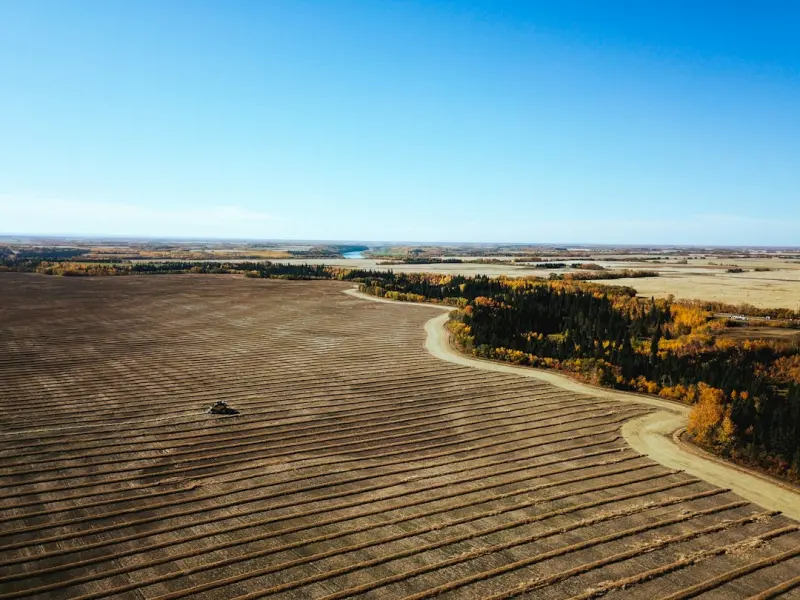
From Soil to Software: The Data‑Driven Regeneration Sweeping Canada’s Family Farms
When I first stepped onto my grandparents’ prairie farm at age ten, the only “metrics” I knew were the height of the wheat stalks and the weight of the hay bales. Fast‑forward three decades, and I’m sitting at a laptop in a barn‑turned‑office, staring at a dashboard that charts carbon sequestration, moisture gradients, and market demand in real time. The transformation is not just technological—it’s philosophical. Canadian farmers are now treating their fields as living data ecosystems, and the results are reshaping how we think about food, climate, and community.
Why Data Matters More Than Ever on the Canadian Landscape
Canada’s agricultural belt stretches from the frost‑kissed fields of the Maritimes to the sun‑baked plains of Saskatchewan. This diversity brings a paradox: while the variety of soils and micro‑climates offers resilience, it also demands hyper‑localized decision‑making. Traditional “one‑size‑fits‑all” recommendations from agronomists simply can’t keep pace with the variability introduced by climate change, market fluctuations, and shifting consumer preferences.
Enter precision agriculture. Sensors buried a few inches below the surface now relay soil temperature and nutrient levels every fifteen minutes. Drones equipped with multispectral cameras map canopy health with centimeter accuracy. All of this data feeds into cloud‑based platforms that translate raw numbers into actionable insights—when to plant, how much fertilizer to apply, and even which varieties will fetch the best price at the nearest farmers’ market.
The Regenerative Pivot: From Yield‑Maximization to Soil‑Health
For many of us, the conversation has shifted from “how much can we grow?” to “how can we heal the land we depend on?” Regenerative agriculture—cover cropping, reduced tillage, diversified rotations—has moved from niche practice to mainstream strategy. What makes this shift possible at scale is data.
- Carbon Accounting: New tools quantify the amount of carbon each acre sequesters, turning soil health into a tradable asset.
- Moisture Mapping: Real‑time soil moisture sensors guide irrigation, conserving water while maintaining optimal plant stress levels that boost root development.
- Plant‑Based Nutrient Modeling: Algorithms predict nutrient uptake, allowing farmers to apply just enough fertilizer to meet crop needs, reducing runoff and input costs.
The payoff is twofold: healthier ecosystems and a new revenue stream from carbon credits and ecosystem services. In fact, several provincial programs now reward farms that can demonstrate measurable improvements in soil organic matter, and the data backbone is what makes verification possible.
Building Community Through Digital Cooperatives
Data alone isn’t enough. The real magic happens when farmers pool their insights. Digital cooperatives are emerging across the Prairies and Atlantic provinces, where members share anonymized field data to benchmark performance and collectively negotiate better terms with processors.
One such network recently leveraged its pooled data to secure a premium price for a batch of spring wheat certified as “regeneratively grown.” By presenting verifiable carbon and biodiversity metrics, they convinced a major grain trader to pay an extra 5 % per bushel—money that would have otherwise vanished in the supply chain.
These cooperatives also serve as knowledge hubs, where a farmer in Nova Scotia can learn from a colleague in British Columbia about managing frost‑prone orchards, all through a shared dashboard. The sense of solidarity mirrors the spirit described in Canada’s Small Towns Are Becoming the New Heartbeat of Community Living, but with a tech‑savvy twist.
From Farm Gate to Consumer Plate: Direct‑to‑Consumer Platforms
The rise of e‑commerce has opened a direct channel between growers and urban diners. Farmers now list their produce on regional marketplaces that showcase not just the product, but the story behind it—soil health scores, carbon offset contributions, and regenerative practices.
Consumers, increasingly conscious of their environmental footprint, are willing to pay a premium for transparency. A recent survey found that 68 % of Canadian shoppers would choose a farm‑to‑table option if they could see the carbon data behind it. Platforms that embed this data into their listings are seeing higher conversion rates and repeat purchases.
Moreover, the data collected from these transactions feeds back into farm management. Order trends reveal which varieties are gaining popularity, allowing growers to adjust planting decisions months in advance. This closed‑loop system reduces waste, aligns supply with demand, and improves farm profitability.
Financing the Future: Data‑Backed Loans and Grants
One lingering barrier to widespread adoption of regenerative tech has been upfront capital. Traditional lenders often view innovative practices as risky due to a lack of historical performance data. However, the tide is turning.
Several Canadian agri‑finance institutions now require detailed farm data as part of the loan application process. By analyzing historical yield trends, carbon sequestration rates, and market forecasts, lenders can offer more favorable terms to farms that demonstrate sustainable practices. In some provinces, governments have introduced grant programs that match a percentage of the cost for installing sensor networks, effectively lowering the breakeven point for tech adoption.
Technology Choices: Open‑Source vs. Proprietary Platforms
Farmers are faced with a growing marketplace of agricultural software. Some opt for proprietary solutions that promise seamless integration but lock data behind paywalls. Others champion open‑source platforms that give them full control over their information, fostering collaboration and innovation.
Choosing the right tool often hinges on the farm’s scale and tech aptitude. Small‑scale operators may prefer plug‑and‑play devices with intuitive mobile apps, while larger enterprises might invest in custom analytics pipelines that ingest satellite imagery, weather forecasts, and IoT sensor streams.
Regardless of the path, the guiding principle remains the same: data sovereignty. Retaining ownership of farm data ensures that farmers can leverage it for multiple purposes—insurance claims, certification, and market negotiations—without surrendering it to third parties.
Challenges on the Horizon
While the momentum is undeniable, several challenges persist. Data privacy concerns loom large; farmers worry about competitive intelligence being exposed. Interoperability remains a technical hurdle, as devices from different manufacturers often speak incompatible languages.
There’s also a cultural aspect. Generational gaps can make the adoption of digital tools feel intimidating to older farmers who grew up with analog methods. To bridge this divide, extension services and university programs are offering hands‑on workshops that demystify the technology, emphasizing that data is a tool—not a replacement for intuition.
Case Study: A Manitoba Grain Farm’s Journey
Consider the story of Greenfield Acres, a 2,500‑acre grain farm in southwestern Manitoba. In 2019, the owners partnered with a regional ag‑tech startup to install soil moisture sensors and a drone‑based scouting program. Within two growing seasons, they reported a 12 % reduction in irrigation water use, a 9 % increase in yields, and earned enough carbon credits to fund the next year’s sensor upgrades.
What made the transition successful? Three key factors:
- Clear Goals: The family set measurable targets—reduce water use by 10 % and increase soil organic carbon by 0.5 %.
- Incremental Implementation: They started with a pilot plot, refined the workflow, then scaled farm‑wide.
- Community Support: By sharing their data with a local cooperative, they accessed collective bargaining power for better seed prices.
The Greenfield story exemplifies how data, when paired with purpose, can transform a traditional operation into a model of regenerative resilience.
The Road Ahead: Scaling Regeneration Across Canada
Scaling these practices will require a coordinated effort among policymakers, tech providers, financial institutions, and the farmers themselves. Initiatives that standardize data formats, provide tax incentives for sustainable inputs, and promote farmer education will be critical.
Ultimately, the narrative is shifting: Canadian farms are no longer just producers of food; they are custodians of the climate, innovators of technology, and architects of community wealth. By embracing data as a stewardship tool, we are planting the seeds for a future where the soil’s health is as measurable—and as celebrated—as the harvest’s bounty.
Take Action: Your Farm’s First Steps Toward Data‑Driven Regeneration
If you’re a farmer ready to dip your toes into the data pool, start small:
- Install a single soil moisture sensor in a representative field.
- Join a local digital cooperative or farmer network.
- Explore open‑source platforms that let you upload and visualize data.
- Apply for provincial grants that support precision agriculture.
Remember, every data point is a conversation with the land. Listening attentively will guide you toward practices that nourish both the earth and your bottom line.
For a deeper dive into how community dynamics influence rural innovation, see The Green Carpet: Sustainable Trends Redefining Prom & Graduation. While the context differs, the underlying principle—that collective action amplifies impact—holds true across farms, schools, and towns alike.

Related Posts
Regenerative Roots: How Canadian Farmers are Turning Soil into Climate Capital
Canadian farmers are embracing regenerative agriculture to improve soil health, generate carbon cred... Read More
How Canadian Farmers Are Turning Data Into a Competitive Edge
Canadian farmers are adopting sensors, satellite imagery, and digital platforms to make data‑drive... Read More
The Quiet Tech Revolution: How Canadian Farmers Are Future‑Proofing Their Fields
Canadian farmers are quietly transforming agriculture with soil sensors, drones, and collaborative d... Read More
Top Posts
Beyond the Fields: A Farmer’s Journey to Resilience and Innovation
From soil health to AI tools, Canadian growers are redefining farming by embracing regenerative methods, community well‑being, and purpose‑driven business m...Read More

Turning Tariff Headwinds into Brand Storytelling Wins
Explore fresh strategies for turning tariff obstacles into compelling brand stories, fostering community support, and driving growth for Canadian SMEs....Read More

Breathwork Hacks for Hyper‑Connected Professionals
A deep dive into how simple breathwork techniques can enhance cognitive performance, reduce stress, and complement nutrition and gut health for modern professio...Read More

Rewilding Ontario’s Lakes: Community Anglers Restoring Fish Populations
A fresh look at Ontario’s fishing scene reveals a grassroots movement where community anglers, Indigenous wisdom, and habitat restoration projects are working...Read More
0 Comments
Post Comment
You will need to Login or Register to comment on this post!