
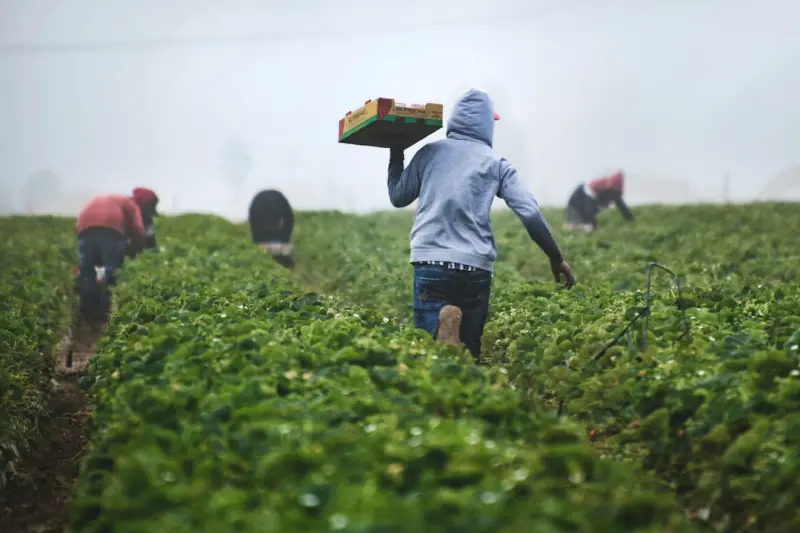
From the Soil Up: Why Regenerative Tech Is the Next Leap for Canadian Farmers
When I first stepped onto my family’s 200‑acre field in southwestern Ontario, the scent of fresh earth and the hum of pollinators felt like a quiet promise. That promise has evolved: today, the promise is data‑driven, climate‑smart, and deeply rooted in the age‑old wisdom of our ancestors. As a third‑generation farmer, I’ve watched the prairie wind shift, the market swing, and the very definition of “good farming” expand. What used to be a labor‑intensive grind is now a dynamic partnership between the land and technology, and the partnership is called regenerative tech.
Regenerative agriculture isn’t a buzzword; it’s a philosophy that places soil health, biodiversity, and community resilience at the center of every decision. Yet, philosophy alone won’t keep the lights on during a harsh winter or help us meet the rising demand for clean, locally‑grown food. That’s where technology steps in—not as a replacement for our hands‑on knowledge, but as an amplifier. From satellite‑based soil moisture maps to AI‑guided crop rotations, the tools we adopt are redefining how we steward the land.
The Data Beneath Our Feet
Imagine walking across a field and instantly knowing the exact nitrogen level in each square meter. That’s no longer a farmer’s fantasy. Portable spectrometers linked to cloud platforms can deliver real‑time nutrient readings, allowing us to apply fertilizers only where needed. The result? Lower input costs, reduced runoff, and a healthier microbial community underground. The collaborative purchasing platforms that many SaaS businesses use are now being repurposed for agronomy inputs, letting small‑scale producers band together to negotiate bulk discounts on precision‑ag tools.
Beyond nutrients, drones equipped with multispectral cameras capture canopy temperature and chlorophyll content, flagging stress before a leaf even curls. This early‑warning system translates to a 15‑20 % reduction in yield loss during heat spikes—an increasingly common challenge as climate patterns grow more erratic across the Prairies and the Maritimes alike.
Climate‑Smart Rotations Powered by AI
Crop rotation has always been a cornerstone of sustainable farming, but the permutations are virtually endless. AI models trained on decades of regional yield data can now suggest optimal rotation sequences that maximize soil organic matter while minimizing pest pressure. For example, a farmer in Saskatchewan who alternated canola, wheat, and lentils based on a simple three‑year plan saw a 12 % increase in overall protein content after incorporating AI‑recommended cover crops like radish and vetch.
These algorithms don’t just crunch numbers; they factor in market forecasts, weather predictions, and even the carbon pricing schemes emerging across Canadian provinces. By aligning agronomic decisions with economic incentives, we’re turning climate adaptation into a profit center rather than a cost center.
Harnessing Renewable Energy on the Farmstead
Regeneration isn’t limited to soil; it extends to the very energy that powers our operations. Across the country, farmers are installing micro‑hydro turbines along irrigation canals and solar canopies over grain bins. The energy generated feeds directly into IoT devices that monitor soil moisture, feed livestock, and power cold storage facilities. One family farm in Nova Scotia now runs a 250‑kilowatt solar array that covers 70 % of its electricity needs, slashing utility bills and insulating the farm from volatile energy markets.
The financial hurdle—upfront capital—has softened thanks to green‑loan programs and community‑owned co‑ops that pool resources. By treating renewable installations as shared assets, farmers can amortize costs over a broader base, similar to how the digital fatigue solutions that businesses adopt to keep teams healthy are now being repurposed to keep farm teams—both human and machine—operating at peak efficiency.
Reinventing the Supply Chain with Transparent Tech
Consumers are demanding traceability, and they’re willing to pay a premium for food that tells a story. Blockchain‑based traceability platforms now let us embed a digital passport into every bushel, recording everything from seed source to harvest date, soil carbon levels, and transport conditions. The transparency builds trust, shortens the sales cycle, and opens doors to niche markets like organic and carbon‑neutral produce.
Moreover, these platforms enable “smart contracts” that automatically release payments when pre‑agreed quality metrics are met. It’s a win‑win: growers receive timely cash flow, and buyers gain assurance that the product aligns with their sustainability standards.
Community Collaboration: Beyond the Farm Gate
Regenerative tech is most powerful when it’s shared. Across the Prairies, we’re seeing the rise of farmer collectives that pool data, share equipment, and co‑manage processing facilities. By adopting a shared‑ownership model, individual farms can access high‑cost technologies—like advanced grain dryers or AI‑driven decision support systems—without shouldering the full expense.
This collaborative spirit mirrors the success of navigating trade complexities strategies that tech firms employ. Just as SaaS companies band together to offset tariff impacts, farmers can leverage collective bargaining to secure better rates on everything from bulk seed purchases to export logistics.
Addressing the Human Side: Mental Health and Digital Balance
While technology brings efficiency, it also introduces a new kind of pressure: the expectation to be constantly connected. The same screens that deliver weather alerts can blur the line between work and personal time, leading to what many refer to as “digital fatigue.” To combat this, progressive farms are instituting “offline hours,” where all devices are set aside for a few hours each day, encouraging workers to reconnect with the land in a tactile way.
Training programs now include mindfulness workshops tailored for agrarian lifestyles, acknowledging that a farmer’s mental well‑being is just as vital as soil health. When the team returns to the field after a digital detox, decision‑making improves, and the risk of data‑driven errors drops dramatically.
Policy Landscape: Incentives that Matter
Provincial governments are beginning to recognize the economic and environmental benefits of regenerative tech. Incentive programs now offer tax credits for carbon‑sequestering practices, subsidies for renewable energy installations, and grants for precision‑agri research. However, the bureaucracy can be daunting. Farmers are forming advocacy groups to streamline the application process, ensuring that the paperwork doesn’t become a barrier to adoption.
These policy shifts also align with Canada’s broader commitment to net‑zero emissions, positioning the agricultural sector as a key player in the national climate agenda. By aligning farm-level actions with federal goals, we not only secure funding but also amplify the collective impact of regenerative practices.
Future Outlook: The Next Generation of Regenerative Leaders
The next wave of Canadian farmers will inherit a landscape where data, sustainability, and community are inseparable. Young agronomists entering the field are tech‑savvy, socially conscious, and eager to blend traditional knowledge with cutting‑edge tools. Educational programs are evolving, offering courses that marry soil science with machine learning, ensuring that the next generation is equipped to push the regenerative frontier even further.
Ultimately, the story of Canadian farming is one of adaptation. From the grain elevators of the early 20th century to today’s AI‑enhanced fields, each era has required us to evolve. Regenerative tech isn’t just a new chapter; it’s a continuation of that resilient spirit, turning challenges into opportunities and ensuring that the land we love remains productive for generations to come.

Related Posts
How Canadian Farmers Are Turning Climate Challenges into Growth Opportunities
Canadian farmers are embracing regenerative methods, carbon farming, and digital tools to turn clima... Read More
Regenerative Roots: How Canadian Farmers Are Re‑Imagining the Land
Discover the fresh approaches Canadian farmers are adopting—from ancient soil practices to high‑... Read More
Harvesting Experiences: How Canadian Farmers are Redefining Agri‑Tourism for the Modern Guest
Canadian farmers are embracing agri‑tourism to diversify income, deepen consumer connections, and ... Read More
Top Posts

The True Price of Convenience: How On‑Demand Services Inflate Your Budget
Explore the hidden costs of on‑demand services, from food delivery fees to smart‑home subscriptions, and get actionable tips to reclaim your budget without ...Read More

When Machines Draft, Who Guards the Law?
A deep dive into the ethical dilemmas posed by AI‑driven legal tools, offering practical steps for firms to balance innovation with responsibility and safegua...Read More

The Home Office Tax: Unpacking the Real Cost of Working From Your Living Room
Remote work feels like a money‑saving win—until you tally the hidden utility, internet, and software costs. This post reveals the true expense of a home off...Read More

Cold-Weather Comfort: Redefining Home Life in Canada’s Winter Months
Discover how Canadians are turning the cold months into a time for innovative home design, community activities, mindful tech, and sustainable practices that bo...Read More
0 Comments
Post Comment
You will need to Login or Register to comment on this post!