

Beyond the Ticket: Unpacking the New Era of Hyper‑Connected Travel
When I first set foot on the cobblestones of Old Quebec, my only companion was a paper map and a stubborn curiosity. Fast‑forward a few years, and my suitcase now comes equipped with a suite of sensors, a biometric passport, and an AI‑driven itinerary that reshapes itself on the fly. The travel experience has evolved from a static, pre‑planned adventure to a fluid, data‑rich journey that reacts to my heartbeat, my budget, and even my carbon footprint in real time.
The Invisible Infrastructure Behind Seamless Journeys
Every swipe of a contactless card at a café, every push‑notification reminding me to hydrate on a long‑haul flight, and every facial scan at a gate is powered by a sprawling network of data streams. While airlines and hotels have long been the visible pillars of tourism, a new layer of invisible infrastructure—travel tech ecosystems—is quietly redefining how we move, stay, and interact with places.
These ecosystems are built on three pillars:
- Biometric Identity Verification: From iris scans to voice recognition, airports are swapping boarding passes for a glance. The technology speeds up processing and reduces fraud, but it also raises questions about data ownership.
- Real‑Time Contextual Services: Imagine walking through a historic district and your phone instantly offers an audio guide in the language of your choice, plus a discount at a nearby café that sources its beans sustainably.
- Dynamic Sustainability Scoring: Travel platforms now embed carbon calculators that adjust your itinerary on the fly, suggesting greener routes or accommodations with proven environmental practices.
From Reactive to Proactive: The Rise of Personal Travel Assistants
My favorite part of the new travel stack is the personal travel assistant (PTA). It’s not just a chatbot that answers “What’s the weather like?” but a proactive companion that learns from every interaction. If I linger longer at an art museum, the PTA nudges me toward a hidden gallery nearby; if my sleep data shows I’m jet‑lagged, it suggests a quiet rooftop bar with low‑light ambience to help reset my circadian rhythm.
These assistants leverage machine learning models trained on anonymized traveler data. While the convenience is undeniable, the trade‑off is a deeper exchange of personal metrics. The industry is still figuring out how to balance personalization with privacy, a conversation that’s only just beginning.
Data Privacy: The Unspoken Ticket Check
Travelers today are simultaneously more connected and more vulnerable. Each biometric scan, Wi‑Fi handshake, and location ping creates a digital breadcrumb trail. Governments and corporations are racing to harvest that data for everything from targeted advertising to predictive health monitoring.
In Canada, the community‑powered health conversation has already sparked debates about consent and data sovereignty. The same principles apply to tourism: Who owns the data generated by a traveler’s journey? How long is it retained? And can it be used to improve infrastructure without compromising individual rights?
Some forward‑thinking companies are adopting zero‑knowledge proofs—a cryptographic method that verifies data without exposing the underlying information. Imagine proving you’re a member of a loyalty program without revealing your full travel history. This technology could become the cornerstone of a privacy‑first travel future.
The Economics of Loyalty in a Hyper‑Connected World
Loyalty programs have traditionally been about points, miles, and status tiers. But with the influx of real‑time data, they’re morphing into dynamic ecosystems that reward not just spend, but behavior that aligns with brand values. A traveler who chooses a carbon‑neutral flight, stays at an eco‑certified hotel, and dines at a farm‑to‑table restaurant might earn “green credits” that unlock exclusive experiences, such as a private sunset sailing.
These programs also create a new revenue stream for destinations. By partnering with local businesses, they can offer micro‑rewards that encourage tourists to explore less‑visited neighborhoods, spreading economic benefits beyond the usual hotspots.
Designing for the Moment: Pop‑Up Hotels and Temporary Architecture
One of the most exciting trends I’ve witnessed on my recent trips is the emergence of pop‑up hotels. These are not just inflatable structures; they’re thoughtfully designed, modular units that can be assembled in a remote mountain valley for a season, then relocated to an urban rooftop for a summer festival.
The design philosophy borrows from cozy cabin culture, emphasizing warmth, community, and a sense of place, even when the physical footprint is temporary. The result is an experience that feels both exclusive and deeply rooted in its surroundings, offering travelers a story to tell that goes beyond the typical hotel stay.
Pop‑up hotels also align with sustainability goals. Because they are modular, they reduce construction waste, and many are built using reclaimed or locally sourced materials. When the season ends, the structures can be repurposed, minimizing environmental impact.
Travel as a Service (TaaS): The Subscription Model Takes Flight
While subscription boxes have dominated the retail space for years, a new wave of “Travel as a Service” platforms is emerging. Instead of booking a single trip, users pay a monthly fee that grants them access to a curated portfolio of experiences—think curated weekend getaways, culinary tours, or adventure sports—all selected based on personal preferences and past behavior.
This model benefits both travelers and providers:
- Predictable Revenue: Destinations and service providers receive a steady cash flow, reducing the seasonality that plagues many tourism economies.
- Personalization at Scale: Advanced analytics match members with experiences they didn’t even know they wanted, increasing satisfaction and repeat usage.
- Risk Mitigation: Subscribers can swap dates or experiences with minimal penalties, providing flexibility that traditional bookings lack.
Critics argue that the subscription model could homogenize travel, but the data‑driven personalization engine aims to keep each itinerary unique, reflecting the evolving tastes of the traveler.
Augmented Reality (AR) Tours: A New Lens on Old Streets
Walking through the historic lanes of Montreal used to be a passive experience—read the plaque, snap a photo, move on. Today, AR glasses overlay stories, 3D reconstructions, and even the voices of former residents onto the physical environment. As you stand before a centuries‑old church, the app can reconstruct its original stained‑glass windows, showing you how sunlight once filtered through them.
This technology bridges the gap between preservation and accessibility. It allows heritage sites to remain untouched while offering immersive storytelling that engages younger, tech‑savvy travelers. Moreover, AR can be localized, providing content in multiple languages and even adapting to different learning styles—visual, auditory, or tactile.
Health Meets Travel: The Rise of Bio‑Feedback Journeys
Post‑pandemic travelers are more health‑conscious than ever. Companies are now integrating bio‑feedback devices—like smart wearables that monitor heart rate variability, sleep quality, and stress levels—into travel packages. If your wearable detects elevated stress during a city tour, the system might suggest a nearby park for a mindfulness break, or a local spa offering a short, restorative treatment.
These “bio‑feedback journeys” turn wellness from an optional add‑on into a core component of the travel experience. They also generate valuable data that can be anonymized and fed back into destination management to improve infrastructure, such as adding more green spaces in high‑stress urban corridors.
Community‑Driven Data Hubs: Turning Travelers into Co‑Creators
One of the most promising developments is the emergence of community‑driven data hubs where travelers voluntarily contribute anonymized data about crowd density, service quality, and environmental conditions. In return, they receive real‑time insights that enhance their travel experience, such as alerts about less‑crowded attractions or suggestions for off‑peak dining.
This model mirrors the collaborative spirit seen in other sectors, where user‑generated data fuels continuous improvement. It also democratizes the tourism narrative, giving voice to travelers who traditionally have been passive consumers.
Future Outlook: A Travel Landscape That Listens
As I sit in a glass‑enclosed lounge overlooking the bustling terminal, I can’t help but feel we’re at the cusp of a paradigm shift. The travel industry is moving from a model that merely moves people from point A to B, to one that listens to each traveler’s physiological, emotional, and ethical signals.
The next decade will likely see:
- Standardized biometric passports that respect privacy through zero‑knowledge proofs.
- Widespread adoption of AR layers that make every street a living museum.
- Subscription‑based travel ecosystems that blend flexibility with curated experiences.
- Pop‑up hospitality that adapts to seasonal demands while championing sustainability.
- Community data platforms that empower travelers to shape the destinations they love.
For travel professionals, the challenge is to harness these technologies responsibly, ensuring that the magic of discovery remains intact while embracing the efficiency and personalization that hyper‑connected travel promises. For wanderers like us, it’s an invitation to become co‑authors of the journey, contributing data, stories, and a commitment to a future where travel enriches both the traveler and the places they visit.
So the next time you book a flight, remember: the ticket is just the beginning. The real adventure lies in the data‑driven, human‑centered ecosystem that unfolds around you—one biometric scan, AR overlay, and green credit at a time.

Related Posts

Best Lavender Fields in Ontario
When summer rolls around, Ontario transforms into a floral wonderland, and nothing epitomizes this s... Read More
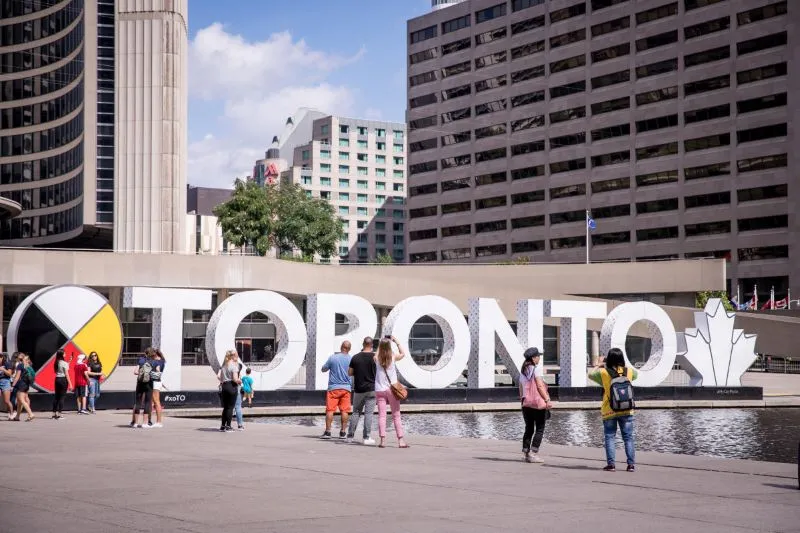
Discovering Toronto: Your Ultimate Summer Getaway Guide
With travel plans shifting and a desire for accessible adventures, Ontario residents are rediscoveri... Read More
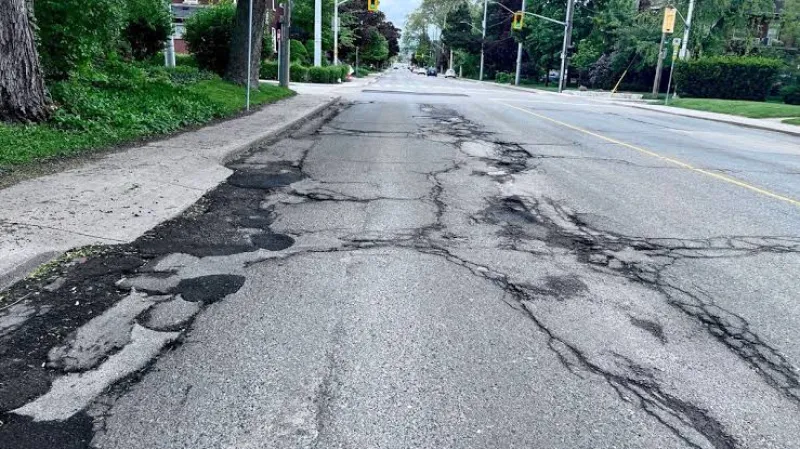
Aberdeen Avenue Claims the Unwanted Title: Ontario's Worst Road for the Second Year Running
The votes are in, and the results are clear: Ontarians are not happy with the state of their roads. ... Read More
Top Posts

Purpose Over Profit: How B2B Brands Turn Mission Into Margin
Purpose is no longer a buzzword for B2B firms; it’s a strategic engine that drives higher win rates, stronger client loyalty, and sustainable financial perfor...Read More

AI in the Courtroom: Balancing Innovation with Justice
AI is entering Canadian courts faster than regulations can keep up, raising ethical dilemmas that lawyers must confront to preserve fairness and transparency....Read More

Beyond Invoicing: How Decentralized Finance is Redefining B2B Payments
Traditional B2B invoices are slow, opaque, and fraught with trust issues. This post shows how decentralized finance and smart contracts can replace them with in...Read More

Beyond the Crowds: Discover Ontario’s Secret Fishing Havens
A guide to Ontario’s lesser‑known fishing locations, complete with gear recommendations, budget-friendly tips, and conservation advice for anglers seeking q...Read More
0 Comments
Post Comment
You will need to Login or Register to comment on this post!