
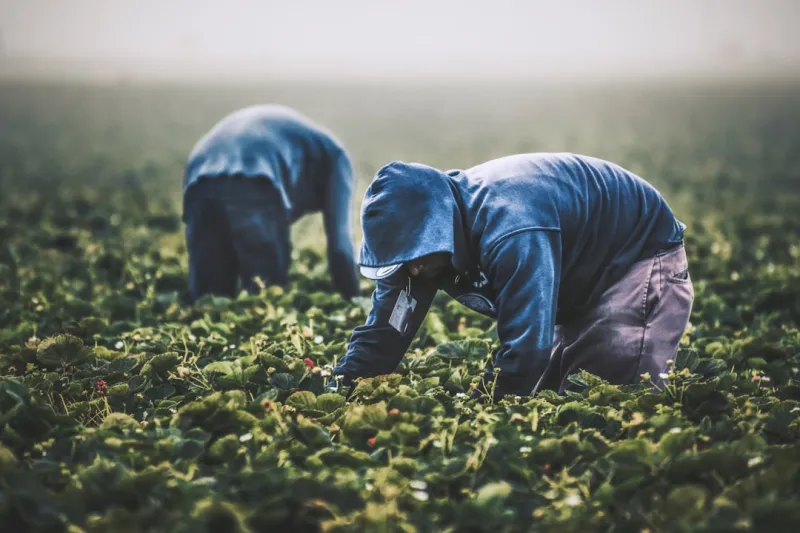
The Unseen Struggles of Canadian Farmers
As a Canadian farmer myself, I have experienced firsthand the challenges that come with working in the agricultural industry. From unpredictable weather conditions to fluctuating market prices, it's a constant struggle to stay afloat. But what's often overlooked is the impact that global economic trends have on our livelihoods. The ongoing trade tensions between the US and China, for example, have led to a complex web of consequences that affect us directly.
The tariff tango has been a delicate dance of economic uncertainty, with both countries imposing tariffs on each other's goods. But what does this mean for Canadian farmers? Essentially, it means that our exports are becoming more expensive for countries like China, making it harder for us to compete in the global market. This has led to a decline in demand for our products, resulting in lower prices and reduced revenue for our farms.
The Ripple Effect on Rural Communities
The impact of tariffs on Canadian farmers is not just limited to our individual farms; it has a ripple effect on rural communities as a whole. When farmers struggle to make ends meet, it can lead to a decline in local economic activity. This can have far-reaching consequences, from reduced spending at local businesses to a decrease in property values. It's a complex issue that requires a nuanced understanding of global economic trends and their local implications.
In my experience, rural communities are often overlooked when it comes to economic policy. But the reality is that we are the backbone of Canada's agricultural industry, producing a significant portion of the country's food supply. It's essential that our voices are heard and our concerns are taken into account when policymakers make decisions that affect our livelihoods.
The Human Side of Tariffs
The tariff tango is not just about numbers and economic data; it's about people. It's about the families who rely on farming as a way of life. It's about the young people who are choosing to stay in rural areas and pursue careers in agriculture. When we talk about tariffs, we need to remember that we're talking about real people, with real struggles and real concerns.
As a farmer, I've seen firsthand the impact that economic uncertainty can have on mental health. The stress and anxiety that come with trying to make a living in an unpredictable industry can be overwhelming. That's why it's essential that we have a support system in place for farmers, from mental health resources to financial assistance programs.
Exploring Solutions
So, what can be done to support Canadian farmers in the face of economic uncertainty? One solution is to diversify our exports and explore new markets. This can help reduce our reliance on countries like China and make us less vulnerable to fluctuations in global demand. Another solution is to invest in rural infrastructure, from roads and bridges to internet and communication systems. This can help improve our connectivity and competitiveness, making it easier for us to access new markets and customers.
Exploring the hidden gems of rural Canada can also help us identify new opportunities for growth and development. By showcasing the beauty and diversity of rural Canada, we can attract tourists and investors, boosting local economies and creating new revenue streams.
The Future of Canadian Farming
The future of Canadian farming is uncertain, but one thing is clear: we need to be adaptable and resilient. We need to be able to navigate the complex web of global economic trends and find ways to thrive in an unpredictable environment. This will require a collaborative effort from governments, industry leaders, and farmers themselves.
As a farmer, I'm committed to doing my part. I'm committed to producing high-quality food, while also being mindful of the environmental and social impacts of my farming practices. I'm committed to being a part of the solution, rather than the problem.
Conclusion
The struggles of Canadian farmers are real, but they're not insurmountable. By working together and exploring new solutions, we can build a more sustainable and resilient agricultural industry. We can create a brighter future for ourselves and for generations to come.
As I look to the future, I'm filled with a sense of hope and determination. I know that the resurgence of rural Canada is possible, and I'm excited to be a part of it.
Final Thoughts
In conclusion, the unseen struggles of Canadian farmers are a complex issue that requires a nuanced understanding of global economic trends and their local implications. By working together and exploring new solutions, we can build a more sustainable and resilient agricultural industry. We can create a brighter future for ourselves and for generations to come.
As a farmer, I'm proud to be a part of this industry. I'm proud to be contributing to the production of high-quality food, and I'm proud to be a part of the rural community. I hope that my story can inspire others to learn more about the challenges and opportunities facing Canadian farmers.
The road ahead will not be easy, but I'm confident that together, we can overcome the challenges and build a brighter future for Canadian farming.
Call to Action
If you're interested in learning more about the challenges facing Canadian farmers, I encourage you to explore the resources available online. You can also support local farmers by buying Canadian-grown produce and visiting rural communities.
Together, we can make a difference and build a more sustainable future for Canadian farming.
We can create a better future, one farm at a time.

Related Posts
How Canadian Farmers Are Turning Climate Challenges into Growth Opportunities
Canadian farmers are embracing regenerative methods, carbon farming, and digital tools to turn clima... Read More
Digital Harvest: How Canadian Farmers Connect Directly with Consumers
Canadian farmers are turning to digital marketplaces, data-driven tools, and collaborative platforms... Read More
From Soil to Software: How Canadian Farmers Are Turning Climate Chaos into a Competitive Edge
Canadian farmers are reshaping the industry with regenerative agriculture, farmer‑owned data coope... Read More
Top Posts
Sailing and Rolling Green: The Rise of Eco‑Friendly Cruises and Bus Tours
From solar‑powered ships to electric coaches, discover the new wave of sustainable cruises and bus tours that blend adventure, community, and planet‑first t...Read More

Canada’s Next Political Leap: Embracing Proportional Representation
A deep dive into why Canada needs to move away from first‑past‑the‑post, how proportional representation works, and concrete steps citizens can take to ch...Read More

The Real Cost of Convenience: When Time‑Saving Services Add Up
Explore the hidden financial toll of subscription services, food delivery, ride‑shares, and more, and find practical steps to regain control of your budget....Read More

When the Bus Becomes a Cruise: Redefining Open‑Road Adventures
Explore the rise of bus‑cruise hybrids, where comfort, culture, and eco‑friendly travel combine to turn the journey itself into a memorable destination....Read More
0 Comments
Post Comment
You will need to Login or Register to comment on this post!