
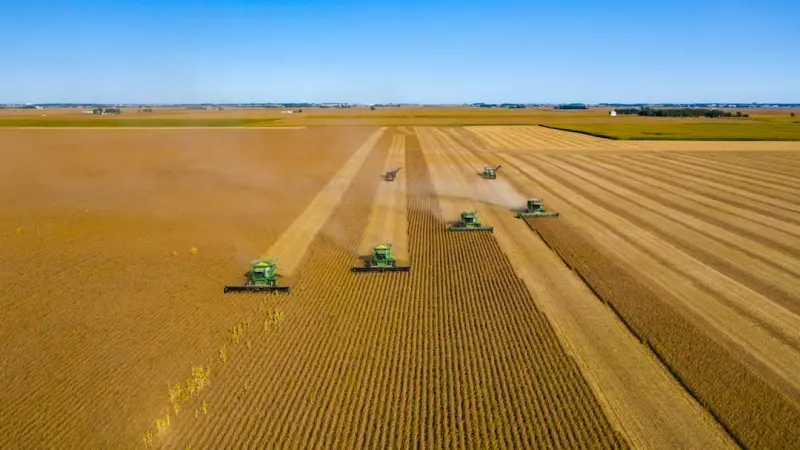
From Soil to Software: How Canadian Farmers Are Re‑Engineering Resilience
When I first walked onto my family’s 250‑acre farm in the Okanagan, the most sophisticated tool I owned was a weathered wooden plow and a pocket‑sized almanac. Fast forward to today, and my barn walls are lined with solar panels, my tractors are whisper‑quiet hybrids, and a cloud‑based dashboard tells me exactly when my beans will hit peak protein. The transformation isn’t just a tech‑add‑on; it’s a cultural shift that’s redefining what it means to farm in Canada.
Why Climate Isn’t Just a Challenge – It’s a Catalyst
Canada’s agricultural landscape is a patchwork of micro‑climates, from the frost‑kissed fields of the Prairies to the rain‑rich valleys of British Columbia. In the past decade, erratic weather patterns have forced us to ask a simple question: How do we keep feeding a nation when the climate refuses to stay predictable? The answer, surprisingly, isn’t to fight nature but to partner with it.
Regenerative practices—cover cropping, rotational grazing, and bio‑char amendment—are no longer niche experiments. They’re becoming the default operating model because they lock carbon into the soil, improve water retention, and create a buffer against drought. Farmers who once relied on a single cash crop are now diversifying with legumes, berries, and even specialty mushrooms, turning “risk” into a portfolio of revenue streams.
Data Cooperatives: The New Farmer’s Union
One of the most transformative developments is the rise of farmer‑owned data cooperatives. In the past, ag‑tech companies harvested field data, sold insights to agribusinesses, and left the growers with a subscription fee they could barely afford. Today, groups of farms are pooling their own satellite imagery, soil sensor readings, and yield maps to create shared intelligence that belongs to the community.
Think of it as a co‑op version of the open‑source software movement. Instead of a proprietary algorithm dictating planting dates, the cooperative’s members collectively train models that account for local soil types, historic weather, and even the migratory patterns of pollinators. The result? Recommendations that are hyper‑local, transparent, and free from hidden fees—a direct answer to the hidden subscription traps that have plagued other sectors.
Wearable Tech for the Field: From Health to Harvest
Farm work is physically demanding, and the health of the farmer is inseparable from the health of the land. Recent advances in wearable health technology—originally designed for chronic‑care patients—are being repurposed for agricultural labor. Smart jackets monitor heart rate, temperature, and even exposure to harmful chemicals, sending real‑time alerts to a farmer’s phone.
These devices are more than personal safety tools; they generate data that can be fed back into the farm’s broader analytics platform. If a worker’s hydration levels drop during a heatwave, the system can suggest a shift in task timing, reducing the risk of heat‑related illnesses while maintaining productivity. The synergy between wearable health tech and field operations is a prime example of cross‑industry innovation.
Agri‑Tourism as a Revenue Engine
While the pandemic forced many farms to pivot to direct‑to‑consumer sales, a new, more sustainable model is emerging: agri‑tourism that blends education, experience, and commerce. Imagine a weekend “farm school” where city dwellers learn to seed, harvest, and even press their own cold‑pressed oils. The concept goes beyond simple “pick‑your‑own” farms; it integrates storytelling, local cuisine, and even art installations that celebrate the regional terroir.
This approach does three things at once: it diversifies income, builds brand loyalty, and creates a pipeline of future advocates for Canadian agriculture. Visitors leave with a deeper appreciation for the work that goes into their food, and many become repeat customers for farm‑produced goods ranging from heirloom tomatoes to artisanal cheeses.
Value‑Added Processing: From Field to Shelf
Adding value to raw crops is another avenue for boosting profitability. Small‑scale fermentation, for example, allows farmers to turn surplus vegetables into probiotic‑rich sauerkraut, kimchi, or specialty vinegars. Not only does this extend the shelf life of perishable produce, but it also taps into the growing consumer demand for functional foods.
Farmers are leveraging community kitchens and shared‑use equipment to keep overhead low. The process is a perfect illustration of turning “waste” into a revenue stream, and it dovetails nicely with the value‑added fermentation movement that’s gaining traction across Canada.
Labor Shortages and the Rise of Robotics
One of the biggest headaches for Canadian growers has been a chronic labor shortage, exacerbated by immigration policy shifts and the physical toll of farm work. The response is a cautious but accelerating adoption of robotics. From autonomous weeders that use AI to differentiate crops from weeds, to drones that precisely apply fertilizer, technology is filling gaps that human labor can’t reliably cover.
Importantly, these machines are not meant to replace farmers but to augment their capabilities. By offloading repetitive, labor‑intensive tasks, farmers can focus on strategic decisions—crop rotation planning, market analysis, and community outreach—activities that truly require a human touch.
Financial Innovation: From Traditional Loans to Impact Bonds
Traditional financing models often penalize farmers for taking on sustainable practices, labeling them as “high risk.” In response, a wave of impact‑investment funds and climate‑focused green bonds has emerged. These financial instruments reward farms that meet specific environmental metrics—carbon sequestration, biodiversity enhancement, water conservation—with lower interest rates and longer repayment terms.
Such structures align the interests of investors seeking ESG (Environmental, Social, Governance) returns with the long‑term viability of farms. They also empower smaller operators, who previously lacked the collateral required for conventional bank loans, to invest in upgrades like solar arrays or precision irrigation.
Policy Momentum: From Provincial Grants to Federal Roadmaps
Governmental support is finally catching up with the on‑the‑ground reality. Provincial ministries are rolling out grant programs that co‑fund the purchase of renewable energy systems, while the federal government’s upcoming agricultural innovation strategy promises $1 billion over the next five years for digital infrastructure and climate‑smart research.
What matters most for farmers is not the size of the pot, but the simplicity of the application process. Streamlined, outcome‑based funding—where you get money back only after demonstrable results—encourages experimentation without the bureaucratic red tape that has historically stifled progress.
Community Resilience: Building Networks Beyond the Field
All of these technological and financial innovations hinge on one fundamental element: community. Farmers are forming regional networks that share equipment, pool marketing resources, and even coordinate planting schedules to mitigate pest pressure. These alliances act as a safety net, allowing individual farms to weather storms—literal and economic—more effectively.
Social media groups, local co‑ops, and farmer‑led research stations are becoming the new extension services. Knowledge that once traveled slowly through academic journals now spreads in real time, fostering a culture of rapid iteration and collective problem‑solving.
Looking Ahead: The Next Decade of Canadian Farming
Standing in my field at sunrise, I can see the future taking shape in the rows of seedlings and the humming of solar inverters. The next decade will be defined not by a single breakthrough but by the convergence of regenerative agriculture, data sovereignty, health‑focused wearables, and community‑driven finance. Canadian farmers are not just surviving climate uncertainty—they are turning it into a competitive advantage that will feed the nation and export expertise worldwide.
In the end, the story of Canadian agriculture is a story of adaptation, collaboration, and relentless curiosity. It’s a narrative that will continue to evolve, and we, the stewards of the land, are writing each chapter with soil, code, and heart.

Related Posts
Harvesting Collaboration: How Canadian Farmers Are Building a Shared Future on the Land
From community equipment hubs to data‑driven marketplaces, Canadian farmers are redefining indepen... Read More
Cultivating Tomorrow: How Canadian Farmers Are Redefining Resilience
A firsthand look at the innovative ways Canadian farmers are merging tradition, technology, and comm... Read More
Regenerative Farming: Canada’s Rural Revival
A deep dive into regenerative agriculture on Canadian farms, exploring soil health, livestock integr... Read More
Top Posts

Reeling in Change: How Ontario Anglers Are Shaping a Sustainable Future
Ontario’s anglers are forging a new path, combining smart gear, Indigenous wisdom, and inclusive community initiatives to protect the province’s waters and ...Read More

Chasing the Midnight Bite: Ontario’s Hidden Night Fishing Gems
Discover Ontario’s hidden lakes perfect for night fishing, from essential gear to sustainable practices and secret spots that only the darkness reveals....Read More

Redefining Adventure: How Purpose‑Driven Travel Transforms the Journey
Explore the rise of purpose‑driven travel, from micro‑escapes to farm‑to‑table tours, and learn how to craft journeys that benefit both you and the plac...Read More

The Front Porch Renaissance: Turning Canadian Porches into Community and Climate Assets
Canadian front porches are being reimagined as multi‑functional hubs that foster community interaction, support sustainable living, and even spark micro‑ent...Read More
0 Comments
Post Comment
You will need to Login or Register to comment on this post!