
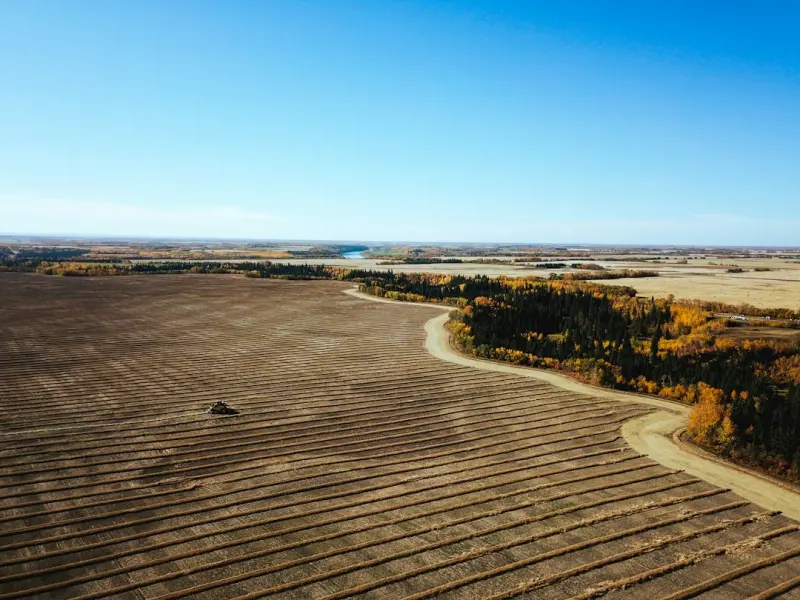
When I first heard the phrase “carbon farming,” I imagined a futuristic greenhouse where clouds of CO₂ are bottled like artisanal wine. The reality is far more grounded—yet just as revolutionary. Across the Prairies, the Okanagan, and the Atlantic Maritimes, a quiet wave of growers is learning to treat the carbon they lock beneath their feet not just as a climate service, but as a tangible line‑item on the balance sheet.
Why Soil Carbon Became the New Commodity
For decades, the conversation around Canadian agriculture focused on yields, export markets, and the next generation of seed. Climate change forced a pivot: unpredictable frosts, longer droughts, and erratic precipitation patterns turned soil health from a nice‑to‑have into a survival strategy. Researchers showed that healthy soils—rich in organic matter, diverse microbes, and stable structure—can retain water better, resist erosion, and, crucially, sequester atmospheric carbon.
Governments and corporations are now assigning monetary value to that sequestration. Carbon markets, once the domain of forestry projects and industrial offsets, are opening doors for farms that can prove they’re pulling CO₂ out of the air and storing it long‑term. This shift transforms a previously invisible ecosystem service into a revenue stream that can help fund everything from precision equipment to farmer mental‑health programs.
The Science Behind the Numbers
Carbon in soil exists primarily as organic carbon—a by‑product of plant residues, root exudates, and microbial activity. When plants photosynthesize, they convert CO₂ into biomass. A fraction of that biomass returns to the soil as roots die, leaves fall, or microbes decompose organic matter. The more carbon we keep in the ground, the less ends up back in the atmosphere.
Two key metrics drive the market:
- Tonnes of carbon per hectare (tC/ha)—the absolute amount of carbon stored.
- Additionality—the increase over a baseline scenario, proving that farming practices actually added carbon rather than just maintaining it.
Accurate measurement is no longer a labor‑intensive lab exercise. Satellite‑derived indices, drone‑based hyperspectral imaging, and AI‑powered soil models can estimate carbon stocks with a margin of error small enough for most compliance standards.
Policy Landscape: From Federal Incentives to Provincial Programs
The federal government’s commitment to net‑zero emissions has birthed several initiatives that directly benefit farmers:
- Carbon Pricing Rebates—eligible farms can receive a rebate on their carbon levy by demonstrating reduced emissions.
- Soil Health Grants—funds earmarked for cover‑cropping, reduced tillage, and diversified rotations.
- Carbon Credit Registries—official platforms where verified carbon offsets can be sold to corporations seeking to meet sustainability targets.
Provincial programs add another layer. In Saskatchewan, the Agri‑Carbon Initiative offers technical assistance and a streamlined verification pathway. Ontario’s Soil Enrichment Fund provides low‑interest loans for equipment that supports regenerative practices, such as no‑till planters and precision applicators.
Technology Tools That Make Carbon Farming Viable
Bridging the gap between carbon science and farm economics requires data, and data needs tools. Below are three tech categories that have become indispensable:
- Soil Carbon Monitoring Platforms—Software that ingests field sensor data, satellite imagery, and farmer inputs to calculate carbon stock changes in near real‑time. Many of these platforms also integrate directly with carbon registries, allowing seamless credit issuance.
- Decision‑Support Apps—These suggest optimal cover‑crop mixes, planting dates, and residue management strategies tailored to your soil type and climate zone.
- Marketplace Integrations—Digital services that connect verified carbon credits from farms to corporate buyers. Think of them as the “e‑commerce” layer for carbon, akin to how direct‑to‑consumer branding opened new sales channels for producers.
When these tools are combined with a clear business model, carbon farming transitions from a side project to a core profit center.
Case Study: Prairie Grain Growers Turn Soil Into a Balance Sheet Asset
In a modest 300‑hectare operation near Moose Jaw, the Harper family adopted a suite of regenerative practices in 2022: winter rye cover crops, reduced tillage, and a precision‑drill that places seed at optimal depth. Within two years, their soil organic carbon rose from 1.8% to 2.4%—a 0.6% increase that translates to roughly 15 tonnes of CO₂ per hectare stored.
Through a provincial verification program, they earned 12,000 carbon credits, which they sold to a regional airline looking to offset its domestic flights. The revenue covered 40% of the cost of a new combine harvester, and the farm’s net‑present value improved by 7% over a five‑year horizon.
Key takeaways from the Harper story:
- Start with a baseline soil test—knowing where you stand is essential.
- Leverage cover crops that fit your climate; winter rye works wonders in the Prairies.
- Partner with a reputable carbon registry early to avoid retroactive compliance headaches.
Getting Started: A Practical Checklist for the Curious Farmer
1. Assess Baseline Soil Carbon—Hire a lab or use a certified field kit.
2. Map Your Practices—Document tillage depth, crop rotations, fertilizer rates, and any conservation measures.
3. Choose a Verification Pathway—Decide between voluntary standards (e.g., Verra) or government‑mandated registries.
4. Invest in Monitoring Tech—Even a modest sensor network can feed data into a carbon model.
5. Secure Financing—Explore federal carbon pricing rebates or provincial grants; the border‑fee advantage framework offers a useful template for turning policy incentives into cash flow.
6. Engage Stakeholders—Communicate with your local co‑op, agronomist, and neighboring farms. Collaboration often yields bulk‑discounts on seed and shared data platforms.
7. Track and Report—Maintain transparent records; credibility is the currency of carbon markets.
Pitfalls to Watch Out For
Verification Lag—Carbon registries can take 6‑12 months to certify credits. Plan cash flow accordingly.
Market Volatility—Credit prices fluctuate with corporate demand and policy shifts. Diversify revenue streams to cushion against price dips.
Over‑Promising—If additionality isn’t clearly demonstrated, credits can be rejected, leading to reputational risk.
One‑Size‑Fits‑All Practices—What works on a loamy field in southwestern Ontario may backfire on a sandy prairie plot. Tailor your approach.
The Future: Scaling Carbon Farming Across Canada
Nationally, we’re looking at a potential 20‑million‑tonne CO₂ sequestration capacity if 30% of arable land adopts regenerative practices. To reach that, three levers must align:
- Policy Consistency—Long‑term, transparent carbon pricing and clear verification standards.
- Technology Adoption—Affordable, user‑friendly tools that integrate with existing farm management software.
- Market Demand—Corporations need reliable, high‑quality offsets; farmer cooperatives can aggregate supply to meet that need.
When these pieces fall into place, carbon farming could become as integral to farm budgeting as fertilizer or seed. The next generation of Canadian growers will likely see carbon credits not as a bonus, but as a core line of revenue that funds everything from renewable energy installations to community‑focused agritourism.
Conclusion: From Fields to Finance
The notion that soil can be both a living ecosystem and a financial asset is no longer a lofty ideal; it’s an emerging reality on farms from the Maritimes to the Rockies. By embracing carbon farming, Canadian producers can hedge against climate risk, unlock new cash flows, and play a decisive role in the nation’s net‑zero journey.
It’s a story of transformation—one that starts with a simple decision to leave a cover crop in the field over winter and ends with a check from a multinational firm looking to offset its carbon footprint. The soil beneath our boots has always been valuable; now we finally have the tools and incentives to measure, monetize, and protect it for generations to come.

Related Posts

Harvesting the Future: Data, Renewable Energy, and Community Power on Canadian Farms
Canadian farmers are turning to data-driven precision agriculture, renewable energy, and cooperative... Read More

From Soil to Ledger: How Blockchain is Rewriting the Canadian Farm Story
Blockchain is emerging as a practical tool for Canadian farmers, offering immutable traceability, pr... Read More
Reaping the Future: How Canadian Farmers Turn Soil Into Digital Gold
From high‑resolution soil dashboards to solar‑powered barns, Canadian farmers are merging age‑... Read More
Top Posts

Community Telehealth Hubs: A New Lifeline for Rural Canadians
A deep dive into community‑run telehealth hubs that combine reliable broadband, trained facilitators, and privacy‑first design to bring quality healthcare t...Read More

Why Revenue Operations Is the Quiet Engine Driving Modern B2B Growth
Revenue Operations (RevOps) unifies sales, marketing, and customer success under a single data‑driven framework, turning fragmented processes into a predictab...Read More

Beyond the Waiting Room: How Value‑Based Care Is Reshaping Canadian Hospitals
Value‑based care aligns payment with patient outcomes, promising shorter stays, lower readmission rates, and higher satisfaction across Canadian hospitals. Th...Read More
The Resurgence of Rural America - Growth and Opportunity
Rural America is experiencing a new era of growth and opportunity, driven by technological advancements, changing demographics, and innovative economic developm...Read More
0 Comments
Post Comment
You will need to Login or Register to comment on this post!