
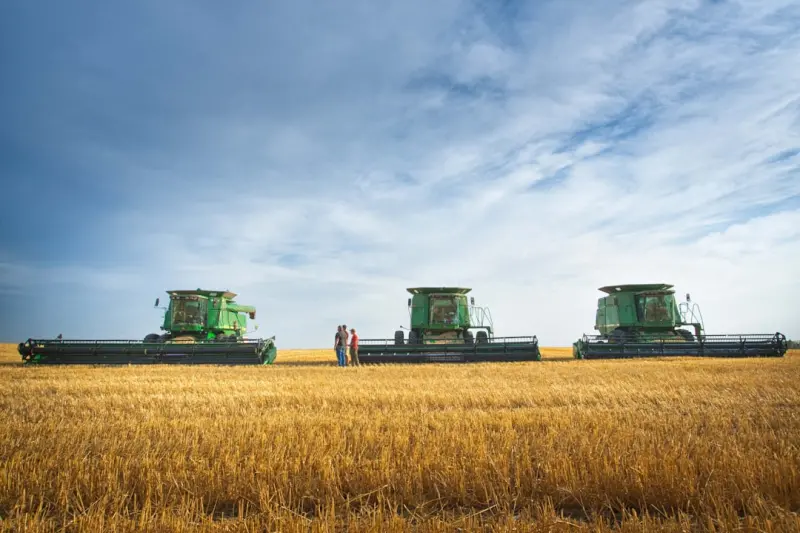
When I first stepped onto my grandparents’ prairie farm as a teenager, the scent of fresh‑cut alfalfa and the rhythm of the wind over the wheat fields felt timeless. Decades later, the same fields pulse with data streams, drones humming overhead, and a new kind of stewardship that blends age‑old soil wisdom with cutting‑edge technology. For many Canadian growers, the journey from plow to pixel isn’t just a novelty—it’s becoming the backbone of a resilient, climate‑smart agricultural sector.
From Soil Health to Data Health
Regenerative agriculture has long been championed for its ability to rebuild organic matter, improve water retention, and sequester carbon. Yet, the promise of these practices can be hard to quantify on a sprawling 1,500‑acre mixed‑crop operation. That’s where digital soil mapping enters the conversation. By deploying low‑cost spectrometers and satellite‑derived indices, farmers can now generate high‑resolution fertility maps that pinpoint nutrient hotspots and deficiencies.
These maps do more than guide fertilizer applications—they become living dashboards that track the impact of cover crops, reduced tillage, and livestock integration over years. When a field’s organic carbon level climbs, the dashboard reflects it, allowing the farmer to claim carbon credits with confidence.
Powering the Farm with Renewable Energy
Canada’s vast geography offers abundant wind, solar, and even biogas potential. Small‑scale farms are increasingly installing hybrid renewable systems that feed excess power back into the grid while guaranteeing a reliable source for irrigation pumps, greenhouse climate control, and on‑site processing equipment. The financial calculus is shifting too: government incentives, net‑metering policies, and emerging green‑bond markets mean the payback period for a 250‑kilowatt solar array can be under five years.
Beyond economics, renewable energy aligns with a farmer’s role as a land steward. By offsetting diesel consumption and reducing greenhouse‑gas emissions, farms can market themselves as “clean‑produced,” opening doors to premium market segments that value provenance and environmental integrity.
Indigenous Knowledge Meets Modern Science
Indigenous peoples across Canada have cultivated the land for millennia, employing practices such as controlled burns, poly‑culture planting, and seasonal migration of livestock. Today, collaborative research projects are weaving these time‑tested methods with precision agriculture tools. For instance, the use of fire‑scars as natural pest barriers is being mapped with drone imagery, allowing farmers to replicate the technique without the guesswork.
These partnerships do more than boost yields; they honor cultural heritage and create pathways for younger Indigenous generations to enter agribusiness. The exchange of knowledge also fuels innovation—think of a traditional “Three Sisters” planting pattern re‑imagined through variable‑rate seeding technology.
Carbon Farming: Turning Soil Into a Revenue Stream
Carbon markets, once the domain of large‑scale forestry projects, are now welcoming row‑crop farms. By documenting practices like no‑till, cover cropping, and diversified rotations, farmers can generate verifiable carbon offsets. The verification process typically involves third‑party auditors who cross‑reference farm management data with satellite‑derived carbon stock estimates.
While the market is still maturing, early adopters report additional income streams that can offset input costs. Moreover, participation in carbon programs often comes with technical assistance, ensuring that the environmental gains are genuine and lasting.
Tech‑Enabled Direct‑to‑Consumer Channels
The pandemic accelerated a shift toward local food buying, and Canadian consumers remain hungry for farm‑fresh produce delivered straight to their doorsteps. Digital platforms now enable farmers to sell season‑specific boxes, subscription services, and even virtual farm tours. These tools not only increase farm profitability but also deepen the consumer‑farmer relationship.
One emerging trend is the integration of Data‑First Dining concepts into farm‑to‑table operations. Restaurants are using real‑time harvest data to design menus that reflect the freshest available produce, while farms receive instant feedback on flavor profiles and consumer preferences. This two‑way data flow sharpens both culinary creativity and agricultural planning.
Community Hubs: Beyond the Farm Gate
While rooftop gardens in urban centres have captured headlines, a quieter revolution is happening on the periphery of small towns. Multifunctional farm hubs are emerging, where a grain bin might share space with a co‑working café, a farmer’s market, and a micro‑brewery showcasing locally sourced hops. These hubs become anchors for regional economies, drawing tourists, encouraging knowledge exchange, and providing supplementary income streams for farmers.
An example that illustrates this synergy is the rise of Winter Food Halls that feature seasonal produce from surrounding farms. Even in the coldest months, these halls keep the local food chain vibrant, offering everything from hearty soups to artisanal cheese plates that celebrate the harvests of the previous season.
Challenges on the Horizon
Despite the optimism, Canadian farmers face a suite of hurdles. Broadband gaps in rural areas can limit access to real‑time data platforms, while climate variability introduces new pest pressures and unpredictable weather patterns. Additionally, the regulatory landscape for carbon credits and renewable installations remains fragmented across provinces.
Addressing these obstacles calls for coordinated policy action, investment in rural connectivity, and continued collaboration between research institutions, Indigenous communities, and the private sector. The solutions will be as diverse as the farms themselves.
Looking Ahead: A Blueprint for Resilient Farming
When I walk the rows today, I see more than furrows and crops—I see a tapestry of sensors, solar panels, and shared stories. The future for Canadian agriculture lies in this hybrid model where tradition informs technology, and technology amplifies tradition. By embracing digital soil mapping, renewable power, Indigenous stewardship, carbon markets, and direct‑to‑consumer platforms, farmers can secure economic viability, environmental health, and a legacy that honors both the land and the people who tend it.
For those of us rooted in the soil, the most exciting harvest may not be the grain we store in silos, but the wealth of knowledge, data, and community connections we cultivate along the way.

Related Posts

Low‑Band Leap: Canadian Family Farms Gain Connectivity Edge
A deep dive into how low‑band satellite internet is empowering Canadian family farms, unlocking re... Read More
Harvesting Power: How Canadian Farmers are Turning Renewable Energy into a Competitive Edge
Canadian farmers are embracing renewable energy—solar panels, wind turbines, and bioenergy—to cu... Read More
The Struggles and Triumphs of Canadian Farmers
Canadian farmers play a vital role in the country's economy, but they face a multitude of challenges... Read More
Top Posts

The Rise of Immersive Theatre: How Canada Is Redefining Live Entertainment
Canada’s live entertainment is evolving—interactive theatre, pop‑up stages, and AR‑enhanced performances are turning audiences into active participants,...Read More
Reeling in the Future: Ontario Anglers Embrace AI and Drones
Ontario anglers are adopting AI-powered sonar, scouting drones, and predictive apps, merging tradition with technology to improve catches, foster community, and...Read More

Stretching Your Dollar: Unconventional Ways to Lower Daily Living Costs
Explore inventive, low‑cost tactics that transform budgeting into a rewarding habit, leveraging public assets, loyalty programs, and simple habit tweaks to ke...Read More

Summer Savings: How to Make the Most of Your Vacation Budget
Planning a summer vacation but worried about the cost? Learn how to make the most of your vacation budget with our top tips and tricks for summer savings....Read More
0 Comments
Post Comment
You will need to Login or Register to comment on this post!