
Why the Cloud Is Becoming My New Tractor
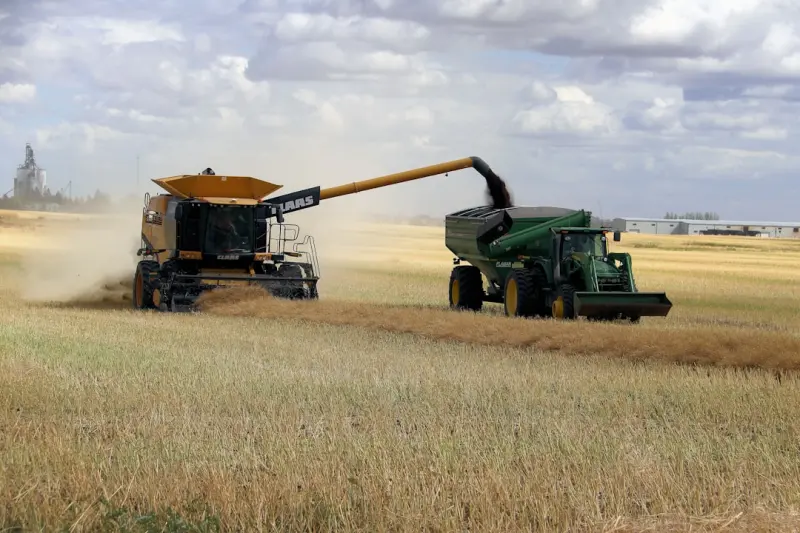
When I first set foot on my family’s 200‑acre farm in the Laurentians, the most sophisticated piece of technology I owned was a vintage diesel‑powered combine that had been handed down from my grandfather. Fast forward a few seasons, and my morning routine now begins with a coffee, a glance at a tablet dashboard, and a quick chat with an AI‑powered agronomy assistant that lives in the cloud. The transition wasn’t seamless, but the payoff has been transformative—not just for my yields, but for the entire rhythm of farm life.
The Data Deluge: From Grain Counters to Satellite Imagery
In the past, “record‑keeping” meant a leather‑bound ledger where I jotted down planting dates, fertilizer amounts, and the occasional rainstorm note. Today, every sensor on the field—soil moisture probes, weather stations, drone‑mounted multispectral cameras—feeds streams of data into a central platform that updates me in real time. I can see, for example, that a patch of my barley field is experiencing a micro‑drought three days before my neighbors notice any wilting. That early warning allows me to deploy targeted irrigation, saving water and preserving grain quality.
What surprised me most was the scale of insight. Satellite imagery, once the domain of government agencies, is now a subscription service that delivers near‑daily NDVI (Normalized Difference Vegetation Index) maps at a resolution fine enough to spot a pest hotspot the size of a backyard. When I cross‑reference that with soil sensor data, I can predict disease pressure before the first leaf shows a sign of trouble.
AI‑Guided Decision‑Making: My New Agronomist
Artificial intelligence isn’t a mysterious black box in my case; it’s a collaborative partner. I feed the platform historical yield data, varietal performance, and even market price trends. The AI then runs thousands of simulations to recommend the optimal planting density, fertiliser split, and harvest window. One of the most valuable outputs is a risk‑adjusted profitability score that weighs the cost of inputs against projected revenue under various weather scenarios.
Last season, the system suggested a slight reduction in nitrogen for the southernmost rows of my wheat field based on a forecasted cooler summer. I was skeptical—after all, the conventional wisdom in my community is “more nitrogen equals higher yield.” Yet when the season unfolded, those rows produced 8 % more grain per hectare than the rest of the field, confirming that the AI had accounted for a subtle interaction between temperature and nitrogen use efficiency that we hadn’t considered.
Building a Digital Community: From Farm to Table and Back Again
Data alone doesn’t solve every challenge. The true power of digital tools emerges when they’re woven into a community fabric. I’ve joined a regional network of growers who share anonymised data sets on pest outbreaks, weather anomalies, and market fluctuations. This collective intelligence allows us to spot regional trends faster than any single farm could.
Beyond the data exchange, we’ve started community repair hubs where farmers, mechanics, and hobbyists gather to fix everything from tractor engines to irrigation controllers. These hubs echo the collaborative spirit of the digital network, reinforcing that modern farming is as much about relationships as it is about technology.
Economic Resilience: Turning Information Into Savings
One of the most compelling reasons I embraced cloud‑based tools is the bottom‑line impact. By tailoring fertilizer applications to the exact needs of each zone, I’ve reduced input costs by roughly 12 % without sacrificing yield. Precision irrigation has cut water usage by 18 %, which is especially important given the tightening regulations around water allocation.
Moreover, the ability to predict market price swings using AI models has helped me time my grain sales more strategically. Instead of selling the entire harvest at the first post‑harvest price dip, I can hold a portion of the grain in storage and release it when the market rebounds, increasing overall revenue.
Climate Incentives and Sustainable Practices
While I’m not positioning myself as an environmental activist, I can’t ignore the growing emphasis on climate‑smart agriculture. The federal government’s new climate incentive models—explored in depth in a recent piece on new climate incentive models—offer financial rewards for practices that reduce greenhouse‑gas emissions. By documenting my precision‑ag practices in a digital log, I can easily demonstrate compliance and qualify for these incentives.
The combination of reduced input use and eligibility for climate credits creates a virtuous cycle: I spend less, earn more, and contribute to a healthier ecosystem. It’s a win‑win that would have been impossible without transparent, auditable data streams.
The Human Side of Digital Farming
Technology is often portrayed as a cold, impersonal force, yet my experience has shown the opposite. The data dashboards give me more time to engage with the people who matter most—my family, my workers, and my neighbours. When a sensor alerts me to a moisture deficit, I can call my crew early in the morning, give them a clear plan, and head to the barn for breakfast with my kids knowing the field is under control.
There’s also a mental‑health component. The uncertainty that once haunted me during the “critical growth period” has been replaced by actionable insights. Knowing that I have a reliable forecast for both the weather and market prices reduces anxiety and allows me to focus on long‑term strategic decisions, such as diversifying into specialty grains or exploring agritourism.
Challenges and Lessons Learned
- Connectivity Gaps: Rural broadband is still a patchwork. I invested in a satellite uplink as a backup, but the latency sometimes hampers real‑time decisions.
- Data Overload: At first, the sheer volume of information was overwhelming. I learned to customise my dashboard, focusing only on the metrics that directly influence my profit and sustainability goals.
- Cost of Adoption: The initial outlay for sensors, drones, and software licences can be steep. I mitigated this by applying for provincial innovation grants and by sharing equipment with neighbouring farms.
- Skill Gap: Not every worker is comfortable with a tablet. Ongoing training and a culture that encourages experimentation have been essential.
Looking Ahead: The Next Generation of Farm Tech
What excites me most is the horizon of interoperability. Today, many platforms operate in silos—one for soil health, another for market analytics, a third for equipment maintenance. The future lies in a unified ecosystem where data flows seamlessly between devices, services, and people.
Imagine a scenario where a drone detects early signs of fungal disease, automatically triggers a targeted spray from a connected sprayer, logs the action in the farm’s carbon ledger, and notifies the regional cooperative for a coordinated response. That vision is no longer science fiction; it’s an emerging reality being piloted in a handful of forward‑thinking farms across Canada.
Conclusion: The Harvest Is Both Digital and Human
Adopting cloud‑based tools has reshaped my farm in ways I never anticipated. Yields are higher, input costs are lower, and I’m better positioned to navigate the volatile climate and market landscapes. Yet the most profound change is cultural: I’m part of a network that values transparency, collaboration, and continuous learning. The data may guide my decisions, but the community—both online and in the field—keeps my farm grounded in the traditions that have sustained us for generations.
If you’re a fellow farmer standing at the crossroads of tradition and technology, I encourage you to take the first step. Start small—perhaps with a single soil sensor or a weather station—and let the data tell you where the next improvement lies. You’ll soon discover that the cloud isn’t a distant, abstract concept; it’s a new kind of tractor, ready to pull your farm forward.

Related Posts
Solar Harvest: How Canadian Farms Are Powering the Future
Canadian farms are embracing solar power to cut costs, enhance resilience, and lead in sustainabilit... Read More
Beyond the Fields: Building Community‑First Food Networks
Canadian farmers are forging community‑first food networks—direct subscriptions, collaborative p... Read More
Cultivating Resilience: How Canadian Farmers Are Rewriting Rural Well‑Being
Canadian farmers are redefining resilience by addressing mental health, forming cooperative networks... Read More
Top Posts

School's Out, Adventure's In: Kids Ride Free on VIA Rail This Summer!
Summer is officially here, and with it comes the annual scramble for affordable and engaging family vacation ideas. Look no further, parents! VIA Rail is offeri...Read More

Parental Warning: Navigating the Hidden Dangers of Tomorrow’s Tech for Kids
A deep dive into the covert threats of modern tech for children, offering legal insights and actionable tips for parents to safeguard their kids online....Read More

Data Trusts and Community Care: A Fresh Blueprint for Canadian Health
A deep dive into how data trusts, combined with community health hubs, can transform Canadian healthcare by enhancing privacy, reducing costs, and ensuring equi...Read More
The Flavors of Community: How Local Food Can Bring People Together
Local food has the power to bring people together and foster a sense of community. By supporting local businesses and choosing to eat local, we contribute to th...Read More
0 Comments
Post Comment
You will need to Login or Register to comment on this post!