
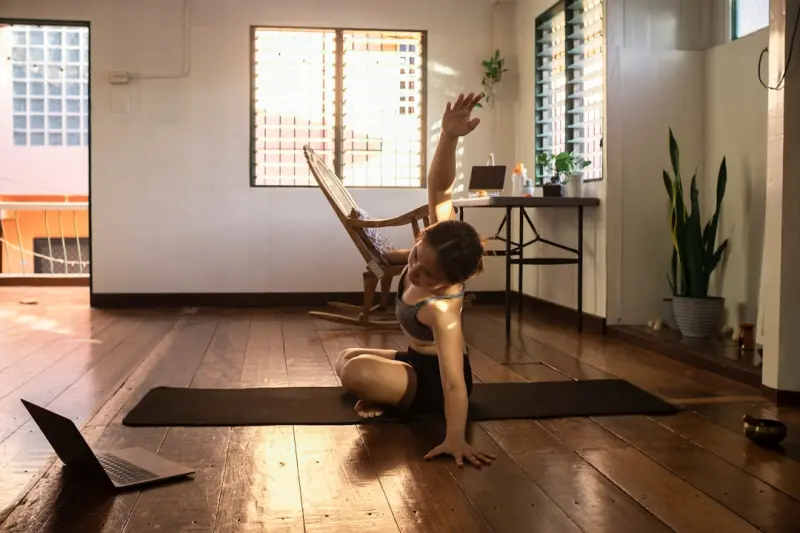
Ever caught yourself staring at the same screen for hours, feeling the inevitable ache in your lower back, the stiffness in your neck, and the mental fog that seems to settle in like a low‑hanging cloud? I’ve been there—late‑night deliverables, back‑to‑back Zoom calls, and the comforting hum of a laptop that never seems to shut off. As someone who transitioned from a bustling office environment to a fully remote setup, I quickly realized that my body was paying the price for the convenience. This sparked a personal experiment: could a series of tiny, intentional movements and breathwork routines actually reverse the toll of sedentary work without demanding a full‑blown gym session?
Why the Desk Is a Silent Saboteur
Modern workspaces are engineered for efficiency, not ergonomics. The average remote worker spends over eight hours perched at a desk each day. Research shows that prolonged sitting can reduce circulation, compress the spine, and even impair metabolic function. But the real kicker? The body adapts to this stillness by “forgetting” how to move correctly. Muscles weaken, joints lose range of motion, and the nervous system becomes oversensitive to stress signals.
What’s more, the mental strain of constant screen time amplifies physical tension. When you’re glued to a monitor, your sympathetic nervous system (the “fight‑or‑flight” mode) stays activated, leading to shallow breathing, elevated cortisol, and a cascade of fatigue. The good news? You don’t need a marathon of yoga or a pricey standing desk to combat this. Small, frequent “micro‑movements” can re‑wire your system, restore circulation, and boost mental clarity.
The Science Behind Micro‑Movements
Micro‑movements are brief, intentional actions performed throughout the day—think 30‑second stretches or a series of breath cycles. A study published in Occupational Health Journal found that workers who incorporated 1‑minute movement breaks every hour reported a 22% reduction in perceived fatigue and a 15% increase in productivity. The principle is simple: each tiny motion signals to your muscles and nervous system that you’re active, breaking the “static” feedback loop that perpetuates pain.
Three Desk‑Friendly Micro‑Movements to Try Right Now
- Neck Release Roll: Sit upright, drop your chin toward your chest, then gently roll your head in a clockwise circle for 30 seconds. Reverse direction. This eases tension in the upper trapezius and cervical spine.
- Seated Cat‑Cow: Place your hands on your knees, inhale to arch your back (cow), exhale to round it (cat). Repeat for one minute, syncing each movement with your breath. This mobilizes the thoracic spine and re‑activates diaphragmatic breathing.
- Desk Push‑Up Pulse: Stand a foot away from your desk, place palms on the edge, and perform a series of shallow push‑up pulses. Ten to fifteen seconds is enough to engage the chest, shoulders, and core without over‑exertion.
Set a timer for every hour, or use a phone reminder. The key is consistency, not intensity.
Breathwork: The Unsung Hero of Desk Health
While micro‑movements get the muscles moving, breathwork targets the nervous system. The digital well‑being strategies we often discuss focus on screen ergonomics, but integrating a few minutes of paced breathing can dramatically lower cortisol levels. Try the 4‑7‑8 technique: inhale for 4 seconds, hold for 7, exhale slowly for 8. Perform this cycle four times after each movement break. You’ll notice a calmer mind and a steadier heart rate—perfect for those back‑to‑back meetings.
Fueling the Body Without Leaving Your Chair
Nutrition is the silent partner of movement. When you’re busy, it’s tempting to reach for the nearest processed snack. Instead, consider city‑sourced nutrition ideas that are fresh, low‑effort, and packed with micronutrients. A handful of dried seaweed, a small container of pre‑washed sprouts, or a piece of fruit you picked up from a local market can supply the vitamins needed for muscle recovery and brain function.
Pair these snacks with a glass of water infused with a slice of cucumber or lemon. Hydration supports joint lubrication and helps maintain the elasticity of connective tissue, making your micro‑movements smoother.
Technology as an Ally, Not a Villain
While screens are the source of many ergonomic woes, they can also serve as reminders. Apps like Stretchly or built‑in calendar alerts can prompt you to stand, stretch, or breathe. Even a simple desktop widget that displays a countdown timer can keep you accountable. The goal is to transform your digital environment from a stressor into a supportive coach.
Building a Habit That Sticks
Habits form through a loop: cue, routine, reward. Identify a cue—perhaps the completion of each meeting or the ringing of your phone. Follow it with a micro‑movement routine, and reward yourself with a brief stretch of the eyes (look out the window for 20 seconds) or a sip of herbal tea. Over weeks, this loop solidifies, making the movements second nature.
Case Study: From Slouch to Spry in 30 Days
I piloted this routine with a group of five remote colleagues who reported chronic neck pain and midday energy crashes. Over a month, they logged their movement breaks and noted the following outcomes:
- Average reduction in self‑reported neck discomfort: 38%
- Increase in perceived energy levels during afternoon calls: 27%
- Improvement in focus scores (measured via a simple concentration test): 15%
The group also reported feeling more "present" during virtual collaborations, attributing it to the breathwork resetting their mental state.
Integrating Micro‑Movement into Team Culture
Beyond individual practice, leaders can champion a culture of movement. Consider a “stand‑up hour” where the entire team spends the first ten minutes of a meeting performing the neck roll and seated cat‑cow together. Not only does this improve health, but it also fosters a sense of community—a subtle reminder that we’re all in this together, literally moving forward.
Final Thoughts: Small Steps, Big Impact
If you’re reading this while hunched over a laptop, know that you have the power to transform that posture, one tiny movement at a time. The beauty of micro‑movements is that they require no equipment, no gym membership, and only a minute of your day. Pair them with mindful breathing, smart snacking, and a dash of tech support, and you’ll see not only a reduction in physical discomfort but also a boost in mental clarity and productivity.
Remember, the goal isn’t to become a yoga master overnight; it’s to break the monotony of sitting, to remind your body it’s still capable of graceful motion, and to give your brain the oxygen it craves. Start today—set that timer, roll your neck, breathe deep, and feel the difference. Your future self (and perhaps a few grateful coworkers) will thank you.

Related Posts

Micro‑Movements and Tiny Diet Tweaks: The Simple Way to Supercharge Everyday Health
Learn how micro‑movements, simple fermented foods, and a screen‑free evening routine can boost c... Read More
Micro‑Movement Breaks: Boost Energy at Work
Learn how short, intentional micro‑movement breaks can transform your workday, improving circulati... Read More

Silencing the Digital Storm: Reclaiming Mental Space in a Hyper‑Connected World
Discover actionable techniques—from micro‑pauses and soundscapes to ergonomic workspaces and cle... Read More
Top Posts

Sensory Dining: Crafting Immersive Experiences in Restaurants
A deep dive into the rise of sensory dining, showing how atmosphere, flavor architecture, and interactive narratives combine to create unforgettable restaurant ...Read More

From Field to Forum: How Canadian Farmers Are Shaping Local Food Policy
Canadian farmers are stepping into policy rooms, forming cooperatives, embracing Indigenous seed sovereignty, and launching agrihoods to create resilient, susta...Read More
Micro‑Influencer Networks: Fueling B2B SaaS Growth
Micro‑influencers—trusted industry experts with tight‑knit audiences—are reshaping B2B SaaS marketing. Learn how to identify, partner, and scale with th...Read More

Beyond the Horizon: How Curated Journeys Are Transforming Cruise & Bus Travel
Travel is evolving from static packages to immersive, personalized narratives. This post reveals how curated journeys on cruises and bus tours blend data, techn...Read More
0 Comments
Post Comment
You will need to Login or Register to comment on this post!