
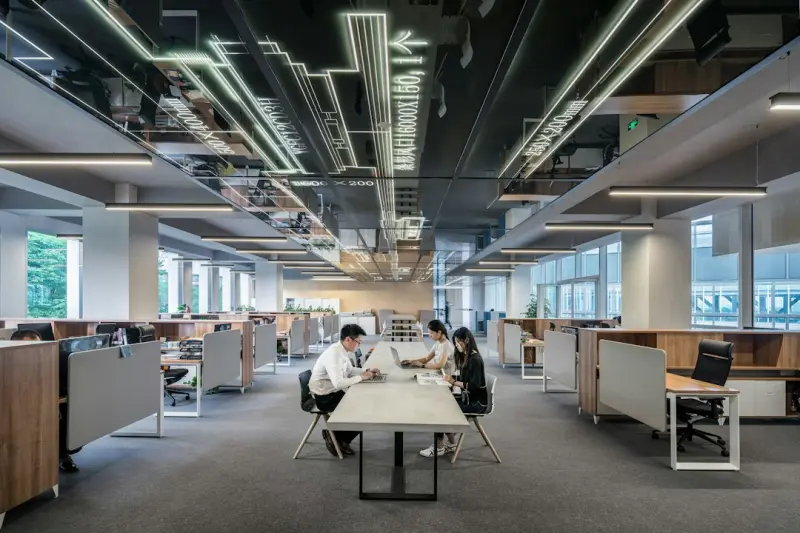
From Cubicles to Communities: Why Hybrid Workspaces Are the Business Frontier
When I first stepped into a glass‑walled office in downtown Toronto, I felt the familiar hum of fluorescent lights and the rhythmic clack of keyboards. Fast forward a few years, and that same space now hosts a rotating cast of remote‑first employees joining via high‑definition video, a small in‑person team huddling around a coffee bar, and a handful of freelancers dropping in for “collaboration days.” The old notion of a static office is evaporating, replaced by a dynamic ecosystem that I like to call the hybrid workspace. This evolution isn’t just a trend; it’s a strategic pivot that can unlock new revenue streams, improve talent retention, and future‑proof your organization against disruption.
The Business Case Behind Hybrid Flexibility
Data from multiple surveys suggest that over 70% of knowledge workers now expect some degree of flexibility in where they work. Companies that ignore this demand risk higher turnover, lower engagement, and a stagnant employer brand. But the upside for those that embrace hybrid models goes far beyond employee satisfaction. Here are three concrete financial levers you can pull:
- Reduced Real‑Estate Footprint: By downsizing your primary office to a “hub” model—think 30‑40% of the original square footage—you can slash lease costs while still offering a physical anchor for culture‑building events.
- Talent Access Across Geographies: Hybrid policies open the door to high‑performing talent in secondary markets where salaries are often 15‑20% lower than in major metros.
- Productivity Gains Through Autonomy: When employees control their environment, they tend to structure their days for peak focus, leading to measurable increases in output (often cited at 4‑6% in pilot studies).
All of these elements combine to create a virtuous cycle: lower operating costs, higher‑quality hires, and a more productive workforce that fuels growth.
Designing the Hybrid Hub: From Theory to Floorplan
Creating a hybrid hub isn’t about chopping down walls and handing out laptops; it’s an exercise in intentional design. The space must support three distinct modes of work:
- Collaboration Zones: Open, adaptable areas equipped with movable whiteboards, video‑conferencing tech, and acoustic panels for spontaneous brainstorming.
- Focus Pods: Small, enclosed booths that provide a distraction‑free environment for deep work, especially for those who thrive in quiet.
- Social Nodes: Coffee‑styled lounges where informal conversations can spark innovation—think of them as the modern equivalent of the water‑cooler.
When you pair this physical layout with a robust digital backbone—high‑speed Wi‑Fi, cloud‑based collaboration suites, and secure VPN access—you create a seamless bridge between remote and on‑site teams. This approach mirrors the principles outlined in distributed leadership, where authority and decision‑making flow organically across locations.
Culture in the Cloud: Maintaining Identity When Teams Are Scattered
One of the biggest fears leaders voice is the erosion of company culture once employees stop sharing the same physical space. The reality, however, is that culture is a set of shared rituals, not a building’s décor. To nurture it in a hybrid world, consider these practices:
- Virtual Onboarding Journeys: New hires receive a curated digital welcome kit that includes video messages from senior leaders, an interactive map of the hybrid hub, and a schedule of “first‑month” virtual coffee chats.
- Quarterly “In‑Person Immersion” Days: Rotate the location of these gatherings—sometimes at the hub, sometimes at satellite coworking spaces—to keep the experience fresh and inclusive.
- Transparent Metrics Dashboard: Share real‑time data on team performance, project milestones, and even wellness scores, fostering a sense of collective accountability.
When you embed these rituals into the everyday workflow, you’ll find that the cultural glue becomes even stronger than before. Employees feel seen, heard, and part of a shared narrative, regardless of where they log in from.
Technology Stack: The Unsung Hero of Hybrid Success
Behind every successful hybrid workspace lies a sophisticated tech stack. While you don’t need to reinvent the wheel, aligning your tools with the hybrid model is critical. Here’s a quick checklist:
- Unified Communications Platform: Choose a solution that integrates video, chat, and voice—think Microsoft Teams, Zoom, or Slack with built‑in calling.
- Cloud‑Native Project Management: Tools like Asana or Monday.com that provide real‑time task visibility and automate workflow handoffs.
- Secure Identity & Access Management (IAM): Multi‑factor authentication and single‑sign‑on (SSO) to protect data across dispersed devices.
- Employee Wellbeing Suite: Platforms that track mental health, offer meditation breaks, and surface early warning signs of burnout.
Integrating these solutions creates a single source of truth for the entire organization, reducing friction and ensuring that remote workers have the same capabilities as those on‑site. If you’re curious about how digital tools are reshaping other industries, the piece on digital tools in Ontario angling offers a fascinating parallel.
Measuring Success: KPIs That Matter in a Hybrid World
Transitioning to a hybrid model is an investment; you need a clear set of metrics to gauge ROI. Below are the top KPIs you should monitor quarterly:
| Metric | Why It Matters |
|---|---|
| Office Space Utilization Rate | Tracks the percentage of desks used on any given day, informing real‑estate decisions. |
| Employee Net Promoter Score (eNPS) | Measures employee satisfaction and likelihood to recommend the company. |
| Recruitment Cost per Hire | Shows savings from tapping talent in lower‑cost markets. |
| Project Cycle Time | Evaluates whether hybrid collaboration speeds up or slows delivery. |
| Wellbeing Index | Aggregates data from wellness platforms to flag burnout risks early. |
By benchmarking these numbers against pre‑hybrid baselines, you’ll quickly spot where the model is delivering value and where adjustments are needed. Remember, the goal isn’t to chase perfection but to iterate toward a sustainable, high‑performing ecosystem.
Future‑Proofing: Hybrid as a Launchpad for Innovation
The hybrid workspace is more than a cost‑saving measure; it’s a catalyst for experimentation. With employees spread across time zones and environments, you naturally get a diversity of perspectives that can spark breakthrough ideas. Companies that embed “innovation sprints” into their hybrid rhythm—short, focused periods where cross‑functional teams tackle a specific challenge—often see a surge in patent filings and new product concepts.
Moreover, the flexibility of a hybrid hub allows you to test new office layouts, tech pilots, and even sustainability initiatives without committing to a massive, permanent footprint. Think of the hub as a living lab where every change is a data point, feeding into a continuous improvement loop.
In short, the hybrid workspace is the new frontier for businesses that want to stay agile, attract top talent, and foster a culture of innovation. By re‑imagining the office as a collaborative hub, aligning technology, and measuring the right metrics, you’ll turn what once felt like a disruption into a competitive advantage.

Related Posts

Why Internal Marketplaces Are the Next Competitive Edge
Internal marketplaces transform idle assets into strategic resources, fostering collaboration, cutti... Read More

The Remote‑First Evolution: Building Collaboration Hubs That Thrive
Discover why the future of work hinges on turning offices into purposeful collaboration hubs, using ... Read More

Negotiation Bots: AI’s Quiet Revolution in B2B Deal‑Making
AI negotiation bots are reshaping B2B contract negotiations by cutting cycle times, boosting margins... Read More
Top Posts

How Canadian Farmers Are Turning Data Into a New Harvest
Canadian farmers are blending satellite imagery, AI tools, and cooperative networks to make smarter, more sustainable decisions—creating a data‑driven harve...Read More
Cottage Comeback: Remote Work Revives Canadian Seasonal Living
Remote work is reshaping Canadian living, turning traditional summer cottages into permanent, eco‑friendly work‑life sanctuaries that nurture community, boo...Read More

The Secret Sauce of Tiered Discounts: Turning SaaS Pricing Into a Savings Engine
Learn how tiered discounts, strategic commitments, and purpose‑driven negotiations can turn standard SaaS pricing into a powerful savings engine, complete wit...Read More

Zero‑Waste Cocktails: Crafting Drinks with Nothing to Lose
Discover the emerging world of zero‑waste cocktails, where every peel, seed, and marine extract becomes a flavor opportunity, powered by AI and community-driv...Read More
0 Comments
Post Comment
You will need to Login or Register to comment on this post!