
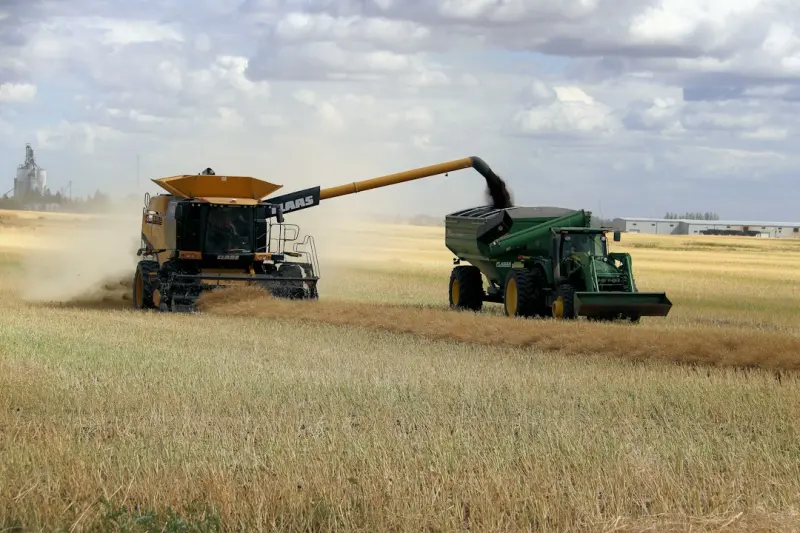
From Soil to Screen: How Canadian Farmers Are Turning Data Into Growth
When I first stepped onto my grandparents’ farm in the Okanagan Valley, the most sophisticated piece of equipment was a brass compass that had guided generations through the rolling hills. Today, the same fields are dotted with drones humming above the rows, soil sensors blinking under the loam, and smartphones displaying weather patterns in real time. As a third‑generation farmer, I’ve watched this transformation with a mixture of awe and a healthy dose of skepticism. Yet, the evidence is clear: data‑driven practices are no longer a novelty—they’re becoming the backbone of sustainable, profitable farming across Canada.
Why the Digital Shift Matters Now More Than Ever
Canadian agriculture faces a perfect storm of challenges. Climate variability is stretching the limits of traditional planting windows, market volatility is tightening profit margins, and labour shortages are pushing farms to do more with fewer hands. In this context, the ability to make rapid, informed decisions can be the difference between a bumper crop and a lost season.
But it’s not just about technology for technology’s sake. The digital tools we’re adopting are designed to address very concrete problems:
- Precision irrigation that reduces water use by up to 30% while maintaining yields.
- Predictive pest modelling that alerts growers to emerging threats days before they become visible.
- Real‑time market dashboards that help farmers lock in better prices before the market swings.
These capabilities are reshaping the farmer’s daily routine, turning gut‑feel decisions into evidence‑based strategies.
The Toolbox: From Sensors to Satellite Imagery
Let’s break down the most common digital tools now cropping up on farms from the Maritimes to the Prairies.
Soil Health Sensors
Small, battery‑powered probes buried a few inches beneath the surface continuously measure moisture, temperature, and nutrient levels. The data streams to a mobile app, allowing growers to fine‑tune fertilizer applications. In a recent trial on a wheat farm near Saskatoon, sensor‑guided nitrogen management cut input costs by 18% without sacrificing grain quality.
Drones and Aerial Imaging
High‑resolution drones equipped with multispectral cameras fly over fields, creating detailed maps that highlight stress zones invisible to the naked eye. Farmers can spot a fungal outbreak in its infancy, target pesticide applications only where needed, and avoid blanket spraying that harms beneficial insects.
Satellite Platforms
While drones are ideal for field‑level insight, satellites provide a broader, macro view. Services such as Planet and Sentinel offer weekly imagery that tracks vegetation indices across thousands of hectares. When combined with local weather stations, these datasets help predict yield outcomes months ahead of harvest.
Farm Management Software (FMS)
All the data points converge in a central platform—think of it as a digital command centre. Modern FMS solutions integrate sensor readings, drone maps, market prices, and even labor schedules. The result is a single dashboard where a farmer can see the entire operation at a glance, schedule tasks, and generate compliance reports for government programs.
Community‑Powered Data Sharing: The New Cooperative Model
One of the most exciting developments is the rise of farmer‑led data cooperatives. Historically, individual growers guarded their data like a family heirloom, fearing that sharing information would erode competitive advantage. Today, a growing number of agricultural groups are realizing that collective intelligence can amplify benefits for everyone.
In the Fraser Valley, a coalition of berry growers pooled their soil sensor data to create a regional heat map of nutrient deficiencies. By sharing this insight, each farm could adjust its fertilization plan, resulting in an average yield increase of 7% across the group.
This cooperative spirit mirrors the ethos of community‑driven product development, but applied to the soil beneath our feet. When growers collaborate on data standards, the aggregate information becomes powerful enough to attract research funding, influence policy, and even negotiate better terms with input suppliers.
Bridging the Digital Divide: Access, Training, and Trust
Despite the clear advantages, adoption isn’t universal. Small‑scale producers in remote northern communities often lack reliable internet, and many older farmers feel overwhelmed by the learning curve. Addressing these gaps requires a three‑pronged approach:
Infrastructure Investment
Governments and telecom providers are beginning to recognize broadband as critical infrastructure for food security. Initiatives that fund fibre‑optic extensions to rural municipalities are essential for ensuring every farm can connect to the cloud.
Hands‑On Education
Extension services and university outreach programs are pivoting from lecture‑style workshops to field‑based demonstrations. By pairing a seasoned agronomist with a tech specialist, growers can see a sensor being installed, watch the data appear on a tablet, and immediately ask questions.
Building Trust Through Transparency
Data ownership concerns remain a hurdle. Farmers worry that corporations might harvest their field data for profit. To mitigate this, many FMS providers now offer clear, farmer‑first data policies, guaranteeing that raw data stays on the farmer’s server unless explicit permission is granted for sharing.
Case Study: A Family Farm’s Digital Journey
Meet the McAllisters, a mixed‑crop farm in New Brunswick. Three generations ago, they relied on a handwritten ledger and a weathered almanac. In 2021, they took the plunge and installed a suite of soil sensors, a drone, and a cloud‑based management platform.
Within the first season, they observed the following outcomes:
- Water savings: Precision irrigation reduced water usage by 22,000 litres.
- Yield boost: Early detection of a soybean rust outbreak allowed targeted treatment, resulting in a 12% increase in harvest weight.
- Cost reduction: By optimizing fertilizer schedules, they saved $8,500 in input expenses.
- Market advantage: Real‑time price alerts helped them secure a premium contract with a local food processor.
The McAllisters attribute their success not only to technology but also to a shift in mindset—seeing data as a partner rather than a replacement for intuition.
Future Trends: What’s on the Horizon for Canadian Farmers?
While we’ve covered the tools that are already in the field, several emerging trends promise to deepen the digital transformation:
Artificial Intelligence for Crop Forecasting
Machine‑learning models trained on decades of climate, soil, and yield data can now predict season‑long outcomes with remarkable accuracy. These forecasts empower growers to make strategic decisions about planting dates, crop rotation, and risk management.
Blockchain for Traceability
Consumers are demanding transparency about where their food comes from. Blockchain ledgers can securely record each step—from seed to shelf—building trust and opening doors to premium “farm‑verified” markets.
Renewable Energy Integration
Many farms are installing solar arrays and wind turbines, not just to offset electricity costs but also to power their digital infrastructure. Excess energy can be sold back to the grid, creating an additional revenue stream that further stabilizes farm finances.
Robotics and Autonomous Machinery
Self‑driving tractors and robotic weeders are moving from prototype to commercial availability. While the upfront cost remains a barrier, shared ownership models—similar to equipment co‑ops—are emerging to make these technologies accessible to smaller operations.
Balancing Technology with Tradition
It’s easy to get caught up in the hype of new gadgets, but the heart of Canadian farming remains rooted in stewardship of the land and community. The most successful adopters are those who blend digital insight with generational knowledge. By honoring the lessons of the past while embracing the possibilities of the future, we can build a resilient agricultural sector that feeds the nation and the world.
Getting Started: A Practical Checklist for Any Farmer
If you’re considering a digital upgrade, here’s a straightforward roadmap:
- Identify the biggest pain point. Is water use a concern? Are pests a recurring issue? Focus on one challenge at a time.
- Start small. Deploy a single soil sensor or a drone flight over a test plot. Measure the impact before scaling.
- Choose an interoperable platform. Ensure the software can integrate future tools and data sources.
- Engage your community. Join a local data cooperative or farmer network to share insights and reduce costs.
- Invest in training. Allocate time for hands‑on learning; consider pairing with a tech mentor.
- Monitor ROI. Track savings, yield changes, and time efficiencies to justify further investment.
By following these steps, you’ll move from curiosity to confidence, turning data into a reliable ally on the field.
Conclusion: A New Chapter for Canadian Agriculture
The digital era is not a distant future; it’s already in our paddocks, silos, and grain elevators. As we navigate climate uncertainty, market pressures, and labour constraints, the tools we choose today will shape the legacy we leave for the next generation of growers. Embracing data does not diminish our connection to the soil—it amplifies it, allowing us to make decisions that honor the land while securing our livelihoods.
So, the next time you hear the whirr of a drone overhead or see a bright graph on your tablet, remember: you’re part of a movement that blends centuries‑old wisdom with cutting‑edge science. Together, we’re writing a new story for Canadian farmers—one pixel at a time.

Related Posts
The Struggles and Triumphs of Canadian Farmers
Canadian farmers play a vital role in the country's economy, but they face a multitude of challenges... Read More
Beyond Crops: How Canadian Farmers Are Crafting Experiential Agri‑Tourism for a New Generation
Canadian farmers are turning fields into immersive destinations, using tech, storytelling, and Indig... Read More
Cultivating Connection: How Canadian Farmers Use Storytelling to Grow Brands
Canadian farmers are weaving heritage, sustainability, and personal experiences into compelling narr... Read More
Top Posts

Indigenous Power Plays: How Nation‑Building Is Redefining Ottawa’s Agenda
Indigenous nation‑building is becoming a decisive force in Canadian politics, driving legal reforms, party platform shifts, and new business models centered o...Read More

When Algorithms Meet the Kitchen: AI-Generated Recipes and the Future of Home Cooking
AI-driven recipe platforms blend data, flavor science, and personal preferences, offering hyper‑personalized meals, smarter shopping, and reduced waste—all ...Read More

Cottage Revival: Remote Work Meets Lakefront Living
Remote work is breathing new life into Canada’s beloved cottages, turning weekend getaways into year‑round hubs of productivity, community, and sustainable ...Read More

The Unseen Struggles of Rural Marketing: A Call for Authenticity
Rural marketing requires a deep understanding of the local context and a willingness to listen and learn. Learn how businesses can prioritize authenticity and c...Read More
0 Comments
Post Comment
You will need to Login or Register to comment on this post!