
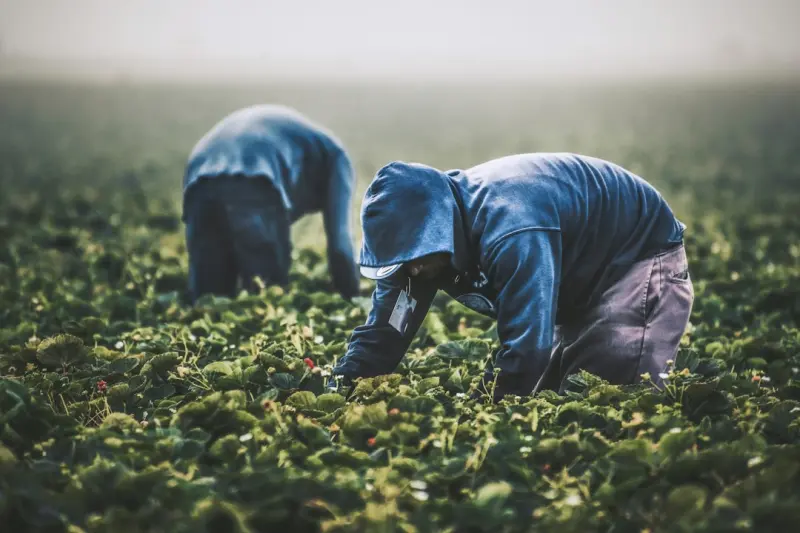
When I first took over the family farm in the rolling fields of southwestern Ontario, the biggest decision I faced was not what crop to plant but how to keep the farm alive in a world that seemed to be moving faster than the seasons themselves. I’ve spent the last two decades watching tractors trade places with drones, barns give way to co‑working spaces, and the quiet hum of the windmill become a backdrop for livestreams that connect a local farmer with a consumer half a continent away. The story I’m sharing today isn’t about the latest gadget or a policy headline—it’s about the human side of that evolution: the way Canadian farmers are rewriting the rules of community, money, and mindset.
From Lone Wolf to Cooperative Wolfpack
For generations, the image of a Canadian farmer was a solitary figure, boots in the mud, eyes fixed on the horizon. That image is powerful, but it also hides a truth that many of us have been living out in secret: the loneliness of the grind.
In the past five years, a wave of farmer‑led cooperatives has begun to replace the lone‑wolf model. These aren’t the top‑down, corporate‑style co‑ops you read about in textbooks. They’re grassroots collectives forged around shared values, mutual aid, and an understanding that strength comes from collaboration.
- Shared Equipment Pools – Instead of each operation buying an expensive combine, farms now rotate use through a central hub, reducing capital outlay and maintenance headaches.
- Joint Marketing Channels – By bundling their harvests under a single brand, smallholders gain negotiating power with supermarkets and can command better prices.
- Collective Insurance – A shared risk pool cushions members against weather events, market dips, and even the occasional equipment mishap.
What surprised me most was how quickly these cooperatives built trust. The first time I walked into a meeting and saw a dozen farmers—some of whom I’d never spoken to—huddled around a laptop discussing a shared marketing dashboard, I felt a surge of optimism I hadn’t experienced since my teenage years when my grandfather first let me plant a row of beans.
Digital Marketplaces: The New Farmgate
One of the biggest barriers to scaling these co‑ops has traditionally been the lack of a reliable sales channel. That’s where digital marketplaces come in. A few tech‑savvy farmers in my network built a simple, mobile‑first platform that lets consumers order directly from the farm, schedule deliveries, and even watch a live feed of the field where their carrots are growing.
The platform is not a polished, unicorn‑level app; it’s a modest website built on an open‑source framework, supported by a community of volunteers. Yet its impact is profound. A small family farm that once sold a few hundred kilograms of produce at a local farmer’s market now ships fresh greens to urban customers across three provinces, all while keeping a transparent supply chain.
Incorporating tech doesn’t mean abandoning tradition. In fact, many of these platforms integrate with the very same smart sensor networks that monitor soil moisture and predict optimal harvest windows. The data collected feeds directly into inventory dashboards, ensuring that the digital storefront never oversells a crop that hasn’t yet reached market readiness.
Money Matters: Rethinking Finance for the Modern Farm
Access to capital has always been the Achilles’ heel of agriculture. Traditional banks often view farms as high‑risk borrowers, and the lengthy approval processes can stall a planting season.
Enter community‑based financing models. Some co‑ops have turned to crowdfunded seasonal loans, where local residents contribute small amounts that collectively cover a farm’s input costs. In return, contributors receive a share of the harvest or a modest interest payment—often in the form of a basket of fresh produce.
Another innovative approach is the “farm‑as‑service” model. Instead of selling a crop outright, farmers lease a portion of their land or the output of a specific field to a corporate partner. The partner supplies the upfront capital for seeds, fertilizer, and labor, and the farmer receives a predictable revenue stream, regardless of market fluctuations. This arrangement reduces risk for both parties and encourages long‑term planning.
These financing experiments have been bolstered by government programs that now recognize the value of cooperative structures. While the policy landscape is still catching up, the message is clear: lenders are beginning to see farms as community assets rather than isolated profit centers.
Mindset Shifts: From Survival to Thriving
Perhaps the most transformative change is internal—how we, as farmers, think about our work.
Traditional farm culture often glorifies stoicism. “Tough it out” is a mantra passed down through generations. While resilience is essential, that mindset can also discourage seeking help for mental health challenges. Recent surveys show that rates of anxiety and depression among rural Canadians are higher than the national average.
Co‑ops are tackling this head‑on by creating peer‑support circles. Every month, a rotating group of members meets (sometimes virtually) to discuss not just agronomy but also stress, family dynamics, and personal goals. The confidentiality and shared experience foster an environment where vulnerability is seen as strength.
Some farms have even partnered with health‑tech innovators—think rural tele‑health solutions—to provide on‑site mental‑wellness resources. A simple app that offers guided breathing exercises, short counseling sessions, or a check‑in questionnaire can make a world of difference during a tough growing season.
Value‑Added Products: Turning By‑Products into Gold
One area where many farms have found a surprising revenue boost is through value‑added processing. Rather than discarding imperfect fruits, leaves, or even spent grain, farmers are experimenting with small‑scale fermentation, drying, and preservation techniques.
Take the example of a grain farmer in the Prairies who partnered with a local artisan to create a line of value‑added fermentation projects. By converting surplus barley into a tangy, probiotic‑rich beverage, the farmer unlocked a market segment that values functional foods, all while reducing waste.
These projects often start as a hobby—something to keep the family busy over the winter—but they can evolve into a legitimate secondary income stream. The key is leveraging existing assets (raw material, space, labor) and adding a modest amount of processing expertise.
Preserving Knowledge: The Role of Intergenerational Storytelling
Technology and finance are important, but the soul of farming is its stories. My grandfather used to tell me how the land “remembers” the hands that tend it. Those narratives hold practical wisdom—when to plant, how to read the sky, how to coax a reluctant seedling into growth.
Co‑ops are now formalizing that oral tradition through digital archives. Members record short videos describing a specific technique or a seasonal anecdote, tagging them with metadata for easy retrieval. Younger farmers can browse these archives on a tablet while on the field, bridging the gap between ancestral knowledge and modern best practices.
This repository also serves an external purpose: it provides rich content for marketing, grants, and community outreach. A compelling story about a centuries‑old family orchard that now uses precision irrigation can attract eco‑tourists, educational groups, and even investors looking for authentic sustainability narratives.
Looking Ahead: A Blueprint for the Next Generation
What does the future hold for Canadian agriculture? I’m not a prophet, but I can see a few clear trends emerging from the grassroots movements we’ve discussed:
- Deeper Integration of Community Capital – As more farmers join cooperatives, the collective financial muscle will grow, allowing for larger infrastructure projects without relying on traditional lenders.
- Hybrid Digital‑Physical Marketplaces – The line between online ordering and farm‑gate experiences will blur, with augmented reality tours, virtual harvest festivals, and real‑time field updates becoming the norm.
- Holistic Health Frameworks – Mental‑health resources will be woven into farm management plans, recognizing that a healthy mind is as vital as fertile soil.
- Micro‑Processing Hubs – Small‑scale fermentation, drying, and packaging facilities will sprout near farms, turning “waste” into market‑ready products and creating local jobs.
- Living Archives of Knowledge – Digital storytelling will preserve the tacit knowledge that has kept Canadian farms productive for centuries, ensuring it isn’t lost as the industry modernizes.
At the end of the day, the story I’m living is one of adaptation, not surrender. The fields may change, the tools may evolve, but the core principle remains: we feed a nation, and in doing so, we feed our communities, our families, and ourselves.
If you’re a farmer feeling the weight of uncertainty, consider reaching out to a nearby cooperative, exploring a digital marketplace, or simply starting a conversation about mental health with a trusted peer. The collective wisdom of Canada’s agricultural community is ready to support you—if you’re willing to let it in.

Related Posts
Cultivating Resilience: How Canadian Farmers Are Rewriting Rural Well‑Being
Canadian farmers are redefining resilience by addressing mental health, forming cooperative networks... Read More
Harnessing Shared Analytics: How Canadian Farmers Are Winning with Data Cooperatives
Canadian farmers are turning data into a collective asset, forming cooperatives that share analytics... Read More

From Soil to Ledger: How Blockchain is Rewriting the Canadian Farm Story
Blockchain is emerging as a practical tool for Canadian farmers, offering immutable traceability, pr... Read More
Top Posts

Silent Currents: Rediscovering Ontario’s Lesser‑Known Fishing Sanctuaries
Discover Ontario’s hidden fishing sanctuaries, learn low‑tech seasonal strategies, adopt zero‑waste prep, and join a community of stewardship for a richer...Read More

Micro‑Deal Magic: Turning Tiny Savings into Big Business Gains
Discover a step‑by‑step playbook for leveraging micro‑deals—modest discounts, free seats, and extended trials—to accumulate significant savings across...Read More

When Tariffs Meet Everyday Life: A Fresh Look at Hidden Costs
Explore the unseen impact of tariffs on daily purchases, from gadgets to groceries, and find out how you can navigate and influence trade policies for better fi...Read More

Unlocking the Hidden Power of Meal Timing, Seasonality, and Food Pairing
Learn how meal timing, micro‑seasonal produce, and nutrient‑pairing strategies can transform everyday eating into a powerful health boost....Read More
0 Comments
Post Comment
You will need to Login or Register to comment on this post!