
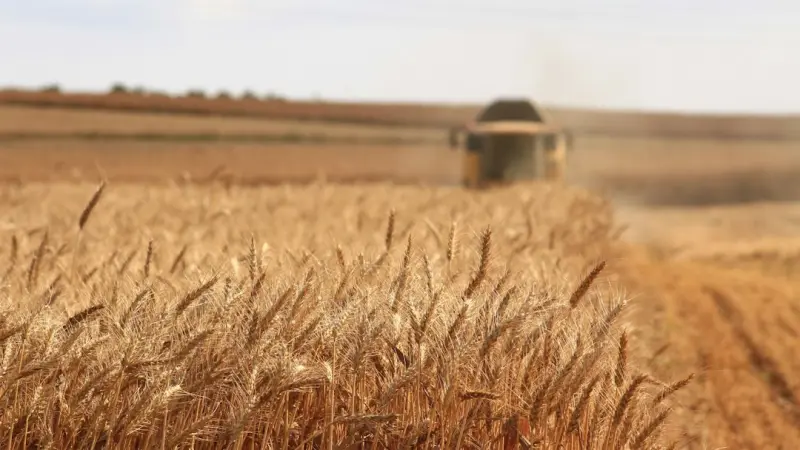
From Soil to Software: The New Wave of Data‑Driven Farming in Canada
When I first stepped onto my grandfather’s wheat fields in the prairie province of Saskatchewan, the only “data” I saw are the weathered rows and the occasional rustle of the wind. Today, that same landscape hums with the quiet chatter of Bluetooth‑enabled soil probes, drone‑captured NDVI maps, and AI models that predict the perfect moment to fertilize. The transformation is not a distant futurist fantasy; it’s happening right now, and it’s reshaping the way Canadian growers—big and small—make decisions, cut waste, and protect their bottom line.
Why Sensors Are No Longer a Luxury
Ten years ago, a precision‑ag sensor system cost as much as a midsize tractor. Most family farms could not justify the expense, so “precision” was a buzzword reserved for corporate agribusinesses. The market has shifted dramatically:
- Miniaturization: Advances in MEMS (Micro‑Electro‑Mechanical Systems) have shrunk devices to the size of a thumbtack, allowing a single farmer to deploy hundreds across a single field.
- Connectivity: Low‑power wide‑area networks (LPWAN) such as LoRaWAN and NB‑IoT provide reliable rural coverage without the need for expensive cellular plans.
- Open‑Source Platforms: Projects like OpenAg and FarmOS let growers plug sensors into free software dashboards, sidestepping costly proprietary licences.
These factors have turned sensors from a “nice‑to‑have” into a must‑have for anyone serious about staying competitive in a market where margins are razor‑thin.
From Raw Readings to Actionable Insight
The real magic happens when raw data meets intelligent analytics. A typical sensor suite might collect:
- Soil moisture and temperature at multiple depths
- Leaf wetness and ambient humidity
- Solar radiation and wind speed
- Crop health indices via multispectral imaging
Individually, each metric offers a glimpse of field conditions. Together, they feed machine‑learning models that can:
- Predict the optimal irrigation schedule, saving up to 30% of water use.
- Identify nutrient deficiencies before visual symptoms appear, reducing fertilizer waste.
- Forecast pest pressure based on micro‑climatic trends, allowing targeted interventions.
For a farmer in the Okanagan Valley, this means the difference between a bumper harvest of blueberries and a costly loss due to over‑watering. For a wheat producer in the Maritimes, it could translate into a 5‑bushel-per‑acre yield boost—money that matters when export prices fluctuate.
Real‑World Success Stories Across the Provinces
Across Canada, early adopters are already reaping tangible benefits.
Ontario’s Mixed‑Fruit Growers have deployed soil‑moisture grids linked to automated drip lines. By fine‑tuning irrigation to the exact needs of each orchard block, they report a 22% reduction in water use and a noticeable improvement in fruit sweetness.
Alberta’s Pulse Farmers use drone‑based NDVI scans combined with AI‑driven nitrogen recommendations. The system tells them precisely where to apply starter fertilizer, cutting input costs by 18% while maintaining protein levels.
Even in the remote north of Quebec, a small dairy operation installed a network of temperature and humidity sensors inside its barns. The data fed a predictive model that flags heat stress days, prompting timely ventilation adjustments and preserving animal health.
These examples echo a larger trend: data‑driven decisions are no longer confined to “high‑tech” crops. They’re becoming the backbone of everyday farm management, from grain to livestock.
Bridging the Knowledge Gap: From Field Hands to Data Scientists
One of the biggest hurdles isn’t the hardware; it’s the human side of data. Many growers grew up with a deep intuition for their land but have never written a line of code. To address this, a new generation of ag‑tech incubators is emerging, offering:
- Hands‑On Workshops that teach farmers how to read dashboards and set thresholds.
- Mentorship Programs pairing tech‑savvy students with veteran growers.
- Community Data Pools where neighbouring farms share anonymised datasets to improve model accuracy.
These collaborative ecosystems echo the spirit of the digital health initiatives reshaping rural care. Just as telemedicine platforms have broadened access to doctors, farm‑data platforms are expanding access to expertise that once lived only in university labs.
Policy, Funding, and the Role of Government
Canada’s federal and provincial governments recognize the strategic importance of modernising agriculture. Recent funding streams focus on:
- Grants for sensor acquisition for small‑scale farms.
- Tax incentives for companies developing AI tools tailored to Canadian cropping systems.
- Research partnerships between universities and growers to validate new models under real‑world conditions.
These initiatives aim to level the playing field, ensuring that a family farm in New Brunswick can benefit from the same data tools as a large grain operation in Saskatchewan. The result is a more resilient national food system that can adapt quickly to market shifts and climate variability.
The Interplay Between Data and Sustainability
While this piece focuses on profitability, the environmental upside is hard to ignore. Precision applications of water, fertilizer, and pesticides directly reduce runoff, lower greenhouse‑gas emissions, and preserve soil health. In fact, many of the same technologies that drive economic gains are the very tools highlighted in the stories of climate‑smart farming. The difference now is that data provides the feedback loop needed to measure impact in near real‑time, turning sustainability from an aspirational goal into a quantifiable metric.
Cybersecurity on the Farm: An Emerging Concern
As farms become more connected, they also become more vulnerable. A compromised irrigation controller could lead to wasted water, while a hacked data platform might expose proprietary yield forecasts. Farmers are therefore being educated on basic cybersecurity hygiene: strong passwords, regular firmware updates, and network segmentation. Some provincial agricultural extensions are even offering free vulnerability assessments, reinforcing that digital resilience is as vital as soil resilience.
Looking Ahead: A Fully Integrated Agri‑Network
Imagine a future where every farm sensor talks not only to the farmer’s phone but also to a national grid that balances water use across basins, a market platform that matches surplus produce with local food banks, and a climate model that predicts seasonal shifts weeks in advance. That vision is edging closer thanks to:
- Standardized data formats that enable interoperability.
- Edge‑computing devices that process data locally, reducing latency.
- Policy frameworks that protect farmer data ownership while encouraging open collaboration.
When these pieces click together, Canadian agriculture will be positioned as a model of efficiency, sustainability, and technological leadership on the global stage.
Conclusion: Cultivating the Data Mindset
The fields of Canada have always been a canvas for innovation—from the introduction of the combine harvester to the adoption of no‑till practices. Today’s canvas is digital, and the brushstrokes are made of data points collected every minute from sensors tucked into the soil. For growers willing to embrace this shift, the payoff is clear: higher yields, lower input costs, and a more sustainable operation. For those hesitant, the risk is falling behind a rapidly evolving industry.
Whether you’re a seasoned farmer, a new entrant, or a tech partner looking to make a difference, the message is simple: the future of Canadian agriculture is being written in code as much as it is in corn stalks. Get your hands on the data, and you’ll find that the possibilities are as boundless as the prairie horizon.

Related Posts
Regenerative Roots: How Canadian Farmers Turn Soil into Climate Solutions
Canadian farmers are reshaping agriculture by adopting regenerative methods that improve soil health... Read More
From Field to Forum: How Canadian Farmers Are Shaping Local Food Policy
Canadian farmers are stepping into policy rooms, forming cooperatives, embracing Indigenous seed sov... Read More
Powering the Fields: How On‑Farm Renewable Energy is Transforming Canadian Agriculture
Canadian farmers are harnessing solar panels, wind turbines, and biogas systems to lower expenses, l... Read More
Top Posts

Reimagining National Identity Through Digital Public Services
A fresh look at national identity in the digital age, emphasizing trust‑centric design, adaptive experience loops, and citizen‑driven innovation to build in...Read More

Parental Warning: Navigating SaaS, Data Privacy, and Kids in the Digital Age
A deep dive into the hidden data pipelines of kids’ apps, why parental warnings matter more than ever, and actionable tips for safeguarding children’s digit...Read More

Internal Marketplaces: Turning Organizational Friction into Growth Engines
Learn how building an internal marketplace can turn internal friction into a strategic advantage, accelerating innovation, improving talent retention, and deliv...Read More

Turning Data into Dialogue: How Conversational AI Is Reshaping Modern Marketing
Explore the rise of conversational AI in marketing, how it redefines the customer journey, and the metrics that prove its impact on brand growth....Read More
0 Comments
Post Comment
You will need to Login or Register to comment on this post!