
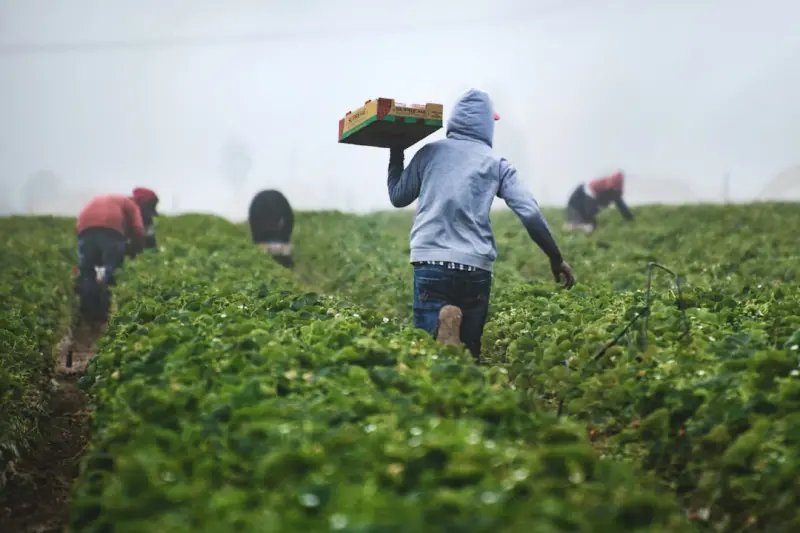
Why Regenerative Agriculture Is the New Frontier for Canadian Farmers
When I first set foot on my grandfather’s wheat field in the heart of Saskatchewan, the wind carried the faint smell of earth after a summer rain. That scent has stayed with me, reminding me that farming is less about the market price of a bushel and more about the life pulsing beneath every footstep. Today, a quiet (but not “quiet”) transformation is sweeping across Canada’s farms: a shift toward regenerative agriculture that treats soil not as a commodity, but as a living system that can sequester carbon, improve biodiversity, and safeguard our food supply for generations to come.
The Science Behind the Soil
Regenerative practices—cover cropping, reduced tillage, diversified rotations, and holistic grazing—are grounded in a simple truth: healthy soil holds more water, more nutrients, and more carbon than depleted ground. Researchers from the University of Manitoba have shown that a well‑managed prairie can lock away up to 1.5 tonnes of carbon per hectare each year. That’s not just a number; it’s a powerful lever in Canada’s climate strategy, especially as our agricultural sector accounts for roughly 10 % of national greenhouse‑gas emissions.
From Soil Health to Farm Profitability
For many producers, the conversation about regeneration still hinges on the bottom line. Here’s how the math adds up:
- Reduced Input Costs: Fewer synthetic fertilizers mean lower expenses and less reliance on volatile global markets.
- Improved Yield Resilience: Diverse crop rotations buffer farms against droughts, floods, and pest outbreaks, leading to more stable harvests.
- Premium Market Opportunities: Consumers increasingly seek products labeled “regenerative” or “soil‑rich,” opening doors to niche pricing.
One farmer in the Okanagan shared that after transitioning 40 % of his acreage to a mix of legumes, rye, and native grasses, his input costs dropped by 22 % while yields remained steady. That balance of ecological stewardship and economic viability is the sweet spot we’re all aiming for.
Stories From the Field
Let me introduce you to three growers whose stories illustrate the regenerative wave:
- Emily Chen – Mixed‑Fruit Orchard, Nova Scotia: Emily replaced annual tillage with a perennial cover‑crop blanket of clover and vetch. Within three seasons, her soil organic matter rose from 2.5 % to 4.3 %. The orchard now requires 30 % less irrigation, a critical advantage on the Atlantic coast.
- Jared McLeod – Cattle Ranch, Alberta: Jared adopted rotational grazing, moving his herd every 24 hours across a 500‑acre pasture mosaic. The result? A 15 % increase in forage productivity and a measurable uptick in soil carbon measured by satellite imagery.
- Marisol Gagnon – Grain Farm, Quebec: Marisol integrated a “no‑till” system with a three‑year legume‑cereal rotation. Her farm’s nitrogen reliance fell by 40 %, and she now markets a “soil‑rich” wheat that chefs love for its nutty flavor profile.
Technology Meets Tradition
While the core of regenerative farming is ancient wisdom—crop diversity, animal integration, and respect for the land—today’s technology amplifies those practices. Drone‑based multispectral imaging lets growers spot nutrient deficiencies before they become visible. Soil‑carbon monitoring platforms provide real‑time data, helping farmers claim carbon credits and access new financing streams.
One tool that’s gaining traction is the Why the palette of your plate matters more than you think framework, which links on‑farm diversity to consumer nutrition. By showcasing a field’s varietal mix, farmers can tell a story that resonates on dinner tables across the country, turning ecological stewardship into a marketable narrative.
Policy Landscape: Incentives and Gaps
The federal government has rolled out several programs—such as the Agri‑Innovation Program and the Carbon Farming Initiative—that reward carbon sequestration and reduced tillage. However, many growers still face hurdles:
- Measurement Uncertainty: Quantifying soil carbon remains complex, and verification standards are still evolving.
- Access to Capital: Transitioning to regenerative systems often requires upfront investment in equipment or seed stock.
- Knowledge Gaps: While extension services are improving, many farmers lack hands‑on training for new practices.
Provincial ministries are beginning to fill these gaps with pilot projects, but a coordinated national strategy would accelerate adoption and ensure that Canada’s agricultural carbon sink reaches its full potential.
Consumer Connections: From Farm to Fork
Regenerative agriculture isn’t just a farmer’s story—it’s a consumer’s story, too. When shoppers choose produce grown with soil health in mind, they’re indirectly supporting climate mitigation. This is where the link to Fermented foods: Tiny cultures, big benefits becomes relevant. Many regenerative farms are also experimenting with on‑site fermentation—think sauerkraut, kimchi, or oat kefir—leveraging the same microbial richness that makes their soils vibrant.
These value‑added products create a closed‑loop system: the farm feeds the consumer, the consumer supports the farm, and both benefit from healthier ecosystems. It’s a narrative that resonates on social media, at farmers’ markets, and increasingly in grocery‑store aisles.
Challenges on the Horizon
Despite the optimism, several challenges loom:
- Climate Variability: Extreme weather events can undo years of soil building if not managed carefully.
- Market Access: Small‑scale regenerative producers often lack the distribution networks of conventional growers.
- Policy Consistency: Shifting political priorities can affect funding streams, making long‑term planning difficult.
Addressing these issues will require collaboration across the supply chain—farmers, processors, retailers, and policymakers working in concert.
What You Can Do Today
Whether you’re a farmer, a consumer, or a policy advocate, there are concrete steps you can take:
- Support Local Regenerative Brands: Look for certifications or farmer statements about soil health.
- Educate Yourself: Attend workshops offered by agricultural colleges or extension services.
- Advocate for Incentives: Write to your MP or provincial representative asking for clearer carbon‑credit pathways for farmers.
- Try Fermented Foods: Incorporate home‑fermented vegetables into your diet and ask your local producer about their farming practices.
The Way Forward
Regenerative agriculture is not a passing trend; it’s a reconnection with the fundamental truth that healthy soil sustains healthy people. As Canadian farmers continue to experiment, learn, and share their successes, the nation stands to gain a resilient food system, a stronger climate position, and a renewed sense of place.
In the words my grandfather used to say, “The land remembers what we do to it.” Today, we have the chance to give it a story of renewal.

Related Posts

From Soil to Ledger: How Blockchain is Rewriting the Canadian Farm Story
Blockchain is emerging as a practical tool for Canadian farmers, offering immutable traceability, pr... Read More
Powering the Fields: How On‑Farm Renewable Energy is Transforming Canadian Agriculture
Canadian farmers are harnessing solar panels, wind turbines, and biogas systems to lower expenses, l... Read More
Harvesting Power: How Canadian Farmers are Turning Renewable Energy into a Competitive Edge
Canadian farmers are embracing renewable energy—solar panels, wind turbines, and bioenergy—to cu... Read More
Top Posts

Rediscovering Community: How Time Banking is Revitalizing Canadian Neighborhoods
A fresh look at time banking reveals how Canadians are turning hours into a community currency, strengthening bonds, and supporting affordable, resilient living...Read More

Unlock Hidden SaaS Savings: A Tactical Playbook for Modern Buyers
A practical, data‑driven guide that shows how to audit SaaS spend, negotiate smarter contracts, and leverage consortia to achieve lasting savings....Read More

Hybrid Cruise‑Bus Tours: The Seamless Blend Redefining Modern Travel
Explore the rise of hybrid cruise‑bus tours that merge sea‑side luxury with authentic land excursions, offering seamless, eco‑friendly travel adventures....Read More

Parental Warning: When AI Becomes the Babysitter You Didn’t Hire
Explore how generative AI is quietly becoming a de facto babysitter, the hidden risks it brings, and eight actionable steps parents can take to keep technology ...Read More
0 Comments
Post Comment
You will need to Login or Register to comment on this post!