
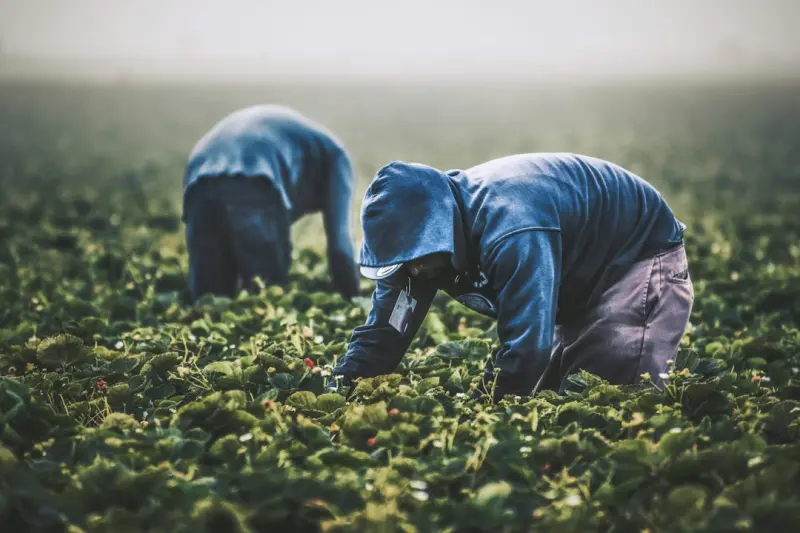
Regenerative Roots: How Canadian Farmers Are Redefining Soil Health and Community Resilience
When I first stepped onto a family farm in the rolling fields of Southern Ontario, the air smelled of loam, fresh rain, and a quiet confidence that only generations of stewardship can give. Today, that confidence is being tested by climate volatility, market pressures, and an ever‑shortening labor pool. Yet, rather than retreat, a growing coalition of Canadian growers is turning the challenge into an opportunity—by embracing regenerative agriculture not just as a set of practices, but as a cultural shift that links soil, people, and profit.
From Chemical Dependency to Living Systems
For decades, conventional farming in Canada leaned heavily on synthetic fertilizers and pesticides. The short‑term yields looked impressive on paper, but the long‑term costs manifested in depleted organic matter, increased runoff, and a loss of biodiversity. Regenerative agriculture asks a simple, yet profound, question: What if we could coax the land to feed us, instead of feeding the land?
Key techniques are gaining traction across the Prairies, the Maritimes, and the interior of British Columbia:
- Cover cropping—planting mixtures of legumes, grasses, and brassicas between cash crops to protect the soil, fix nitrogen, and create habitat for pollinators.
- Reduced tillage—minimizing soil disturbance to preserve microbial networks and reduce carbon loss.
- Managed grazing—rotating livestock in tight, timed paddocks so that grasses recover fully, fostering deeper root systems and higher water infiltration.
- Compost integration—feeding the soil with on‑farm organic waste, turning what was once a disposal problem into a nutrient source.
These practices are not theoretical; they are being logged in field journals, measured with soil carbon sensors, and shared across farmer networks. The result? Healthier soils that retain water longer, support more diverse ecosystems, and ultimately reduce the need for costly inputs.
The Data Backbone: Measuring Success in Real Time
Regeneration is a science as much as it is an art, and Canadian growers are tapping into data to prove its worth. Soil carbon maps, drone‑based vegetation indices, and IoT moisture probes are becoming as common as the tractor’s steering wheel. The insight gained from these tools helps farmers fine‑tune their rotations, pinpoint where to add compost, and forecast the impact of a dry spring.
One farmer in Saskatchewan recently shared how a simple dialogue with real‑time data transformed his operation: by uploading sensor readings to a cloud platform, he could compare carbon sequestration rates across fields and allocate resources where they mattered most. This transparency not only boosted his bottom line but also opened doors to carbon credit markets that reward regenerative outcomes.
Carbon Credits and New Revenue Streams
Canada’s federal and provincial governments are rolling out incentive programs that monetize the carbon stored in regenerative soils. Farmers can now sell verified carbon offsets to corporations seeking to neutralize their footprints. While the paperwork can be daunting, collaborative groups—often called “soil carbon co‑ops”—are emerging to handle verification, registration, and sales on behalf of member farms.
These programs are more than a financial windfall; they provide a tangible metric for the environmental benefits of regenerative practices. By quantifying carbon sequestration, farmers can demonstrate stewardship to consumers, retailers, and policymakers, strengthening the social license to operate.
Community Resilience: The Farm as a Hub
Regenerative agriculture reshapes the farm’s role in its surrounding community. A healthy field becomes a classroom, a gathering place, and a source of local food. In many regions, farmers are inviting schools to conduct soil‑testing workshops, partnering with chefs for “farm‑to‑table” pop‑ups, and hosting seasonal festivals that celebrate the land’s bounty.
These initiatives echo the spirit of the community hubs that are redefining Canadian winters. Just as insulated public spaces keep towns vibrant during cold months, regenerative farms keep the local economy thriving year‑round by providing fresh produce, educational experiences, and a sense of place.
Indigenous Knowledge Meets Modern Science
One of the most powerful undercurrents in Canada’s regenerative movement is the integration of Indigenous land‑care principles. Concepts such as “seven generations” stewardship, fire stewardship, and seasonal planting calendars are being woven into contemporary farm plans. Collaborative projects in British Columbia and Manitoba demonstrate that when Indigenous knowledge holders and settler farmers co‑design regenerative strategies, outcomes improve for both soil health and cultural preservation.
These partnerships go beyond tokenism. They involve shared decision‑making, joint ownership of data, and equitable revenue sharing from carbon markets. The result is a more inclusive agricultural sector that honors the deep relationship Indigenous peoples have with the land.
Women Leading the Regenerative Charge
While agriculture has historically been male‑dominated, women are now at the forefront of Canada’s regenerative renaissance. From a Nova Scotia dairy farm that pioneered rotational grazing for dairy cows to a Quebec orchard that uses mulching and intercropping to boost biodiversity, women are proving that regenerative practices can be tailored to any commodity.
Mentorship circles, grant programs, and women‑focused agritech incubators are amplifying this momentum, ensuring that the next generation of farm leaders brings a holistic, inclusive perspective to soil stewardship.
Technology as an Enabler, Not a Replacement
The narrative that “technology will replace the farmer” is a myth. Instead, tech serves as an enabler, allowing farmers to make more informed decisions while preserving the intuition that comes from years of hands‑on experience. Precision agriculture tools, such as variable‑rate applicators for compost or seed, reduce waste and improve yields. Meanwhile, farm management platforms aggregate data from multiple sources—soil tests, weather stations, market prices—into dashboards that are as intuitive as a farm’s weather‑vaned logbook.
Crucially, these platforms are being designed with farmer input. Open‑source communities and co‑development initiatives ensure that the software speaks the language of the field, not just the boardroom.
Economic Resilience Through Diversification
Regenerative farms are also diversifying revenue streams. Beyond traditional crops, many are exploring:
- Agroforestry—integrating trees and shrubs for timber, nuts, or carbon credits.
- Cover‑crop seed sales—producing and selling high‑quality seed mixes to neighboring farms.
- Value‑added products—turning surplus produce into jams, sauces, or fermented beverages.
- Eco‑tourism—offering farm stays, guided walks, and workshops that generate supplemental income.
This diversification cushions farms against market swings and climate shocks, turning risk into opportunity.
Policy Landscape: Supportive Yet Still Evolving
Federal and provincial policies are beginning to recognize the long‑term benefits of regenerative agriculture. Incentives for carbon sequestration, grants for soil health testing, and research funding for regenerative techniques are on the rise. However, gaps remain—particularly in simplifying the application process for smallholders and ensuring that verification standards are transparent and accessible.
Advocacy groups are lobbying for a unified national framework that aligns carbon credit verification, subsidy eligibility, and knowledge‑transfer programs. When policymakers, researchers, and farmers co‑create these policies, the result is a more resilient and competitive agricultural sector.
The Road Ahead: Scaling Regeneration Without Losing Soul
Scaling regenerative practices across Canada’s vast agricultural landscape is an ambitious goal. It requires:
- Education and mentorship—building a pipeline of young farmers who understand both the science and the cultural values of regeneration.
- Investment in infrastructure—such as on‑farm composting facilities, soil testing labs, and data connectivity in rural areas.
- Market development—creating consumer demand for products grown under regenerative standards and ensuring fair pricing.
- Collaborative governance—bringing together Indigenous groups, women’s networks, agribusiness, and government to co‑design solutions.
When these pieces come together, the promise of regenerative agriculture extends far beyond the field. It becomes a catalyst for climate action, community cohesion, and economic vitality—an integrated model that other nations will look to for inspiration.
In the end, the most powerful metric of success is not a carbon number or a yield per hectare; it’s the sense of belonging that farmers feel when they watch a seedling push through dark soil, knowing that they are part of a living, breathing system that will sustain generations to come.

Related Posts
Solar Harvest: How Canadian Farms Are Powering the Future
Canadian farms are embracing solar power to cut costs, enhance resilience, and lead in sustainabilit... Read More

AI & Regeneration: Canadian Farmers Lead the Way
Canadian farmers are adopting AI-driven precision tools and regenerative practices, creating a proac... Read More
From Field to Guest: The Agri‑Tourism Boom Transforming Canadian Farms
Canadian farms are shifting from pure production to destination experiences, using agri‑tourism to... Read More
Top Posts

Unplug and Play: Turning Travel into a Real‑World Adventure
Explore a fresh travel approach that swaps constant connectivity for genuine moments, from analog planning to community stays and pop‑up fan pilgrimages....Read More

Uncharted Getaways: Exploring the Hidden Gems of Rural America
Explore the uncharted getaways of rural America, where stunning landscapes, rich history, and warm hospitality await. Discover hidden gems and local charm in th...Read More
The Quiet Tech Revolution: How Canadian Farmers Are Future‑Proofing Their Fields
Canadian farmers are quietly transforming agriculture with soil sensors, drones, and collaborative data platforms, blending modern tech with Indigenous wisdom t...Read More
Cultivating Tomorrow: How Canadian Farmers Are Harnessing Renewable Energy
Canadian farmers are turning fields into power plants, using solar, wind, and bioenergy to cut costs, enhance resilience, and drive a sustainable agricultural f...Read More
0 Comments
Post Comment
You will need to Login or Register to comment on this post!