
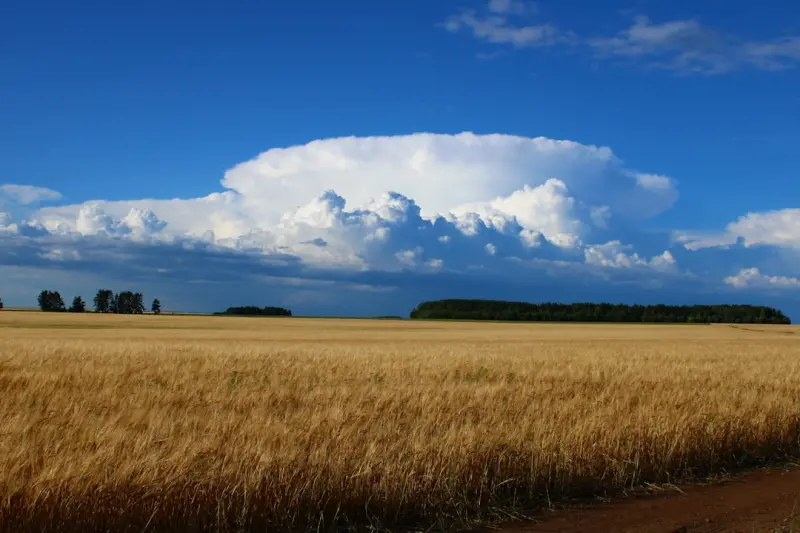
From Soil to Software: A Farmer’s Journey into the Future
When I first pulled a plow through the black loam of my grandparents’ field in southwestern Ontario, the biggest decision I faced was whether to sow wheat or canola that season. Today, that same decision is tangled with questions about data privacy, drone flight paths, and automated compliance reports. As a third‑generation farmer who’s watched the prairie skies fill with wind turbines and the market stalls fill with customers demanding traceable produce, I’ve learned that resilience isn’t just about hard work—it’s about weaving technology, community, and stewardship into the fabric of our farms.
Why “Resilience” Matters More Than Ever
Resilience used to be a buzzword for the occasional flood‑prone river valley. Now it’s a daily reality for anyone who farms in Canada’s diverse climate zones. From the early thaw in the Atlantic provinces to the late‑season droughts on the Prairies, weather patterns have become less predictable. Add to that fluctuating global commodity prices, shifting consumer expectations for clean‑label products, and an ever‑tightening regulatory landscape, and the modern farmer faces a complex puzzle.
What’s changed is not the soil’s capacity to produce, but the context in which we produce. The farm of tomorrow must be able to:
- Adapt quickly to climate‑driven stressors.
- Demonstrate transparent, verifiable practices to retailers and consumers.
- Navigate legal and financial obligations with less reliance on costly consultants.
- Leverage data to make smarter planting, irrigation, and marketing decisions.
These aren’t lofty ideals; they’re the baseline for staying competitive and sustainable.
Data Ownership: The New Farmhand
For years, farmers have been the custodians of the land, but the data we generate—from soil moisture readings to yield maps—has often been harvested by third‑party platforms that package it into analytics services. This dynamic mirrors the conversation around Zero‑Party Data: The New Gold Standard for B2B Marketers, where businesses are reclaiming the narrative about who owns the information.
On the farm, we can apply the same principle: treat every sensor reading, drone image, and market order as a piece of intellectual property. By consolidating data in a secure, farm‑owned cloud repository, we gain:
- Negotiation power. When a grain elevator asks for “average yields,” we can provide precise, verified numbers that reflect our specific practices.
- Risk mitigation. Historical weather‑linked yield data helps secure more favorable insurance terms.
- Innovation pathways. Sharing anonymized data with research institutions fuels breeding programs tailored to Canadian soils.
It’s not enough to collect data; we must build the governance framework that ensures we stay in control, much like the way marketers are redefining consent and ownership in the digital realm.
AI‑Driven Compliance: A Lawyer in the Barn
Compliance used to mean keeping a stack of paper forms in the office and hoping you hadn’t missed a deadline. The rise of automated legal solutions—explored in When AI Becomes Your Lawyer—has opened a door for farms to automate many of these tasks.
Imagine a system that scans your pesticide application logs, cross‑references them with provincial regulations, and flags any discrepancies before you even think about filing a report. Or an AI that drafts your annual environmental impact statement, pulling in the latest satellite‑derived carbon data. The benefits are tangible:
- Time savings. A farmer can spend those hours on the field instead of the desk.
- Accuracy. Human error is reduced, minimizing the risk of costly fines.
- Scalability. As your operation grows, the AI scales with you, handling multi‑field, multi‑province compliance.
Adopting such tools doesn’t mean surrendering the farmer’s intuition; it means augmenting it with a digital partner that handles the minutiae while you focus on stewardship.
Precision Agriculture: From Drone Flights to Soil Carbon Maps
Precision agriculture isn’t a fad; it’s an evolution of the age‑old practice of “reading the land.” Drones equipped with multispectral cameras can now detect nitrogen deficiencies before a leaf turns yellow. Soil probes can relay real‑time moisture levels, allowing variable‑rate irrigation that conserves water and cuts energy costs.
What’s exciting for Canadian growers is the integration of these tools into a unified platform. When a drone captures a stress map, the data feeds directly into a decision‑support system that suggests where to apply fertilizer, how much, and when. The result is a reduction in input use—often by 15‑20%—and a boost in yield consistency across fields with differing micro‑climates.
Beyond immediate economic gains, these technologies help us answer the consumer’s growing demand for traceability. A QR code on a box of Saskatchewan barley can now link the buyer to a dashboard showing the exact field, the inputs used, and the carbon footprint of that batch.
Community‑Powered Innovation Hubs
While the digital realm offers tools, the physical community remains the backbone of agricultural resilience. In the past decade, farmer cooperatives have evolved into “innovation hubs” where members share equipment, data, and research findings. These hubs operate on the same collaborative spirit highlighted in Canada’s Quiet Cultural Boom, but with a focus on agritech.
At a recent gathering in the Okanagan, I witnessed a group of growers test a new low‑cost soil carbon sensor. The device, developed by a university spin‑out, costs less than a handful of dollars per acre—dramatically lowering the barrier for small to mid‑size farms to monitor carbon sequestration. By pooling resources, the coop can purchase the sensors in bulk, train members on interpretation, and collectively negotiate better terms with carbon credit marketplaces.
This model does three things:
- Accelerates adoption. Farmers see peer success and are more willing to try new tech.
- Reduces risk. Shared investment spreads the financial exposure.
- Fosters knowledge exchange. Real‑world feedback loops improve the technology faster than isolated trials.
Consumer Expectations: The Hidden Cost of Convenience
Consumers today expect fresh, locally sourced produce on the same day they order it online. This convenience comes with hidden costs that ripple back to the farm. The article The True Cost of Everyday Convenience outlines how supply‑chain shortcuts can strain producers, but it also hints at opportunities.
Farmers can turn this pressure into profit by embracing “direct‑to‑consumer” (DTC) channels that cut out the middlemen. Subscription boxes, farm‑to‑table delivery apps, and virtual farmer’s markets enable us to capture a larger slice of the retail price while providing customers with the story behind their food. The key is transparency: use blockchain‑based traceability or simple QR codes that tell a story—from seed to shelf.
Moreover, the data gathered from DTC sales—order frequency, geographic hotspots, product preferences—feeds back into planting decisions. If a particular heirloom tomato sells out within days in Montreal, you can allocate more acreage for the next season, reducing waste and increasing profitability.
Building Financial Resilience with Digital Tools
Traditional farm financing still relies heavily on annual cash‑flow statements and historical yield data. However, lenders are increasingly open to “digital twins” of farms—virtual replicas that simulate crop growth under different scenarios. By feeding real‑time sensor data into these models, you can demonstrate to a bank how a drought‑resilient irrigation upgrade will improve cash flow under a range of weather outcomes.
Additionally, emerging platforms allow farms to tokenize future harvests, offering investors a share of the yield in exchange for upfront capital. This approach mirrors the broader fintech trend of asset tokenization, yet it remains under‑utilized in Canadian agriculture. When paired with robust data ownership practices, tokenization can unlock a new liquidity stream without sacrificing long‑term control of the land.
Climate‑Smart Practices Without the “Regenerative” Label
While “regenerative” has become a buzzword, the core practices—cover cropping, reduced tillage, diversified rotations—are simply good farming. The difference today is the ability to quantify their impact. Soil carbon meters, combined with satellite imagery, let us measure how much carbon we’re sequestering each year. This data is not just for scientists; it feeds into government incentive programs that reward measurable outcomes.
Take the example of a mixed‑grain farm in Manitoba that switched from a conventional monoculture to a three‑year rotation of wheat‑canola‑pea. The shift reduced fertilizer use by 18% and increased overall soil organic matter. By logging these metrics, the farm qualified for a provincial carbon offset credit, turning an environmental practice into a revenue source.
The Path Forward: A Call to Action for Canadian Growers
Resilience is no longer a passive hope—it’s an active strategy that blends old‑world knowledge with new‑world technology. Here’s a concise roadmap for any farmer ready to step into this future:
- Audit your data. Identify every sensor, log, and record. Consolidate them in a secure, farm‑owned cloud space.
- Adopt AI compliance tools. Start with a pilot that automates a single reporting requirement.
- Invest in precision equipment. Drones and soil probes provide immediate ROI through input savings.
- Join or form a coop‑based innovation hub. Share costs, knowledge, and risk.
- Explore direct‑to‑consumer channels. Use the data from sales to fine‑tune planting decisions.
- Leverage digital twins and tokenization. Communicate your farm’s future performance to lenders and investors.
- Measure and monetize climate‑smart practices. Turn stewardship into a line item on the balance sheet.
If we, as a community, adopt these steps collectively, Canadian agriculture will not just survive the uncertainties of the next decade—it will thrive, setting a benchmark for the world.

Related Posts

Beyond the Fields: How Storytelling is Revitalizing Canadian Farms
Farmers are turning everyday experiences into powerful narratives that engage consumers, boost resil... Read More
Harnessing Shared Analytics: How Canadian Farmers Are Winning with Data Cooperatives
Canadian farmers are turning data into a collective asset, forming cooperatives that share analytics... Read More
Digital Harvest: How Canadian Farmers Connect Directly with Consumers
Canadian farmers are turning to digital marketplaces, data-driven tools, and collaborative platforms... Read More
Top Posts

The Sky’s the Limit: How Rooftop Farms Are Redefining Canadian Cities
Rooftop farms are turning Canadian city rooftops into thriving ecosystems that provide fresh produce, reduce carbon footprints, and foster community, heralding ...Read More

Why Canada’s National Digital ID Could Redefine SaaS Playbooks
A federal digital identity platform promises frictionless onboarding, granular access control, and built‑in compliance for Canadian SaaS companies. This post ...Read More

Sync Your Meals with Your Body Clock: The Chrononutrition Playbook
Learn the science behind chrononutrition and get a step‑by‑step meal schedule that fits a busy lifestyle, helping you maximize energy, improve digestion, an...Read More

Flavor Alchemy: Turning Everyday Ingredients into Health Boosters
Explore the science of food synergy, learn practical pairing strategies, and see how treating your kitchen like a lab can enhance energy, focus, and overall hea...Read More
0 Comments
Post Comment
You will need to Login or Register to comment on this post!