
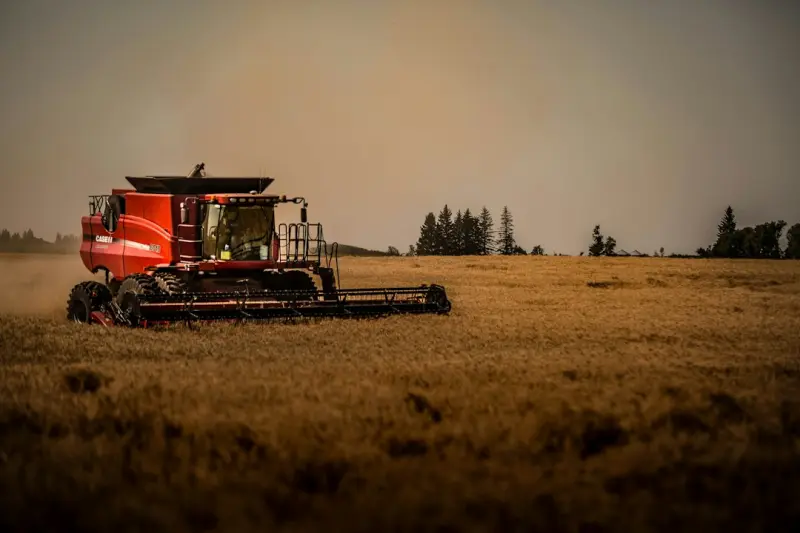
Re‑Rooting the Prairie: How Canadian Farmers Are Turning Challenges into Community‑Powered Growth
When I first stepped onto my grandparents’ wheat farm in the heart of Saskatchewan, the horizon stretched endless and the soil felt like a living promise. Decades later, that promise is being tested by climate swings, market volatility, and a generation of newcomers hungry for fresh, transparent food. Yet, what I’m witnessing now is not a story of decline—it’s a story of reinvention, where farmers are becoming ecosystem stewards, data‑savvy innovators, and community builders all at once.
From Survival Mode to Regenerative Vision
Traditional farming in Canada has long been about maximizing yields, often at the expense of soil health. Regenerative agriculture is flipping that script. By integrating cover crops, reduced tillage, and holistic grazing, growers are restoring organic matter, capturing carbon, and improving water infiltration. The result? Fields that bounce back faster after a dry spell, and a product that carries a richer nutrient profile.
Take the example of a family farm near Prince Edward Island that swapped a monoculture of potatoes for a diversified rotation of beans, rye, and brassicas. Within three years, the soil’s organic carbon rose by 1.5 %, and the farm reported a 12 % reduction in fertilizer expenses. This isn’t a one‑off miracle; it’s a scalable model that many producers across the Prairies, the Atlantic provinces, and BC are beginning to emulate.
Data as the New Plowshare
While the romance of the open field endures, the modern farmer’s toolbox now includes satellite imagery, soil sensors, and AI‑driven forecasting platforms. The shift from intuition‑based decisions to data‑backed strategies is accelerating, but it also demands a new kind of literacy. That’s why the National Data Literacy initiative matters for agriculture just as much as for any other sector.
- Precision Planting: GPS‑guided equipment places seeds at optimal depths and spacing, cutting seed waste by up to 10 %.
- Variable Rate Application: Real‑time nitrogen maps let growers apply fertilizer only where it’s needed, slashing input costs and runoff.
- Predictive Weather Modeling: Hyper‑local forecasts inform the timing of sowing and harvest, reducing crop loss from unexpected frosts.
For many small‑scale operators, the biggest barrier is not technology itself but the confidence to interpret the data. Community workshops, farmer‑led cooperatives, and partnerships with ag‑tech startups are bridging that gap, turning raw numbers into actionable insights.
Co‑ops and Shared Resources: The New “Tool Library” for Farmers
Just as urban neighborhoods have embraced shared tool libraries, rural communities are creating collective equipment hubs for agricultural use. These co‑ops pool high‑cost machinery—like combine harvesters, drone sprayers, and soil‑testing rigs—making them accessible to farms that might otherwise never afford them.
One such hub in the Okanagan Valley started with three partners contributing a single tractor and a set of precision sensors. Today, the cooperative serves over 20 farms, reduces duplicate purchases, and has collectively saved more than $200,000 in capital expenditures. The financial upside is clear, but the social impact is equally powerful: farmers exchange tips, mentor new entrants, and foster a resilient network that can weather market downturns together.
Carbon Markets: Turning Soil Health Into Revenue
Regenerative practices do more than improve yields; they generate carbon credits that can be sold on emerging Canadian carbon markets. By quantifying the amount of CO₂ sequestered in their soils, farmers can earn supplemental income while contributing to national climate goals.
Programs like the Carbon Farming Initiative provide methodologies to measure carbon stocks, verify results, and connect producers with buyers ranging from corporations seeking offset solutions to provincial governments funding climate action. Early adopters report an additional $30‑$70 per acre annually—money that can be reinvested in further soil health improvements or diversification projects.
Diversification: From Field to Table and Beyond
Relying solely on commodity crops is a risk that many Canadian farms have learned the hard way. Diversification is becoming a cornerstone strategy, and it takes many forms:
- Agri‑tourism: Farm stays, U‑pick orchards, and educational tours bring supplemental revenue and strengthen community ties.
- Value‑Added Products: From artisanal cheese in Quebec to heritage grain flours in Ontario, processing on‑farm adds profit margins and creates brand stories.
- Renewable Energy: Installing solar panels on barns or wind turbines on grazing lands provides a steady power source and can feed excess electricity back into the grid.
These ventures not only buffer farms against price shocks but also open new marketing channels that speak directly to consumers eager for traceable, locally‑grown goods.
Financial Savvy: Unlocking Hidden Value
Running a farm is as much about bookkeeping as it is about plowing. Many producers discover untapped savings by re‑examining their expense structures. The principles outlined in Unlock Hidden Value translate well to agriculture: renegotiating supplier contracts, consolidating insurance policies, and leveraging bulk purchasing agreements through co‑ops can shave significant dollars off the bottom line.
One Ontario grain farmer, after a detailed cost audit, identified a 15 % overpayment on fuel due to outdated fleet management practices. By adopting a fuel‑tracking app and adjusting routes, he reclaimed $8,000 in a single season. Small adjustments, when multiplied across the sector, create a ripple of economic resilience.
Well‑Being on the Farm: A Quiet Revolution
Beyond soil and revenue, the mental health of farmers is gaining overdue attention. Long hours, isolation, and financial stress have historically been “quiet” challenges. Community circles, peer‑support networks, and digital mental‑health platforms are now emerging as lifelines.
In Nova Scotia, a pilot program pairs experienced growers with newcomers for weekly “check‑in” sessions—part mentorship, part emotional support. Participants report reduced feelings of isolation and a greater willingness to adopt innovative practices, proving that caring for the farmer’s mind is as vital as caring for the land.
Policy Landscape: What’s on the Horizon?
Government support continues to shape the trajectory of Canadian agriculture. Recent policy shifts emphasize:
- Incentives for sustainable practices: Grants for cover‑crop seed purchases and carbon‑sequestration verification.
- Infrastructure funding: Investment in rural broadband to enable real‑time data exchange and remote monitoring.
- Market access programs: Assistance for exporting value‑added products and navigating trade agreements.
These measures, while promising, require active farmer participation in consultations to ensure they address on‑the‑ground realities.
Looking Ahead: A Collaborative Future
Canada’s farms are at a crossroads where climate, technology, and community intersect. The path forward isn’t about choosing one over the other; it’s about weaving them together into a resilient tapestry. By embracing regenerative methods, harnessing data, sharing resources, and diversifying income streams, farmers are not only protecting their livelihoods but also nurturing the ecosystems and communities that depend on them.
As we stand on the cusp of this agricultural renaissance, the message is clear: the future of Canadian farming belongs to those who cultivate both the land and the relationships that sustain it. It’s a journey rooted in tradition, enriched by innovation, and propelled by collective stewardship.

Related Posts
Data Fields: How Canadian Farmers Are Turning Sensors into Harvest Gains
Canadian farmers are embracing affordable sensors and AI, turning raw field data into actionable ins... Read More
Harvesting Hope: Turning Canadian Farm Land into Renewable Energy Hubs
Canadian farmers are embracing renewable energy, installing solar arrays and wind turbines to genera... Read More
Beyond the Fields: Building Community‑First Food Networks
Canadian farmers are forging community‑first food networks—direct subscriptions, collaborative p... Read More
Top Posts

Unleashing Employee Advocacy: The Secret Weapon for B2B SaaS Growth
Employee advocacy transforms everyday staff into trusted marketers, boosting brand visibility and pipeline. Learn a step‑by‑step framework, measurement tact...Read More

Why Voice Search Is the Quiet Disruptor in B2B Marketing
Voice search is quietly redefining B2B marketing. Learn how conversational keywords, structured data, and integration with revenue operations can turn spoken qu...Read More

Snack Smarter: Uncovering the Power of Plant‑Based Crunch
A deep dive into plant‑based snacks that combine protein, fiber, and micronutrients with bold flavors, offering practical guidelines for choosing and pairing ...Read More

Designing a Microbiome‑Friendly Meal Plan for the Modern Professional
A practical guide for busy professionals on creating a microbiome‑supporting diet, featuring fiber‑rich recipes, smart prep tips, and links to soil‑to‑d...Read More
0 Comments
Post Comment
You will need to Login or Register to comment on this post!