
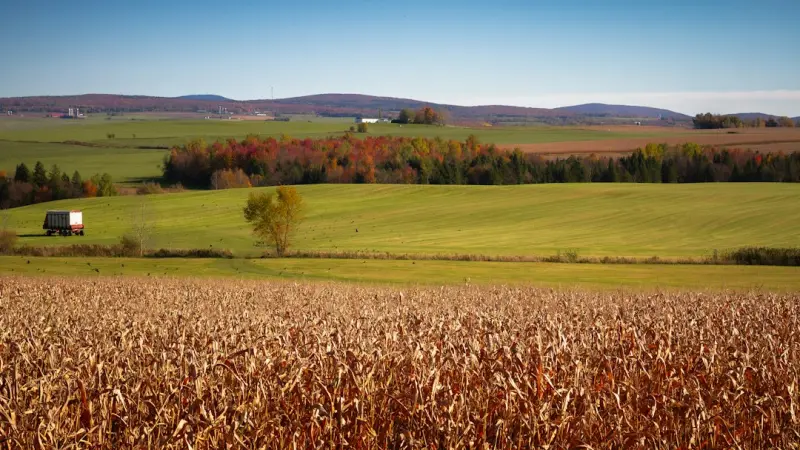
Canadian agriculture is at a crossroads. Decades of intensive practices have left soils depleted, climate patterns erratic, and farm families stretched thin. Yet the very challenges that threaten our fields also contain the seeds of a new, resilient future. In this post I’m pulling back the curtain on the regenerative farming movement that’s gaining steam across the Prairies, the Maritimes, and the interior, and I’ll show how it’s reshaping profit margins, community ties, and even our national carbon ledger.
The regenerative promise: more than just a buzzword
Regenerative agriculture goes beyond “sustainable” by actively improving the ecosystem it touches. It blends time‑tested practices—cover cropping, rotational grazing, reduced tillage—with modern tools like soil‑carbon sensors and blockchain‑verified carbon credits. The goal? To pull carbon out of the atmosphere, lock it into healthy soil, and boost yields without adding synthetic inputs.
What makes this shift especially compelling for Canadian growers is the sheer scale of our arable land. From the wheat belts of Saskatchewan to the orchard‑rich valleys of British Columbia, we have the spatial capacity to turn acres of under‑utilized terrain into carbon sinks that pay farmers directly.
Carbon markets: Turning soil health into a revenue stream
Across the country, provincial governments and private enterprises are launching carbon‑offset programs that reward farmers for measurable improvements in soil organic matter. For example, the Carbon Farming Initiative in Ontario offers credits based on verified increases in carbon sequestration. Those credits can then be sold to corporations looking to offset their own emissions.
While the paperwork can feel daunting, a growing network of ag‑tech startups is simplifying the process. They provide:
- Baseline assessments using satellite imagery and on‑ground probes.
- Ongoing monitoring via IoT devices that track moisture, temperature, and carbon flux.
- Transparent reporting through blockchain ledgers that verify each ton of carbon stored.
In practice, a medium‑size grain farm that adopts no‑till and cover crops can generate enough credits to offset a portion of its operating costs, sometimes covering 10‑15% of input expenses. When you combine that with higher yields from healthier soils, the financial upside becomes hard to ignore.
Beyond the ledger: Community and mental health benefits
Regenerative practices aren’t just about numbers; they’re about people. The isolation many Canadian farmers feel has been linked to higher rates of depression and anxiety. By shifting toward diversified, multi‑species systems, farms become more resilient and less dependent on a single cash crop, which reduces financial stress.
Moreover, the collaborative nature of regenerative farming—sharing seed stock, co‑hosting workshops, forming “soil health circles”—creates a built‑in support network. I’ve seen dozens of farms band together in what we call “soil clubs,” where members meet monthly to discuss cover crop performance, exchange compost, and simply check in on each other’s well‑being.
One farmer from Nova Scotia told me, “When we started rotating beans and rye together, not only did our nitrogen levels bounce back, but I found myself looking forward to the weekly soil club meetings. It reminded me I’m not in this alone.” That sense of belonging is a silent but powerful antidote to the mental health crisis looming over rural Canada.
Tech tools that keep the regenerative cycle turning
While the core practices are ancient, the data that validates them is cutting‑edge. If you’ve been following our blog, you might recall our deep dive into how Canadian farmers are turning data into growth. That piece (From Soil to Screen: How Canadian Farmers Are Turning Data Into Growth) highlighted the rise of satellite‑based NDVI mapping. In the regenerative context, that same tech now helps pinpoint where cover crops are thriving and where they need a boost.
Other innovations include:
- Carbon capture dashboards that translate sensor data into tangible credit numbers.
- AI‑driven planting calendars that recommend the optimal mix of species based on historic weather patterns and soil health metrics.
- Mobile apps for herd tracking, ensuring rotational grazing stays within the sweet spot that maximizes carbon input without overgrazing.
These tools lower the barrier to entry for smaller farms that previously thought regenerative methods were too complex or expensive.
Indigenous knowledge: The missing piece of the puzzle
Regenerative agriculture is, at its heart, a philosophy of stewardship—a principle that aligns closely with Indigenous land‑care traditions. Across Canada, partnerships are emerging between Indigenous communities and settler farmers to co‑manage lands, share seed varieties, and integrate fire‑based land‑clearing practices that promote biodiversity.
One notable project in British Columbia blends traditional salmon‑stream restoration with regenerative grazing. By timing livestock movement to coincide with seasonal water flows, the program improves riparian vegetation, reduces erosion, and creates richer foraging grounds for both cattle and wild species.
These collaborations not only boost ecological outcomes but also open new market channels. Products labeled as “Indigenous‑partnered” often command premium prices in urban grocery stores, providing an additional income stream for participating farms.
Policy and funding: What’s on the horizon?
The federal government has signaled its commitment to regenerative agriculture through the upcoming “Green Harvest” fund, earmarking billions for climate‑smart farming initiatives. While the exact eligibility criteria are still being drafted, early drafts suggest support for:
- Adoption of cover cropping on at least 30% of arable land.
- Implementation of precision irrigation systems that cut water use by 20%.
- Development of community‑owned carbon credit registries.
Provincial ministries are also rolling out pilot programs that match grant dollars with private carbon‑offset purchases, effectively doubling the financial incentive for farmers who can prove measurable soil carbon gains.
Real‑world success stories: From theory to practice
To illustrate how these ideas are playing out, let’s look at three farms that have taken the regenerative leap:
1. The Prairie Pulse Farm (Saskatchewan)
Facing declining wheat yields, the family switched to a three‑year rotation of wheat‑soy‑canola, supplemented by a winter rye cover crop. Within two seasons, soil organic carbon rose by 1.2%, qualifying the farm for $45,000 in carbon credits. The additional income allowed the family to upgrade to a solar‑powered grain dryer, slashing fuel costs by 30%.
2. Coastal Kale Collective (New Brunswick)
Specializing in kale and microgreens, this cooperative adopted no‑till raised beds and integrated a small herd of goats for rotational grazing. The goats fertilize the beds, reducing the need for synthetic nitrogen. The cooperative now sells a “regenerative kale” line to local restaurants, commanding a 20% price premium.
3. Alpine Orchard Alliance (Alberta)
After years of battling soil compaction, the Alliance introduced biochar amendments and a drip‑irrigation network powered by a community wind turbine. Soil tests showed a 15% increase in water‑holding capacity, cutting irrigation water use by 25,000 liters per season. The project qualified for a provincial grant that covered 40% of the system’s cost.
Getting started: A practical roadmap for Canadian farmers
If you’re curious about stepping onto the regenerative path, here’s a simple three‑step plan:
- Assess your baseline. Use a soil test kit or partner with a local university to gauge current organic matter and carbon levels.
- Identify low‑hanging fruit. Start with easy wins like adding a winter cover crop, reducing tillage depth, or integrating a small herd for grazing.
- Leverage technology and funding. Explore ag‑tech platforms that track carbon sequestration, and keep an eye on federal or provincial grant announcements. The cultivating resilience beyond the harvest article offers a deeper look at how to secure financing for these initiatives.
Remember, regenerative farming isn’t a one‑size‑fits‑all prescription. It’s a mindset that encourages experimentation, community sharing, and a willingness to listen to the land. By embracing this approach, Canadian farmers can safeguard their livelihoods, contribute to climate goals, and nurture the next generation of rural Canadians.
In the words of an old prairie farmer who once told me, “The soil is a living thing. Treat it right, and it’ll repay you tenfold.” Today, we finally have the tools to measure that repayment—and to turn it into real, tangible benefits for farms, families, and the planet.

Related Posts
Regenerative Tech: Canadian Farmers Build a Resilient Future
Canadian farmers are merging age‑old regenerative methods with modern technology—AI, satellite i... Read More
Regenerative Roots: How Canadian Farmers Are Re‑Imagining the Land
Discover the fresh approaches Canadian farmers are adopting—from ancient soil practices to high‑... Read More

Harvesting the Future: Data, Renewable Energy, and Community Power on Canadian Farms
Canadian farmers are turning to data-driven precision agriculture, renewable energy, and cooperative... Read More
Top Posts

Chatting Your Way to B2B Growth: Conversational Commerce Strategies
Learn how embedding AI‑powered chat into every stage of the buyer journey turns cold leads into warm conversations, fuels data‑driven insights, and accelera...Read More

Why Your Plate Needs a Palette: The Science Behind Eating Colorful
A colorful plate isn’t just Instagram‑friendly—it’s a scientifically proven way to improve nutrition, balance blood sugar, and boost mood. Learn practic...Read More

Family Fishing Adventures Across Ontario
Explore Ontario’s best family‑friendly fishing locations, learn practical gear tips, sustainable habits, and cooking ideas, and turn each outing into lastin...Read More

AI‑Powered Contract Review: Transforming Legal Risk Management
AI‑powered contract review tools now scan, score, and suggest revisions for agreements in seconds, offering in‑house counsel unprecedented efficiency while ...Read More
0 Comments
Post Comment
You will need to Login or Register to comment on this post!