
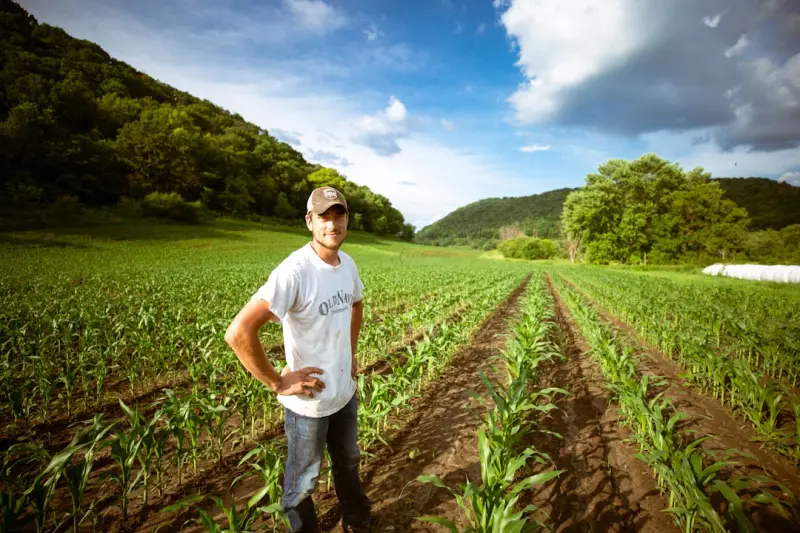
Regenerative Roots: Canadian Farmers Transform Soil into Climate Solutions
When I first stepped onto my grandfather’s wheat field in the prairies, the earth felt like a living, breathing entity—soft, resilient, and full of promise. Decades later, that same soil is at the heart of a quiet, powerful movement that’s reshaping agriculture across Canada. Regenerative farming isn’t just a buzzword; it’s a pragmatic, science‑backed approach that restores biodiversity, captures carbon, and builds economic resilience for family farms.
In this post I’ll walk you through the core principles of regenerative agriculture, share real‑world stories from farms that are already reaping the benefits, and explore how technology, community collaboration, and policy are converging to make soil health the new profit center for Canadian growers.
Why Soil Health Matters More Than Ever
Traditional industrial farming has delivered abundant yields, but it has also left a legacy of degraded topsoil, reduced microbial diversity, and increased greenhouse‑gas emissions. According to recent research, Canada loses roughly 3 % of its topsoil each decade—a rate that, if unchecked, threatens food security for the next generation.
Regenerative agriculture flips the script. Rather than viewing the soil as a static substrate, growers treat it as a dynamic ecosystem that can be nurtured to store carbon, retain water, and support a wider range of crops. The upside is twofold: healthier ecosystems and a stronger bottom line.
Three Pillars of Regenerative Practice
- Cover Crops & Crop Diversity: Planting legumes, radishes, or rye in off‑seasons shields the ground from erosion, fixes nitrogen, and feeds beneficial microbes.
- Reduced Tillage: Minimal soil disturbance preserves soil structure, reduces fuel use, and keeps carbon locked underground.
- Integrated Livestock: Rotational grazing returns nutrients directly to the field, closing the nutrient loop and enhancing pasture resilience.
These pillars work together like a symphony, each amplifying the effects of the others. For example, a farmer who adopts cover crops may find that his livestock gain higher‑quality forage, which in turn reduces feed costs and improves animal health.
Case Study: The Maple Ridge Family Farm
Located just outside Kingston, the Maple Ridge family transitioned from conventional corn‑soy rotations to a regenerative model three years ago. Here’s a snapshot of their journey:
- Year 1 – Soil Testing & Planning: They began with a comprehensive soil health audit, measuring organic matter, microbial activity, and carbon levels.
- Year 2 – Introducing Cover Crops: A mix of crimson clover and winter rye was sown after harvest, reducing nitrogen leaching by 45 %.
- Year 3 – Managed Grazing: A small herd of heritage goats was introduced, rotating every three days across paddocks. The goats’ natural foraging helped break down plant residues, further enriching the soil.
Results? Within three seasons, the farm reported a 30 % increase in yield per hectare, a 20 % reduction in fertilizer purchases, and a measurable uptick in soil organic carbon—an achievement that not only boosts profitability but also contributes to Canada’s climate commitments.
Technology as the Regeneration Enabler
While the principles are ancient, modern tools are accelerating adoption. Precision agriculture platforms now provide real‑time soil moisture maps, allowing farmers to fine‑tune irrigation and avoid over‑watering. Drones equipped with multispectral cameras can detect early signs of stress, guiding targeted interventions that preserve plant health without excessive chemical use.
Even the restaurant industry is feeling the ripple effect. AI‑driven demand forecasting helps chefs order exactly what they need, reducing waste and creating a tighter feedback loop between farm and plate. When chefs know a farmer’s regenerative practices, they can market dishes as “soil‑restored” or “carbon‑negative,” adding premium value that trickles back to the grower.
Community Collaboration: From Co‑ops to Knowledge Hubs
Regenerative agriculture thrives on shared learning. Across the country, farmer co‑operatives are establishing “soil health circles,” where members pool resources for testing, share successes, and collectively negotiate better prices for regenerative inputs (like high‑quality compost or native seed mixes).
In British Columbia, the Coast Soil Alliance hosts quarterly workshops that pair agronomists with local growers. These sessions often feature hands‑on demonstrations of no‑till drills, cover‑crop rollers, and portable soil carbon meters—tools that were once out of reach for small‑scale producers.
Policy Landscape: Incentives and Challenges
Federal and provincial governments are beginning to recognize the climate mitigation potential of regenerative practices. Programs such as the Carbon Farming Initiative (CFI) provide measurable carbon credits for verified soil carbon sequestration. Meanwhile, the Agri‑Innovation Fund offers grants for technology adoption that supports reduced tillage and precision grazing.
However, challenges remain. Many farmers cite the lack of clear, consistent measurement standards for soil carbon as a barrier to participating in credit markets. Moreover, transition costs—new equipment, learning curves, and temporary yield dips—can deter risk‑averse producers.
Addressing these hurdles will require a coordinated effort: transparent verification protocols, accessible financing, and continued research to refine best‑practice guidelines.
Economic Upside: Turning Soil Into an Asset
Think of soil not as a cost of production but as a revenue‑generating asset. By improving soil health, farmers can:
- Reduce input expenses (fertilizer, pesticides, water).
- Increase resilience to extreme weather, safeguarding yields.
- Tap into emerging markets for carbon offsets and “soil‑friendly” branding.
For example, a grain farmer in Alberta who enrolled in a carbon‑credit program reported an additional $15 per acre per year in offset revenue—money that directly offsets the modest upfront investment in cover‑crop seed.
Future Outlook: Scaling Regeneration Nationwide
Scaling regenerative agriculture across Canada will hinge on three key levers:
- Education & Extension Services: Universities and agricultural colleges must embed soil health curricula, while extension agents translate research into field‑ready recommendations.
- Financial Instruments: Low‑interest loans, insurance products that reward regenerative practices, and carbon‑credit marketplaces will lower the financial barrier to entry.
- Consumer Awareness: When diners demand food grown on healthy soil, market signals will cascade back to the farm, incentivizing more growers to adopt regenerative methods.
The journey isn’t without obstacles, but the momentum is undeniable. Across the Prairies, the Maritimes, and the Pacific Northwest, a new generation of farmers is planting the seeds—literally and figuratively—for a more resilient, climate‑smart agricultural system.
Getting Started: A Simple Checklist for Farmers
If you’re curious about taking the first step toward regeneration, consider this starter checklist:
- Assess Your Soil: Conduct a baseline soil health test (pH, organic matter, microbial activity).
- Plan Cover Crops: Choose species suited to your climate and rotation schedule.
- Reduce Tillage: Invest in no‑till or reduced‑till equipment, or experiment with strip‑till methods.
- Integrate Livestock: If feasible, adopt rotational grazing or consider a small herd for nutrient cycling.
- Leverage Data: Use precision tools to monitor moisture, temperature, and crop vigor.
- Connect Locally: Join a farmer co‑op or soil health circle for peer support and shared resources.
Remember, regeneration is a marathon, not a sprint. Small, incremental changes compound over time, delivering both ecological and economic dividends.
Closing Thoughts
Canada’s agricultural heritage is built on the tenacity of farmers who have weathered droughts, frosts, and market swings. Regenerative agriculture offers a way to honor that legacy while steering the sector toward a sustainable future. By nurturing the living soil beneath our feet, we can capture carbon, protect biodiversity, and secure profitable farms for generations to come.
So the next time you bite into a crisp Ontario apple or savor a buttery Alberta beef steak, remember the hidden story beneath the surface—a story of soil revived, communities united, and a nation stepping confidently into a greener, more resilient era.

Related Posts
Powering the Prairie: How Canadian Farmers Are Turning Fields into Renewable Energy Hubs
Canadian farmers are pioneering renewable energy projects—wind turbines, solar arrays, biogas dige... Read More
Cultivating Tomorrow: How Canadian Farmers Are Redefining Resilience
A firsthand look at the innovative ways Canadian farmers are merging tradition, technology, and comm... Read More

Fields as Futures: Canadian Farmers Turning Their Land into Community Hubs
Canadian farmers are redefining their role by transforming fields into vibrant community hubs, offer... Read More
Top Posts

Edible Packaging: The Quiet Revolution Changing What We Eat and Drink
A deep dive into the rise of edible packaging reveals how innovative materials, AI-driven personalization, and zero‑waste mixology are turning containers into...Read More

Crafting a Memory‑First Prom and Graduation Experience
A fresh, memory‑first approach to prom and graduation planning that blends sustainable fashion, nutrient‑rich menus, micro‑community involvement, and tech...Read More
From Field to Guest: The Agri‑Tourism Boom Transforming Canadian Farms
Canadian farms are shifting from pure production to destination experiences, using agri‑tourism to diversify income, strengthen communities, and showcase auth...Read More

Embracing Forest Bathing: A Modern Path to Natural Wellness
Explore the science and simple steps behind forest bathing, a nature‑based practice that reduces stress, strengthens immunity, and revitalizes everyday wellne...Read More
0 Comments
Post Comment
You will need to Login or Register to comment on this post!